Song Xiliang, Yue Xian, Chen Weifeng, Jiang Huixin, Han Yanyun, Li Xu
College of Resources and Environment, Shandong Agricultural University, Tai'an, China.
Shandong Provincial Engineering and Technology Research Center for Phyto-Microremediation in Saline-Alkali Land, Shandong, China.
Front Plant Sci. 2019 Jun 20;10:798. doi: 10.3389/fpls.2019.00798. eCollection 2019.
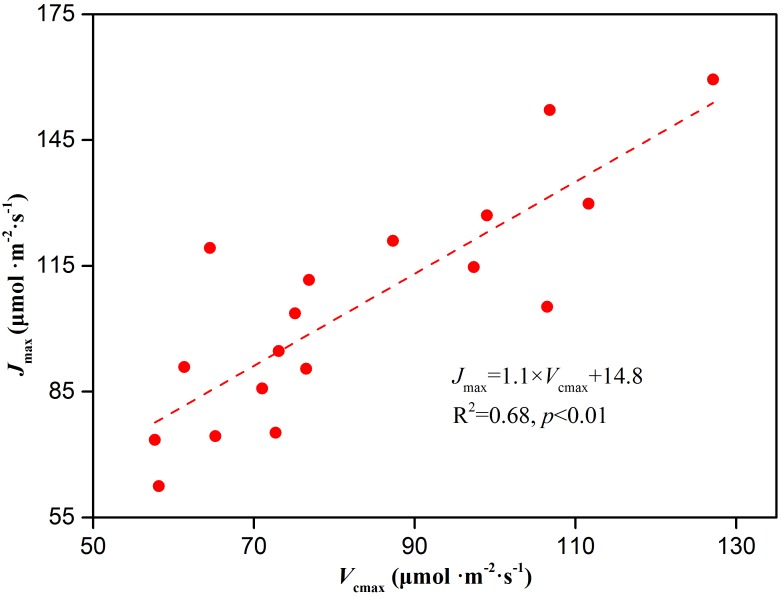
Photosynthesis plays an essential role in plant growth and crop yield, and the mechanisms of the effects of cadmium (Cd) on photosynthetic performance require more attention. The acute toxicity of Cd in soil to the photosynthetic capacity of was evaluated using gas exchange parameters, / curves, light response curves, and chlorophyll fluorescence transients after exposure to elevated Cd concentrations (0, 10, 20, 50, 70, and 100 mg kg) for a 3-month period. The results indicated that leaf Cd concentration in increased with the strength of soil Cd stress and ranged from 4.9 to 15.8 μg g DW. The accumulation of leaf Cd severely restricted photosynthesis and its non-stomatal limitation in regulating the photosynthetic performance of . The leaf chloroplasts at 10 and 20 mg kg Cd concentrations showed no noticeable change, but the chlorophyll content significantly decreased by 9.0-20.4% at 50-100 mg kg Cd concentrations. The Cd treatments also decreased plant ribulose-1,5-bisphosphate (RuBP) activity ( ) and regeneration capacity ( ), triose phosphate utilization (), light-saturated photosynthesis ( ), apparent quantum yield (), light saturation point (), and dark respiration ( ), but Cd treatment increased the light compensation point (). The shape of chlorophyll fluorescence transients in leaves was altered under different Cd treatments. The increased OJ phase and the decreased IP phase in fluorescence induction curves suggested that Cd toxicity inhibited both light use efficiency and photodamage avoidance ability. These results suggested that the decrease in photosynthesis through exposure to Cd may be a result of the decrease in leaf chlorophyll content, Rubisco activity, and RuBP regeneration, inhibition of triose phosphate utilization, reduction of the ability to use light and provide energy, and restrictions on electron transport in PSII.
光合作用在植物生长和作物产量中起着至关重要的作用,镉(Cd)对光合性能影响的机制需要更多关注。通过气体交换参数、/曲线、光响应曲线以及在暴露于升高的镉浓度(0、10、20、50、70和100 mg kg)3个月后的叶绿素荧光瞬变,评估了土壤中镉对光合能力的急性毒性。结果表明,叶片中的镉浓度随着土壤镉胁迫强度的增加而增加,范围为4.9至15.8 μg g DW。叶片镉的积累严重限制了光合作用及其在调节光合性能方面的非气孔限制。在10和20 mg kg镉浓度下,叶片叶绿体没有明显变化,但在50 - 100 mg kg镉浓度下,叶绿素含量显著下降了9.0 - 20.4%。镉处理还降低了植物核酮糖-1,5-二磷酸(RuBP)活性()和再生能力()、磷酸丙糖利用()、光饱和光合作用()、表观量子产率()、光饱和点()和暗呼吸(),但镉处理增加了光补偿点()。在不同镉处理下,叶片中叶绿素荧光瞬变的形状发生了改变。荧光诱导曲线中OJ相增加和IP相减少表明,镉毒性抑制了光利用效率和光损伤避免能力。这些结果表明,通过暴露于镉导致的光合作用下降可能是由于叶片叶绿素含量、Rubisco活性和RuBP再生的下降、磷酸丙糖利用的抑制、光利用和能量提供能力的降低以及对PSII中电子传递的限制。