Department of Physical Chemistry, Faculty of Pharmacy, University of Granada, 18071 Granada, Spain.
Biopathology and Regenerative Medicine Institute (IBIMER), Centre for Biomedical Research, University of Granada, E-18100 Granada, Spain.
Int J Mol Sci. 2019 Jul 5;20(13):3316. doi: 10.3390/ijms20133316.
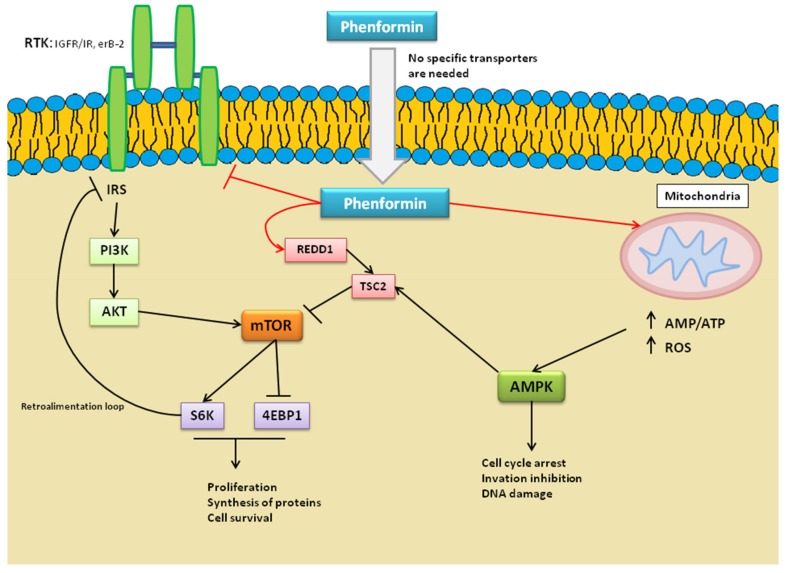
Currently, there is increasing evidence linking diabetes mellitus (especially type 2 diabetes mellitus) with carcinogenesis through various biological processes, such as fat-induced chronic inflammation, hyperglycemia, hyperinsulinemia, and angiogenesis. Chemotherapeutic agents are used in the treatment of cancer, but in most cases, patients develop resistance. Phenformin, an oral biguanide drug used to treat type 2 diabetes mellitus, was removed from the market due to a high risk of fatal lactic acidosis. However, it has been shown that phenformin is, with other biguanides, an authentic tumor disruptor, not only by the production of hypoglycemia due to caloric restriction through AMP-activated protein kinase with energy detection (AMPK) but also as a blocker of the mTOR regulatory complex. Moreover, the addition of phenformin eliminates resistance to antiangiogenic tyrosine kinase inhibitors (TKI), which prevent the uncontrolled metabolism of glucose in tumor cells. In this review, we evidence the great potential of phenformin as an anticancer agent. We thoroughly review its mechanism of action and clinical trial assays, specially focusing on current challenges and future perspectives of this promising drug.
目前,越来越多的证据表明,糖尿病(尤其是 2 型糖尿病)通过多种生物学过程与致癌作用有关,如脂肪诱导的慢性炎症、高血糖、高胰岛素血症和血管生成。化疗药物用于癌症治疗,但在大多数情况下,患者会产生耐药性。二甲双胍是一种用于治疗 2 型糖尿病的口服双胍类药物,由于存在致命乳酸酸中毒的高风险,已从市场上撤出。然而,已经表明二甲双胍与其他双胍类药物一样,是一种真正的肿瘤破坏剂,不仅通过 AMP 激活的蛋白激酶(AMPK)产生能量检测引起的热量限制导致低血糖,而且还作为 mTOR 调节复合物的阻断剂。此外,二甲双胍的添加消除了对血管生成酪氨酸激酶抑制剂(TKI)的耐药性,这些抑制剂可防止肿瘤细胞中葡萄糖的不受控制的代谢。在这篇综述中,我们证明了二甲双胍作为抗癌药物的巨大潜力。我们彻底审查了其作用机制和临床试验检测,特别关注该有前途的药物目前的挑战和未来前景。