Department of Physiology, Nitte (Deemed to be University), Mangalore 575018, India.
Department of Psychiatry, Nitte (Deemed to be University), Mangalore 575018, India.
Medicina (Kaunas). 2019 Jul 7;55(7):346. doi: 10.3390/medicina55070346.
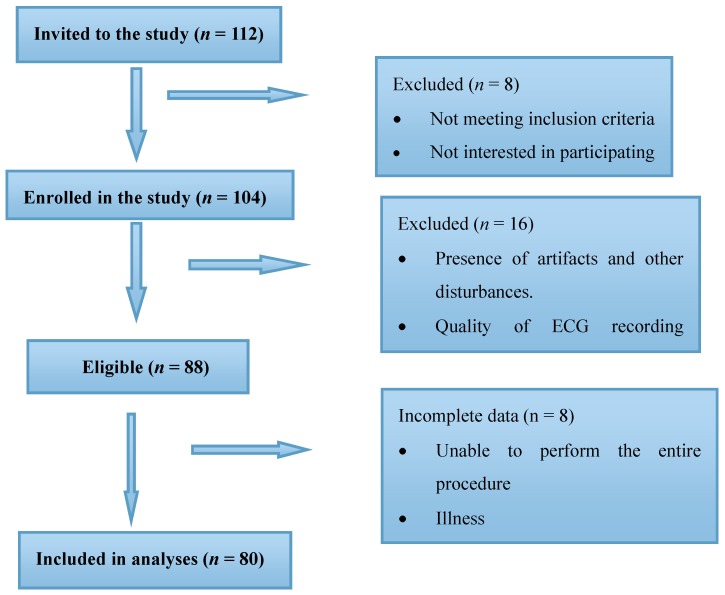
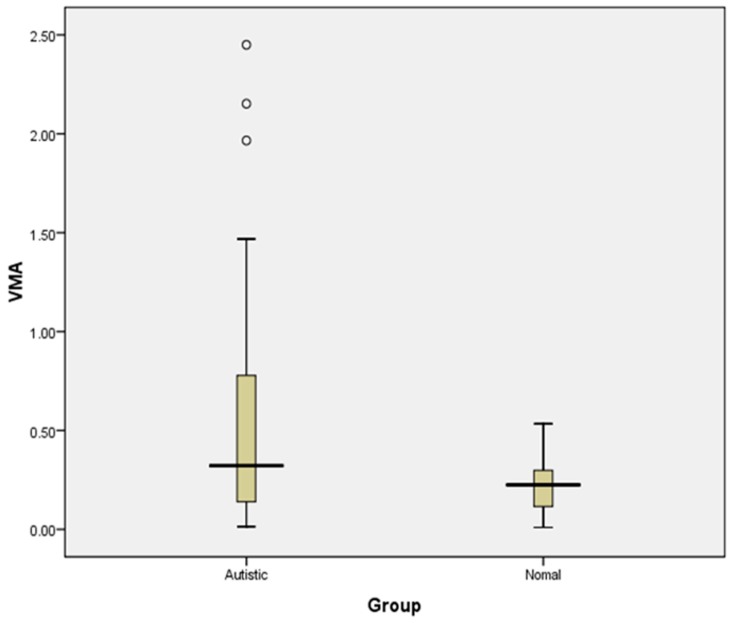
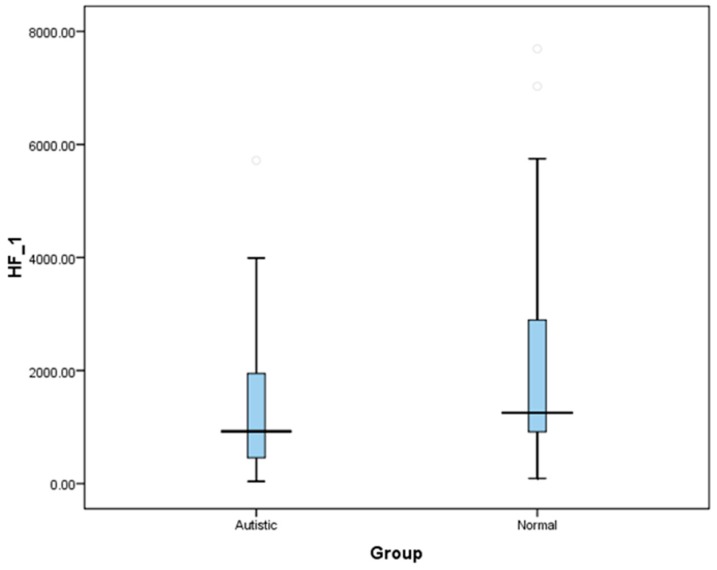
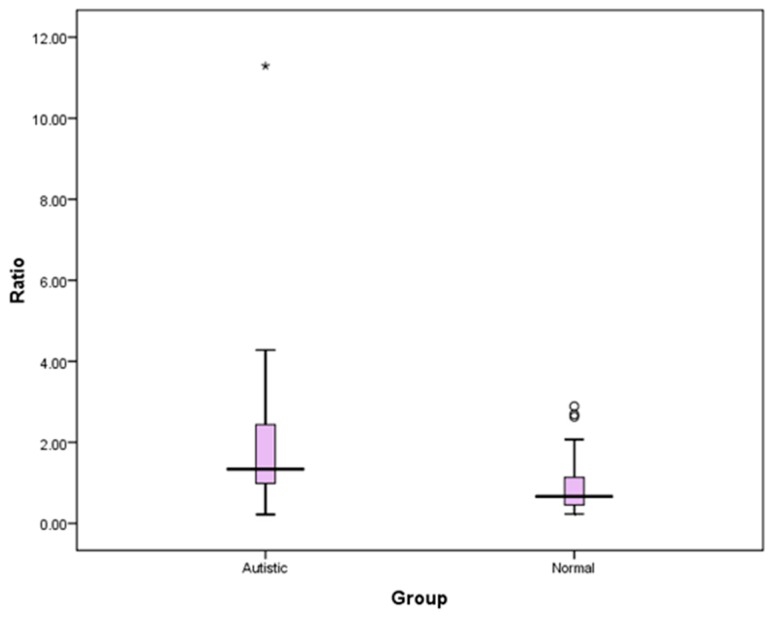
Autism Spectrum Disorder (ASD) is a complex neuro-developmental disorder and it has been suggested that symptoms of ASD are associated with neural networks that regulate the Autonomic Nervous System (ANS). However, the nature of autonomic atypicalities in ASDs remain largely unknown. Measures like Heart Rate Variability (HRV) and urinary Vanillylmandelic Acid (VMA) estimation are sensitive and non-invasive physiological and biochemical indicators of autonomic nervous activity. This study aimed to compare the physiological and biochemical autonomic indices in children with and without ASD. In this case-control study, 40 children with autism and 40 Typically Developing (TD) children were recruited. Measures of physiological autonomic index were assessed by the analysis of short term HRV, and the urinary levels of VMA estimation was used as a biochemical autonomic index. Cardiac sympathetic activity assessed by Low Frequency (nu) of HRV was significantly higher in the ASD group in comparison with the TD group ( = 0.006). On the contrary, both the High Frequency (abs) and (nu) of HRV were found to be significantly lower in autistic children ( = 0.034 and = 0.000) than controls. Autistic children also exhibited a significantly higher level ( = 0.049) of VMA concentration compared to TD children. The study concludes that children with ASD exhibit lower cardio-vagal activity as measured by HRV and increased sympathetic activity as assessed by urinary VMA compared to that of TD children. The core autistic symptoms exhibited by children with ASD could be due to the differences in baseline arousal or stress which might be associated with autonomic dysfunction. Further studies are needed to examine the association of this autonomic dysregulation with ASD symptoms and comorbidities.
自闭症谱系障碍(ASD)是一种复杂的神经发育障碍,有研究表明 ASD 的症状与调节自主神经系统(ANS)的神经网络有关。然而,ASD 中自主神经的异常性质在很大程度上仍不清楚。心率变异性(HRV)和尿香草扁桃酸(VMA)估测等测量方法是自主神经活动的敏感且非侵入性的生理和生化指标。本研究旨在比较自闭症儿童和非自闭症儿童的生理和生化自主神经指标。在这项病例对照研究中,共招募了 40 名自闭症儿童和 40 名典型发育(TD)儿童。生理自主指数的测量通过短期 HRV 分析进行评估,尿 VMA 估测水平则作为生化自主指数。与 TD 组相比,ASD 组的 HRV 低频(nu)表示的心脏交感神经活动明显更高( = 0.006)。相反,与对照组相比,自闭症儿童的 HRV 高频(abs)和 nu 均明显降低( = 0.034 和 = 0.000)。自闭症儿童的 VMA 浓度也明显高于 TD 儿童( = 0.049)。研究得出结论,与 TD 儿童相比,自闭症儿童的 HRV 测量的心脏迷走神经活动较低,尿 VMA 评估的交感神经活动较高。自闭症儿童表现出的核心自闭症症状可能是由于基线唤醒或应激的差异所致,而这可能与自主神经功能障碍有关。需要进一步的研究来检查这种自主神经调节与 ASD 症状和共病的关联。