Koo Dae Lim, Lee Won Gu, Hong Seung Chyul, Seo Dae Won
Department of Neurology, Boramae Medical Center, Seoul National University College of Medicine, Seoul, Korea.
Department of Neurology, Kosin University College of Medicine, Busan, Korea.
J Clin Neurol. 2019 Jul;15(3):285-291. doi: 10.3988/jcn.2019.15.3.285.
We aimed to determine the effectiveness of intraoperative neurophysiological monitoring focused on the transcranial motor-evoked potential (MEP) in patients with medically refractory temporal lobe epilepsy (TLE).
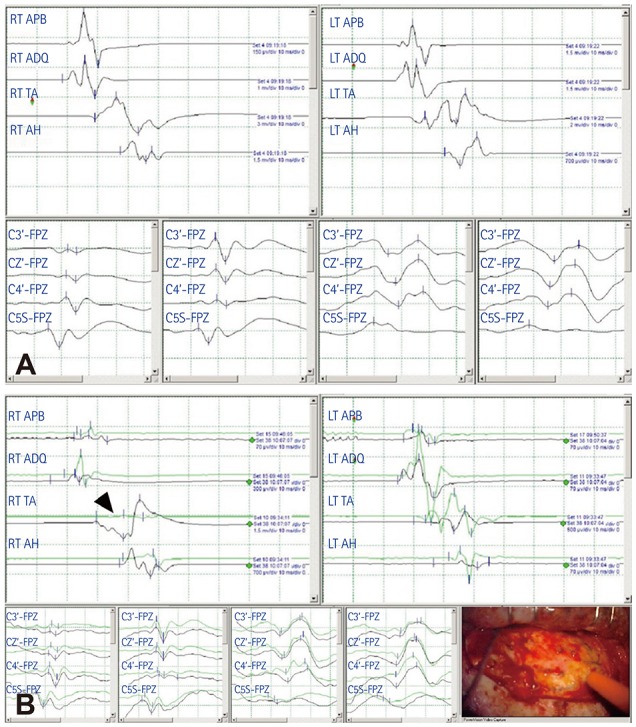
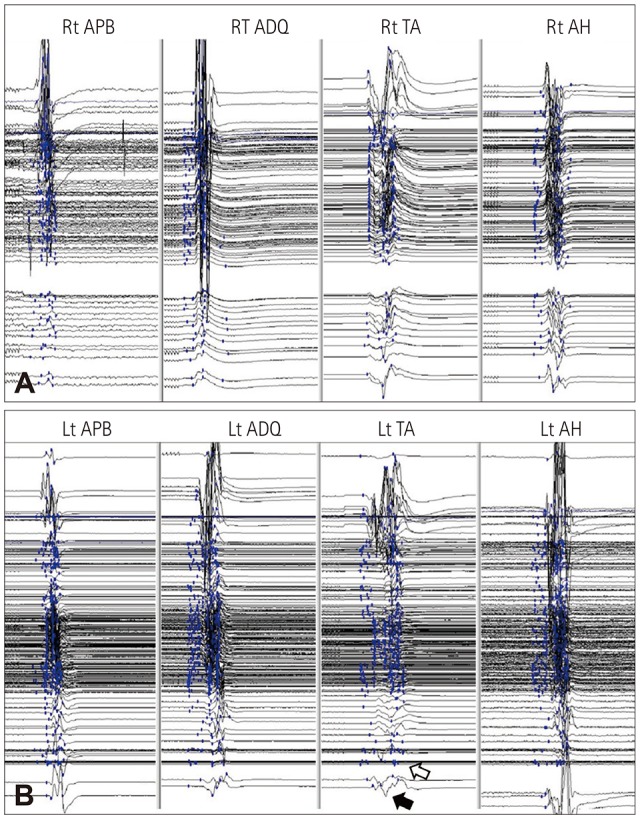
We compared postoperative neurological deficits in patients who underwent TLE surgery with or without transcranial MEPs combined with somatosensory evoked potential (SSEP) monitoring between January 1995 and June 2018. Transcranial motor stimulation was performed using subdermal electrodes, and MEP responses were recorded in the four extremity muscles. A decrease of more than 50% in the MEP or the SSEP amplitudes compared with baseline was used as a warning criterion.
In the TLE surgery group without MEP monitoring, postoperative permanent motor deficits newly developed in 7 of 613 patients. In contrast, no permanent motor deficit occurred in 279 patients who received transcranial MEP and SSEP monitoring. Ten patients who exhibited decreases of more than 50% in the MEP amplitude recovered completely, although two cases showed transient motor deficits that recovered within 3 months postoperatively.
Intraoperative transcranial MEP monitoring during TLE surgery allowed the prompt detection and appropriate correction of injuries to the motor nervous system or ischemic stroke. Intraoperative transcranial MEP monitoring is a reliable modality for minimizing motor deficits in TLE surgery.
我们旨在确定术中神经生理监测,特别是经颅运动诱发电位(MEP)监测对药物难治性颞叶癫痫(TLE)患者的有效性。
我们比较了1995年1月至2018年6月期间接受TLE手术的患者在有无经颅MEP联合体感诱发电位(SSEP)监测情况下的术后神经功能缺损情况。使用皮下电极进行经颅运动刺激,并在四肢肌肉中记录MEP反应。与基线相比,MEP或SSEP波幅下降超过50%被用作警示标准。
在未进行MEP监测的TLE手术组中,613例患者中有7例术后出现了新的永久性运动功能缺损。相比之下,接受经颅MEP和SSEP监测的279例患者中未出现永久性运动功能缺损。10例MEP波幅下降超过50%的患者完全康复,尽管有2例出现了短暂性运动功能缺损,但在术后3个月内恢复。
TLE手术期间的术中经颅MEP监测能够及时发现并适当纠正运动神经系统损伤或缺血性中风。术中经颅MEP监测是将TLE手术中运动功能缺损降至最低的可靠方式。