Faculty of Rehabilitation Medicine, University of Alberta, 3-48 Corbett Hall, 8205 114 Street, Edmonton, Alberta, T6G2G4, Canada.
Department of Physical Therapy, University of Alberta, 2-50 Corbett Hall, Edmonton, Alberta, T6G2G4, Canada.
BMC Musculoskelet Disord. 2019 Jul 8;20(1):319. doi: 10.1186/s12891-019-2695-9.
The Cobb angle is proposed as the "disease process" outcome for scoliosis research because therapies aim to correct or stop curve progression. While the Scoliosis Research Society recommends the Cobb angle as the primary outcome, the Society on Scoliosis Orthopaedic and Rehabilitation Treatment prioritises, as a general goal, patient related outcomes over Cobb angle progression.
To determine the threshold of change in the Cobb angle in adolescents with idiopathic scoliosis (AIS) who perceive improvement in a 6-months randomized controlled trial comparing a Schroth exercise intervention added to the standard of care to the standard of care alone.
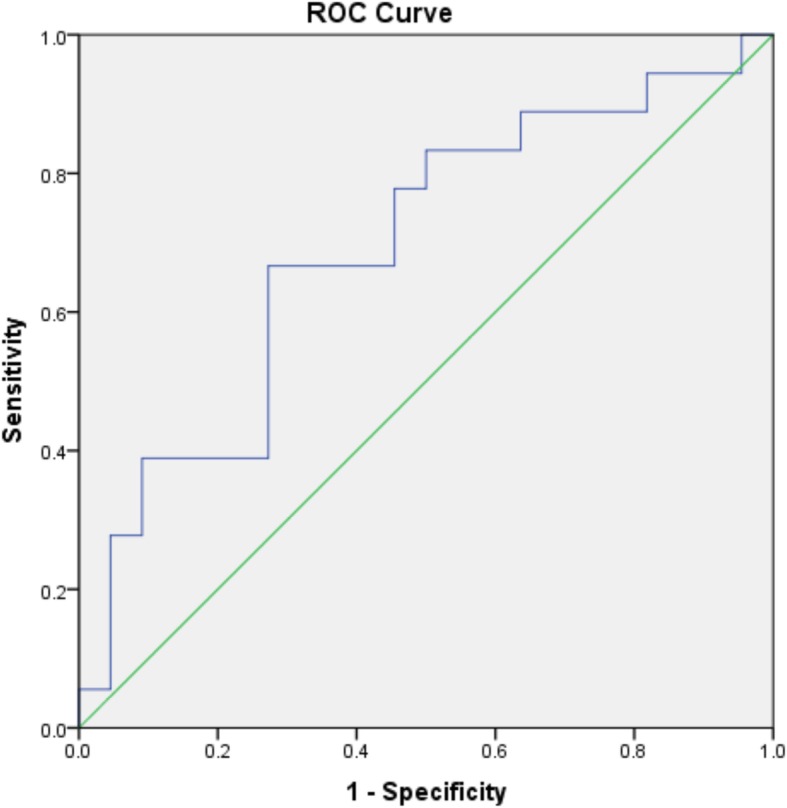
This is a secondary analysis of data from a randomized controlled trial of 50 patients with AIS, with curves ranging from 10° to 45°, with or without a brace. Participants with diagnoses other than AIS, surgical candidates or patients who had scoliosis surgery were excluded. The 6-month interventions consisted of Schroth exercises added to standard-of-care (observation or bracing) with daily home exercises and weekly therapy sessions (Schroth) or standard-of-care alone (Control). The anchor method for estimating the minimal important difference (MID) in the largest Cobb angles (LC) was used. Patient-reported change in back status over the 6-month treatment period was measured using the Global Rating of Change (GRC) scale as anchor varying from - 7 ("great deal worse") to + 7 ("great deal better"). Participants were divided into two groups based on GRC scores: Improved (GRC ≥2) or Stable/Not Improved (GRC ≤1). MID was defined as the change in the LC that most accurately predicted the GRC classification as per the receiver operating characteristic curve (ROC).
The average age was 13.4 ± 1.6 years and the average LC was 28.5 ± 8.8 °s. The average GRC in the control group was - 0.1 ± 1.6, compared to + 4.4 ± 2.2 in the Schroth group. The correlation between LC and GRC was adequate (r = - 0.34, p < 0.05). The MID for the LC was 1.0 °. The area under the ROC was 0.69 (0.52-0.86), suggesting a 70% chance to properly classify a patient as perceiving No Improvement/Stable or Improvement based on the change in the LC.
Patients undergoing Schroth treatment perceived improved status of their backs even if the Cobb angle did not improve beyond the conventionally accepted threshold of 5°. Standard of care aims to slow/stop progression while Schroth exercises aim to improve postural balance, signs and symptoms of scoliosis. Given the very small MID, perceived improvement in back status is likely due to something other than the Cobb angle. This study warrants investigating alternatives to the Cobb angle that might be more relevant to patients.
ClinicalTrials.gov , NCT01610908 . Retrospectively registered on April 2, 2012 (first posted on June 4, 2012 - https://clinicaltrials.gov/ct2/keydates/NCT01610908 ).
Cobb 角被提出作为脊柱侧凸研究的“疾病过程”结果,因为治疗旨在纠正或停止曲线进展。虽然脊柱侧凸研究学会建议 Cobb 角作为主要结果,但脊柱侧凸矫形与康复治疗学会将患者相关结果作为一般目标,优先于 Cobb 角进展。
确定在接受比较施罗斯锻炼干预加标准护理与标准护理的 6 个月随机对照试验中,感知改善的特发性脊柱侧凸(AIS)青少年的 Cobb 角变化阈值,施罗斯锻炼干预加标准护理。
这是一项对 50 例 AIS 患者的随机对照试验数据的二次分析,曲线范围从 10°到 45°,有无支具。排除患有除 AIS 以外的其他诊断、手术候选者或已接受脊柱侧凸手术的患者。6 个月的干预措施包括施罗斯锻炼,加标准护理(观察或支具),并进行日常家庭锻炼和每周治疗(施罗斯)或标准护理(对照)。使用 anchor 方法估计 Cobb 角最大(LC)的最小重要差异(MID)。使用全球变化等级(GRC)量表作为锚点,测量患者在 6 个月治疗期间背部状况的变化,范围从-7(“差很多”)到+7(“好很多”)。根据 GRC 评分,将参与者分为两组:改善(GRC≥2)或稳定/无改善(GRC≤1)。MID 定义为最准确地预测 GRC 分类的 LC 变化,根据接收器操作特征曲线(ROC)。
平均年龄为 13.4±1.6 岁,平均 LC 为 28.5±8.8 °s。对照组的平均 GRC 为-0.1±1.6,而施罗斯组为+4.4±2.2。LC 与 GRC 之间的相关性适中(r=-0.34,p<0.05)。LC 的 MID 为 1.0°。ROC 的曲线下面积为 0.69(0.52-0.86),这表明根据 LC 的变化,正确分类患者感知无改善/稳定或改善的概率为 70%。
接受施罗斯治疗的患者即使 Cobb 角没有改善到传统上接受的 5°阈值,也会感知到背部状况的改善。标准护理旨在减缓/停止进展,而施罗斯锻炼旨在改善姿势平衡、脊柱侧凸的体征和症状。鉴于非常小的 MID,背部状况的感知改善可能不是由于 Cobb 角。这项研究值得调查可能更相关于患者的 Cobb 角以外的替代方法。
ClinicalTrials.gov,NCT01610908。2012 年 4 月 2 日进行回顾性注册(首次于 2012 年 6 月 4 日发布-https://clinicaltrials.gov/ct2/keydates/NCT01610908)。