Groningen University, University Medical Center Groningen , Antonius Deusinglaan 1 , 9713 AW Groningen , The Netherlands.
Anal Chem. 2019 Aug 6;91(15):9800-9805. doi: 10.1021/acs.analchem.9b01459. Epub 2019 Jul 23.
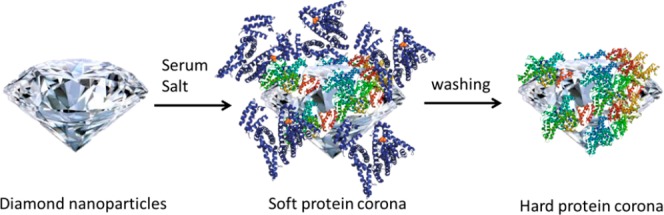
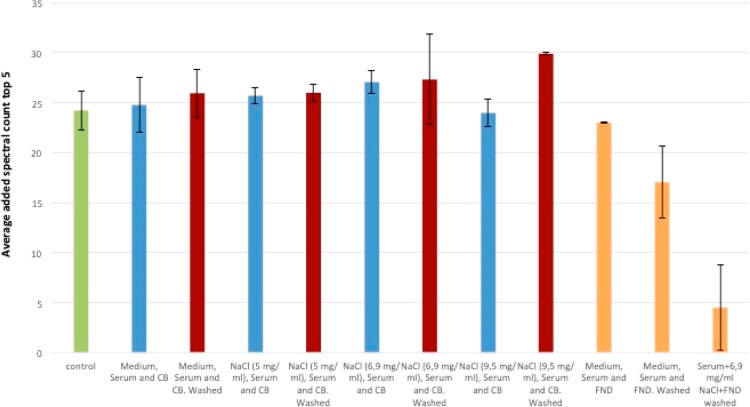
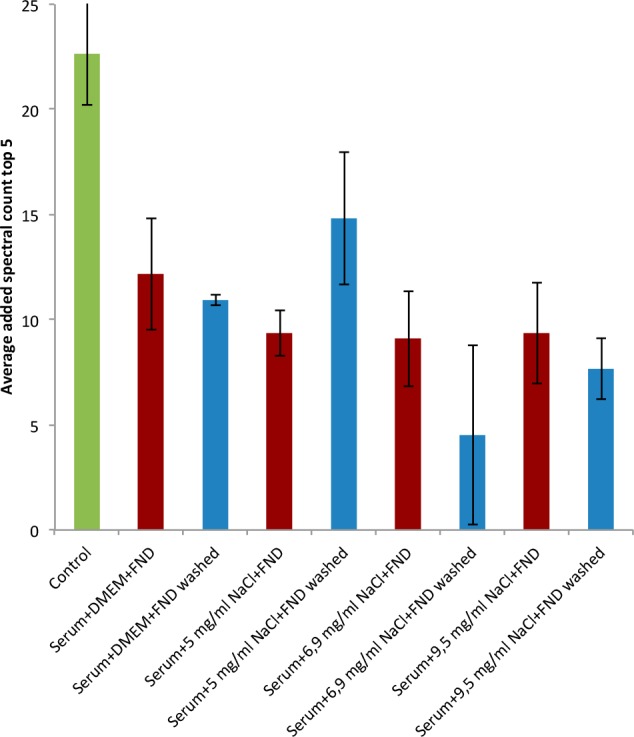
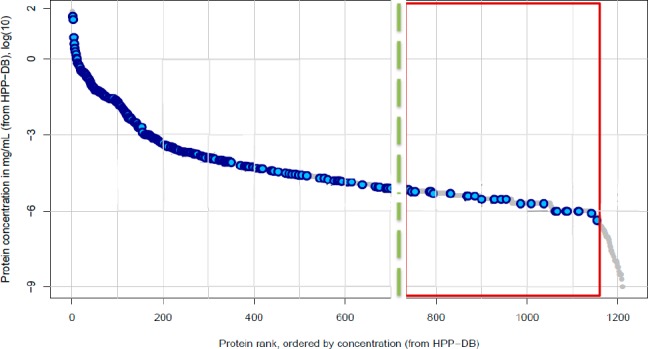
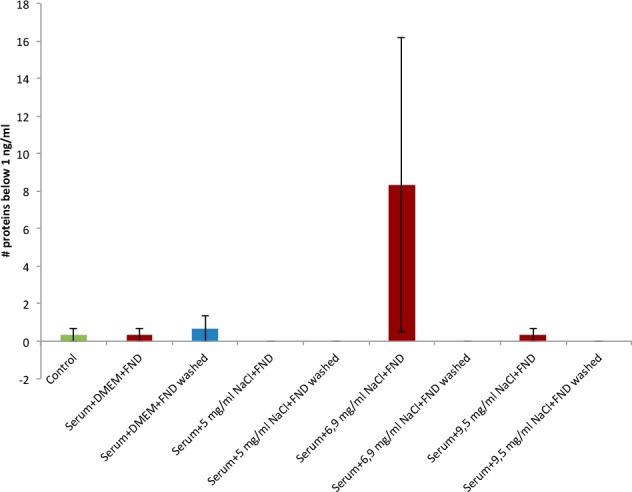
Protein analysis of potential disease markers in blood is complicated by the fact that proteins in plasma show very different abundances. As a result, high-abundance proteins dominate the analysis, which often render the analysis of low-abundance proteins impossible. Depleting high-abundance proteins is one strategy to solve this problem. Here, we present, for the first time, a very simple approach based on selective binding of serum proteins to the surface of nanodiamonds. In our first proof-of-principle experiments, we were able to detect, on average, eight proteins that are present at a concentration of 1 ng/mL (instead of 0.5 ng/mL in the control without sample preparation). Remarkably, we detect proteins down to a concentration of 400 pg/mL after only one simple depletion step. Among the proteins we could analyze are also numerous disease biomarkers, including markers for multiple cancer forms, cardiovascular diseases, or Alzheimer's disease. Remarkably, many of the biomarkers we find also could not be detected with a state-of-the-art ultrahigh-performance liquid chromatography column (which depletes the 64 most-abundant serum proteins).
血液中潜在疾病标志物的蛋白质分析很复杂,因为血浆中的蛋白质丰度差异很大。因此,高丰度蛋白质主导了分析,这往往使得低丰度蛋白质的分析变得不可能。去除高丰度蛋白质是解决这个问题的一种策略。在这里,我们首次提出了一种非常简单的方法,基于血清蛋白对纳米金刚石表面的选择性结合。在我们的第一个原理验证实验中,我们平均能够检测到 8 种浓度为 1ng/ml(而未经样品制备的对照浓度为 0.5ng/ml)的蛋白质。值得注意的是,在仅经过一次简单的去除步骤后,我们就能检测到浓度低至 400pg/ml 的蛋白质。我们可以分析的蛋白质中还包括许多疾病生物标志物,包括多种癌症、心血管疾病或阿尔茨海默病的标志物。值得注意的是,我们发现的许多生物标志物也无法用最先进的超高液相色谱柱(去除 64 种最丰富的血清蛋白)检测到。