Zhao Xuan, Kuang Fang, You Yi-Yan, Wu Ming-Mei, You Si-Wei
Department of Neurobiology and Collaborative Innovation Center for Brain Science, Air Force Medical University; Department of Histology and Embryology & Shaanxi Key Laboratory of Brain Disorders, Xi'an Medical University, Xi'an, Shaanxi Province, China.
Department of Neurobiology and Collaborative Innovation Center for Brain Science, Air Force Medical University, Xi'an, Shaanxi Province, China.
Neural Regen Res. 2019 Nov;14(11):2020-2024. doi: 10.4103/1673-5374.259627.
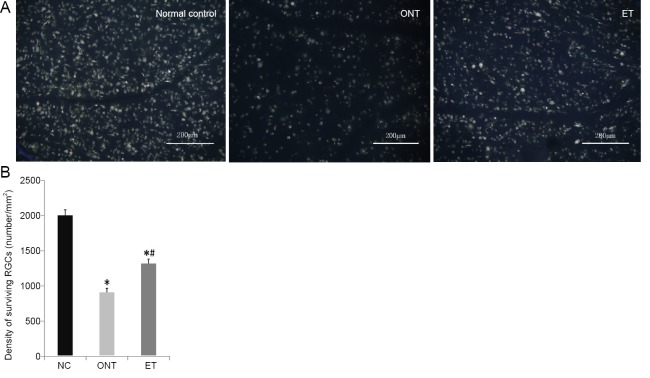
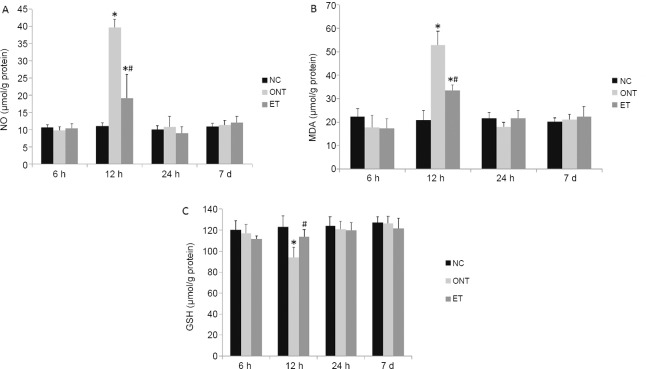
Our previous studies revealed that etomidate, a non-barbiturate intravenous anesthetic agent, has protective effects on retinal ganglion cells within 7 days after optic nerve transection. Whether this process is related to anti-oxidative stress is not clear. To reveal its mechanism, we established the optic nerve transection injury model by transecting 1 mm behind the left eyeball of adult male Sprague-Dawley rats. The rats received an intraperitoneal injection of etomidate (4 mg/kg) once per day for 7 days. The results showed that etomidate significantly enhanced the number of retinal ganglion cells retrogradely labeled with Fluorogold at 7 days after optic nerve transection. Etomidate also significantly reduced the levels of nitric oxide and malonaldehyde in the retina and increased the level of glutathione at 12 hours after optic nerve transection. Thus, etomidate can protect retinal ganglion cells after optic nerve transection in adult rats by activating an anti-oxidative stress response. The study was approved by the Animal Ethics Committee at Air Force Medical University, China (approval No. 20180305) on March 5, 2018.
我们之前的研究表明,依托咪酯,一种非巴比妥类静脉麻醉剂,在视神经横断后7天内对视网膜神经节细胞具有保护作用。这个过程是否与抗氧化应激有关尚不清楚。为了揭示其机制,我们通过在成年雄性Sprague-Dawley大鼠左眼球后方1毫米处横断视神经建立了视神经横断损伤模型。大鼠每天腹腔注射依托咪酯(4毫克/千克),持续7天。结果显示,在视神经横断后7天,依托咪酯显著增加了用荧光金逆行标记的视网膜神经节细胞数量。在视神经横断后12小时,依托咪酯还显著降低了视网膜中一氧化氮和丙二醛的水平,并提高了谷胱甘肽的水平。因此,依托咪酯可通过激活抗氧化应激反应保护成年大鼠视神经横断后的视网膜神经节细胞。该研究于2018年3月5日获得中国空军军医大学动物伦理委员会批准(批准号:20180305)。