Department of Molecular and Cell Biology , University of California , Berkeley , California 94720 , United States.
Department of Chemical Biology , Max Planck Institute for Medical Research , Jahnstraße 29 , 69120 Heidelberg , Germany.
J Am Chem Soc. 2019 Jul 24;141(29):11522-11530. doi: 10.1021/jacs.9b02895. Epub 2019 Jul 10.
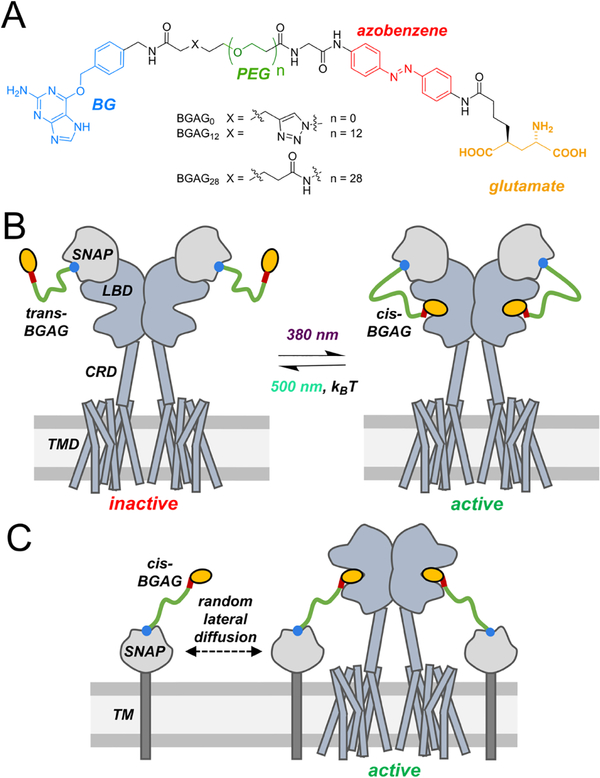
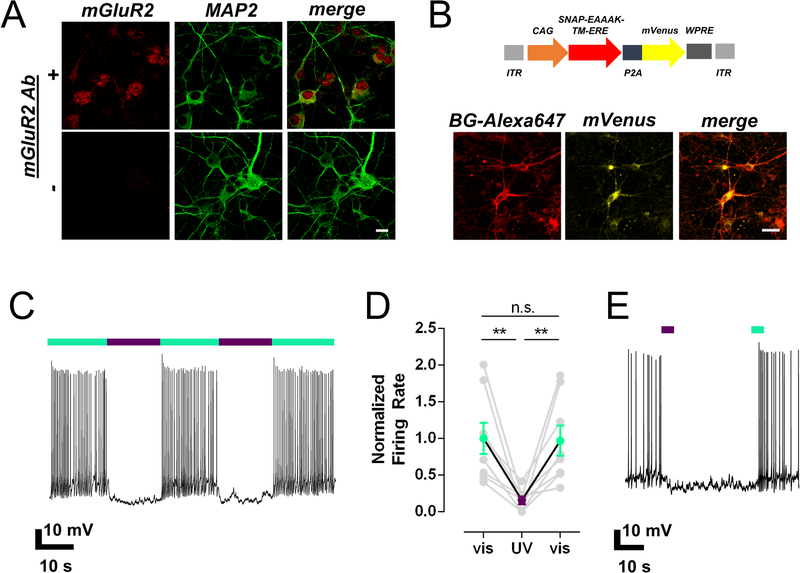
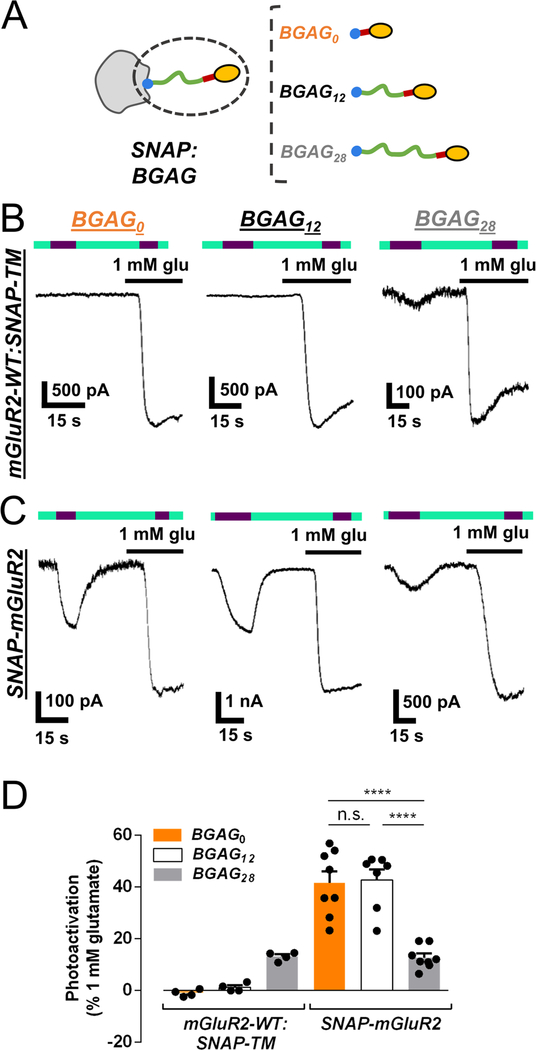
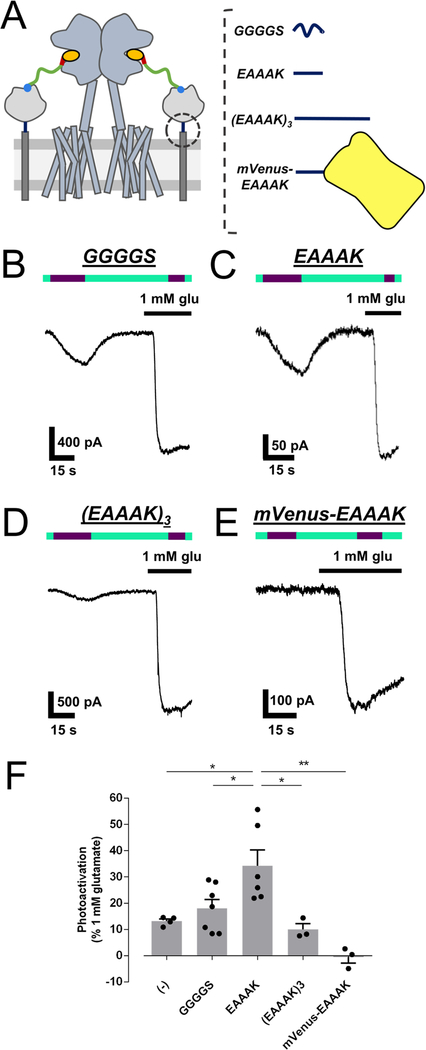
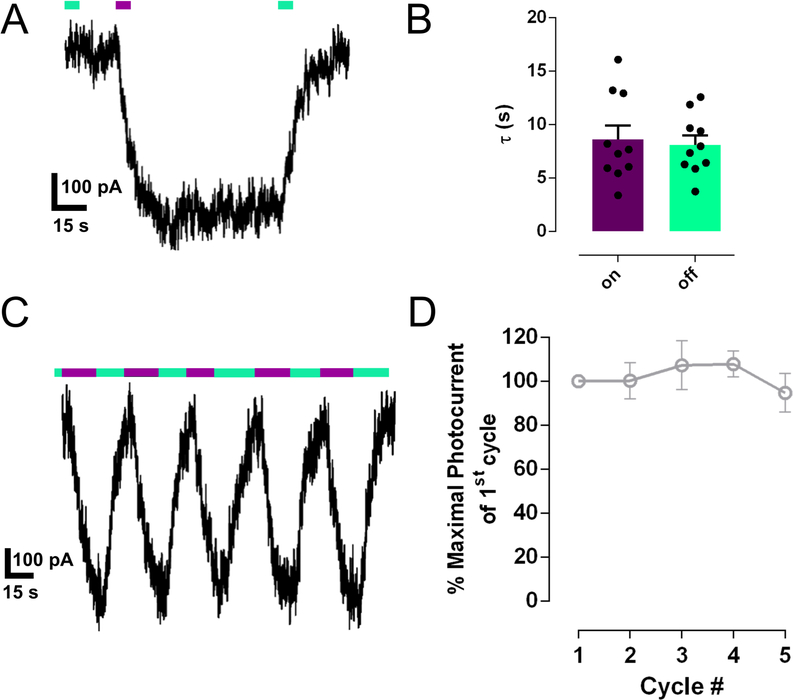
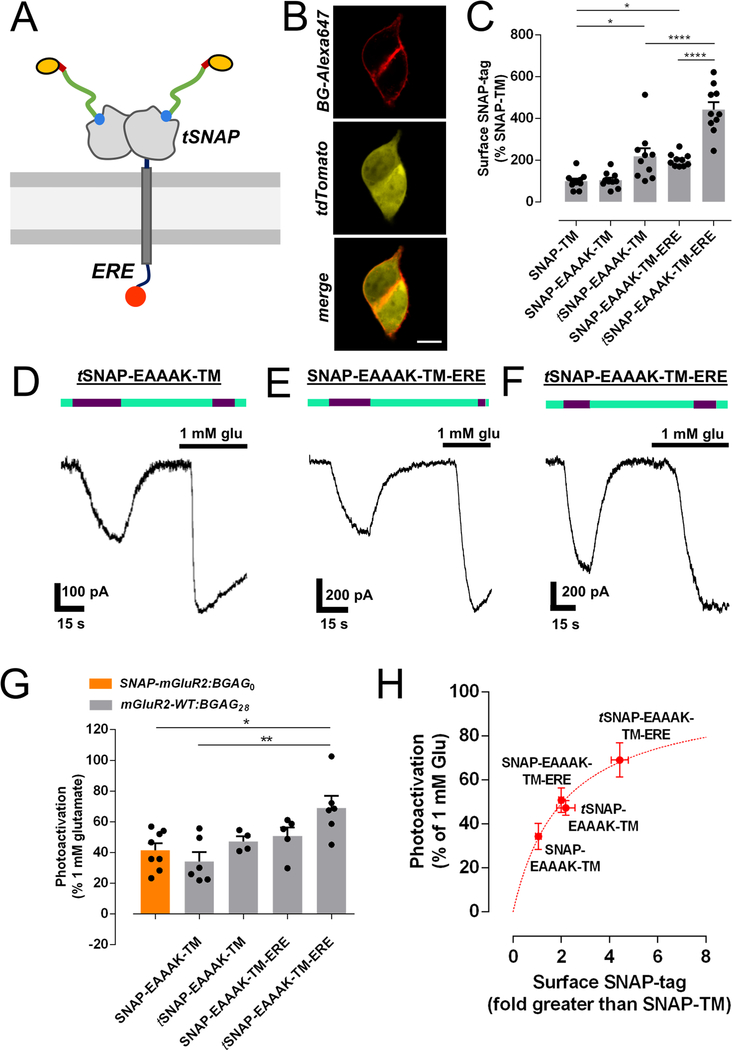
G protein-coupled receptors (GPCRs) are membrane proteins that play important roles in biology. However, our understanding of their function in complex living systems is limited because we lack tools that can target individual receptors with sufficient precision. State-of-the-art approaches, including DREADDs, optoXRs, and PORTL gated-receptors, control GPCR signaling with molecular, cell type, and temporal specificity. Nonetheless, these tools are based on engineered non-native proteins that may (i) express at nonphysiological levels, (ii) localize and turnover incorrectly, and/or (iii) fail to interact with endogenous partners. Alternatively, membrane-anchored ligands (t-toxins, DARTs) target endogenous receptors with molecular and cell type specificity but cannot be turned on and off. In this study, we used a combination of chemistry, biology, and light to control endogenous metabotropic glutamate receptor 2 (mGluR2), a Family C GPCR, in primary cortical neurons. mGluR2 was rapidly, reversibly, and selectively activated with photoswitchable glutamate tethered to a genetically targeted-plasma membrane anchor (embrane nchored hotoswitchable rthogonal emotely ethered igand; maPORTL). Photoactivation was tuned by adjusting the length of the PORTL as well as the expression level and geometry of the membrane anchor. Our findings provide a template for controlling endogenous GPCRs with cell type specificity and high spatiotemporal precision.
G 蛋白偶联受体 (GPCRs) 是一种在生物学中发挥重要作用的膜蛋白。然而,由于我们缺乏能够以足够精度靶向单个受体的工具,因此我们对它们在复杂生命系统中的功能的理解是有限的。最先进的方法,包括 DREADDs、optogenetics 和 PORTL 门控受体,以分子、细胞类型和时间特异性来控制 GPCR 信号。尽管如此,这些工具都是基于工程化的非天然蛋白,可能存在以下问题:(i) 表达水平非生理,(ii) 定位和周转不正确,和/或 (iii) 无法与内源性伴侣相互作用。或者,膜锚定配体(如 t-毒素、DARTs)以分子和细胞类型特异性靶向内源性受体,但无法开启和关闭。在这项研究中,我们使用化学、生物学和光的组合来控制原代皮质神经元中的内源性代谢型谷氨酸受体 2 (mGluR2),这是一种 C 族 GPCR。通过将光可切换谷氨酸连接到基因靶向的质膜锚定物(膜锚定光可切换正交远程偶联配体;maPORTL)上,mGluR2 可快速、可逆和选择性地被激活。通过调整 PORTL 的长度以及膜锚定物的表达水平和几何形状来调节光激活。我们的发现为具有细胞类型特异性和高时空精度的内源性 GPCR 控制提供了模板。