Laboratory of Molecular Microbiology, National Institute of Allergy and Infectious Diseases, Bethesda, Maryland, United States of America.
PLoS One. 2019 Jul 10;14(7):e0219576. doi: 10.1371/journal.pone.0219576. eCollection 2019.
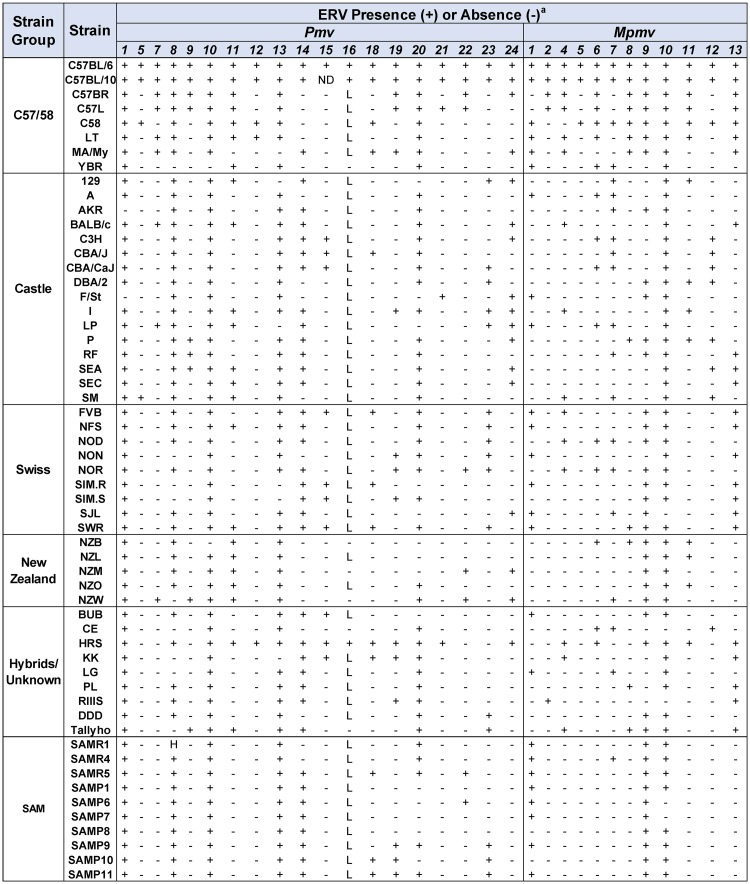
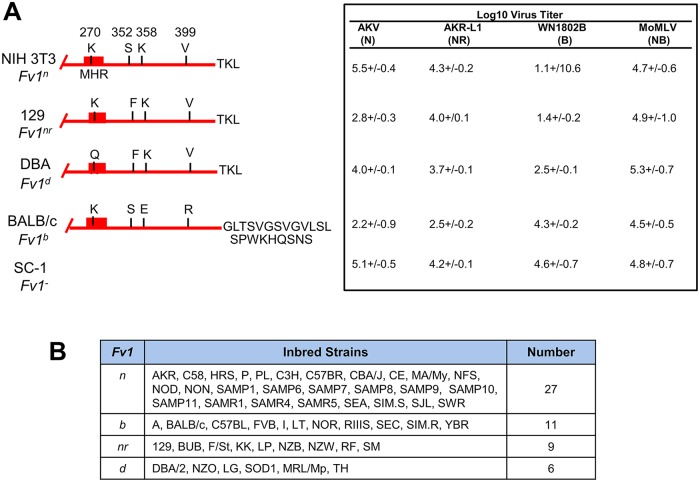
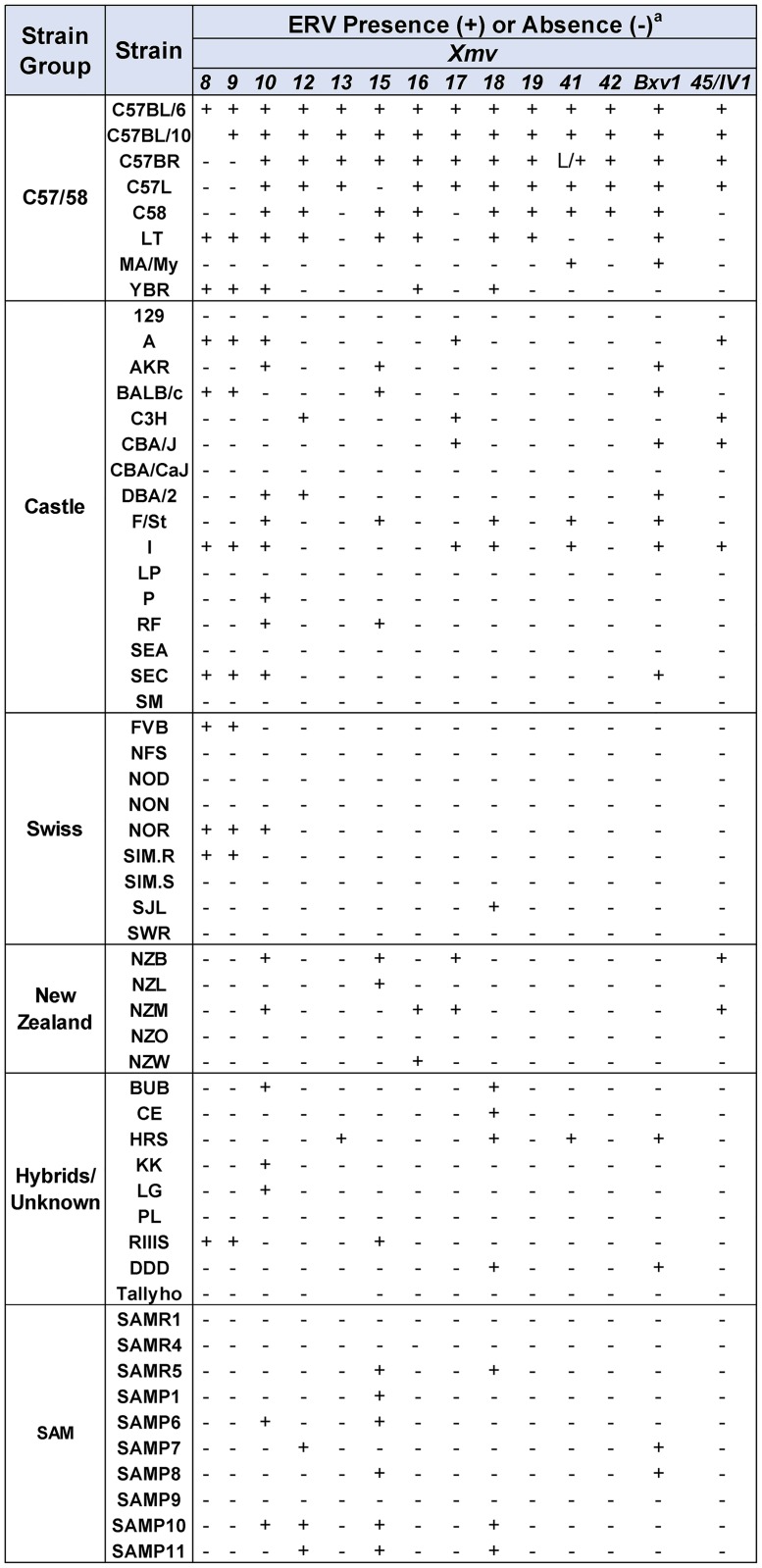
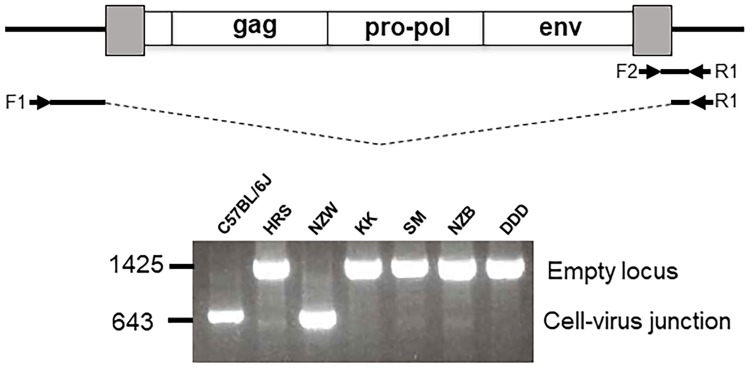
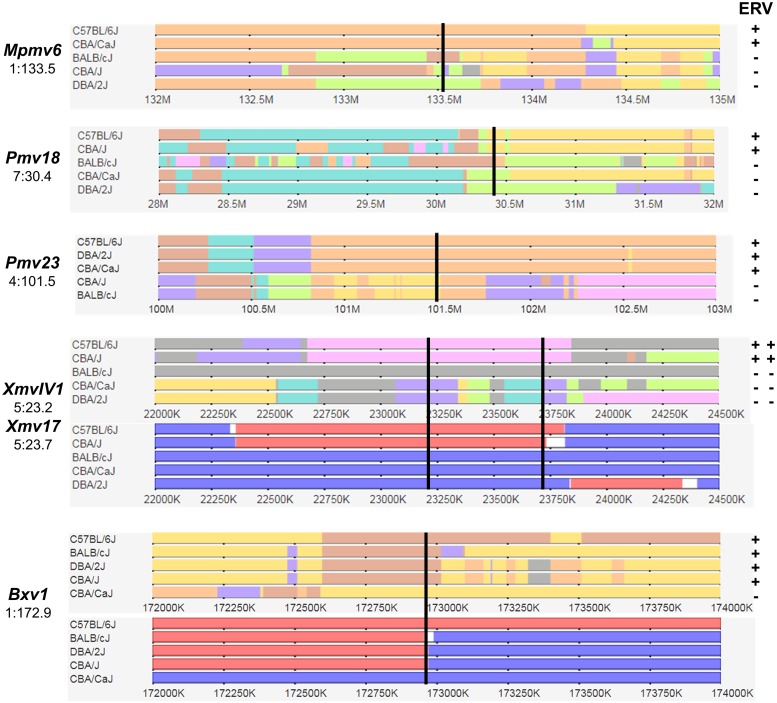
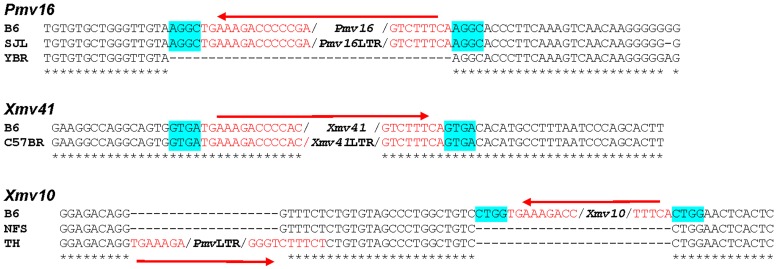
Inbred laboratory mouse strains carry endogenous retroviruses (ERVs) classed as ecotropic, xenotropic or polytropic mouse leukemia viruses (E-, X- or P-MLVs). Some of these MLV ERVs produce infectious virus and/or contribute to the generation of intersubgroup recombinants. Analyses of selected mouse strains have linked the appearance of MLVs and virus-induced disease to the strain complement of MLV E-ERVs and to host genes that restrict MLVs, particularly Fv1. Here we screened inbred strain DNAs and genome assemblies to describe the distribution patterns of 45 MLV ERVs and Fv1 alleles in 58 classical inbred strains grouped in two ways: by common ancestry to describe ERV inheritance patterns, and by incidence of MLV-associated lymphomagenesis. Each strain carries a unique set of ERVs, and individual ERVs are present in 5-96% of the strains, often showing lineage-specific distributions. Two ERVs are alternatively present as full-length proviruses or solo long terminal repeats. High disease incidence strains carry the permissive Fv1n allele, tested strains have highly expressed E-ERVs and most have the Bxv1 X-ERV; these three features are not present together in any low-moderate disease strain. The P-ERVs previously implicated in P-MLV generation are not preferentially found in high leukemia strains, but the three Fv1 alleles that restrict inbred strain E-MLVs are found only in low-moderate leukemia strains. This dataset helps define the genetic basis of strain differences in spontaneous lymphomagenesis, describes the distribution of MLV ERVs in strains with shared ancestry, and should help annotate sequenced strain genomes for these insertionally polymorphic and functionally important proviruses.
近交系实验小鼠携带内源性逆转录病毒(ERVs),分为嗜性、异嗜性或多嗜性小鼠白血病病毒(E-、X-或 P-MLVs)。其中一些 MLV ERV 产生感染性病毒并/或有助于产生亚群重组体。对选定的小鼠品系的分析将 MLV 的出现和病毒诱导的疾病与 MLV E-ERV 的品系组成以及限制 MLV 的宿主基因(特别是 Fv1)联系起来。在这里,我们筛选了近交系 DNA 和基因组组装,以描述 45 种 MLV ERV 和 Fv1 等位基因在 58 种经典近交系中的分布模式,这些近交系分为两种方式:按共同祖先描述 ERV 遗传模式,按 MLV 相关淋巴瘤发生的发生率描述。每个品系携带一套独特的 ERV,单个 ERV 存在于 5-96%的品系中,通常表现出谱系特异性分布。两种 ERV 以全长前病毒或单独的长末端重复存在。高疾病发生率的品系携带允许的 Fv1n 等位基因,经过测试的品系具有高度表达的 E-ERVs,并且大多数具有 Bxv1 X-ERV;这三个特征在任何低中度疾病品系中都不会同时存在。先前与 P-MLV 生成相关的 P-ERV 并未优先出现在高白血病品系中,但限制近交系 E-MLV 的三个 Fv1 等位基因仅出现在低中度白血病品系中。该数据集有助于定义自发淋巴瘤发生中品系差异的遗传基础,描述了具有共同祖先的品系中 MLV ERV 的分布,并应有助于注释这些插入多态性和功能重要的前病毒的测序品系基因组。