Plant Biotechnology Division, CSIR- Indian Institute of Integrative Medicine, Canal Road, Jammu Tawi, 180001, India.
Department of Botany, University of Jammu, Jammu Tawi, 180006, India.
BMC Plant Biol. 2019 Jul 10;19(1):301. doi: 10.1186/s12870-019-1912-x.
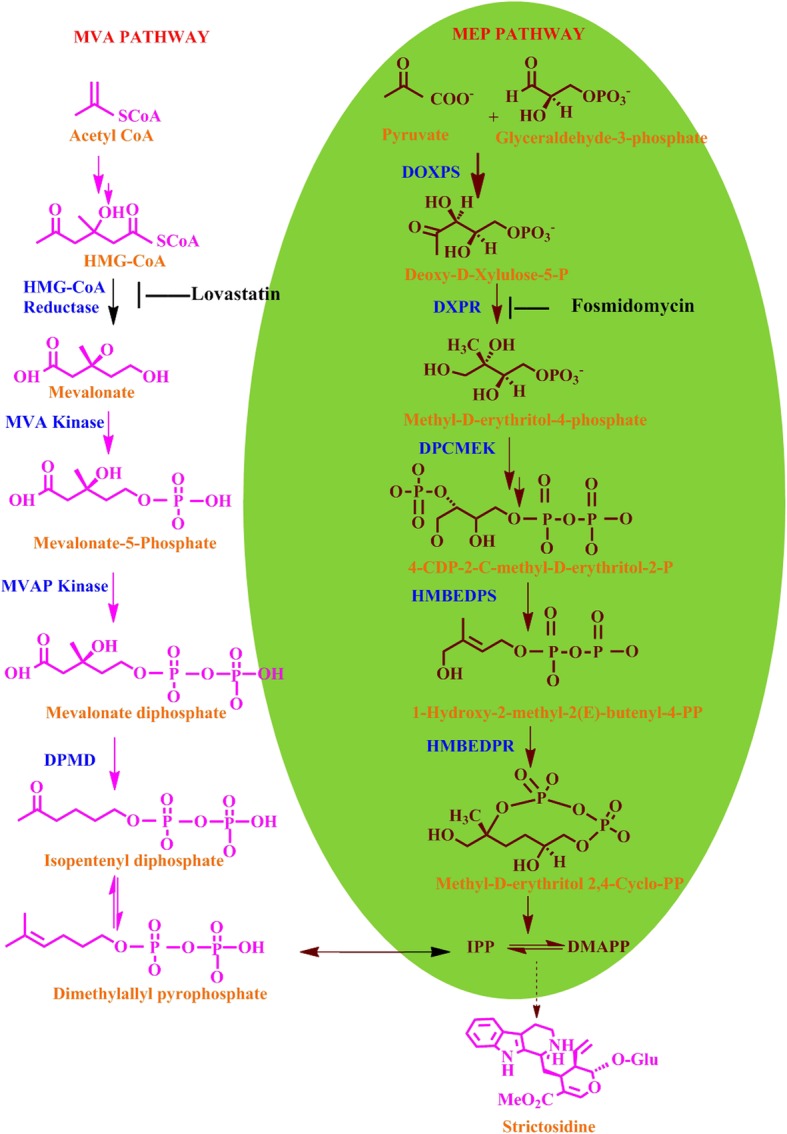
Nothapodytes nimmoniana, a plant of pivotal medicinal significance is a source of potent anticancer monoterpene indole alkaloid (MIA) camptothecin (CPT). This compound owes its potency due to topoisomerase-I inhibitory activity. However, biosynthetic and regulatory aspects of CPT biosynthesis so far remain elusive. Production of CPT is also constrained due to unavailability of suitable in vitro experimental system. Contextually, there are two routes for the biosynthesis of MIAs: the mevalonate (MVA) pathway operating in cytosol and the methylerythritol phosphate (MEP) pathway in the plastids. Determination of relative precursor flux through either of these pathways may provide a new vista for manipulating the enhanced CPT production.
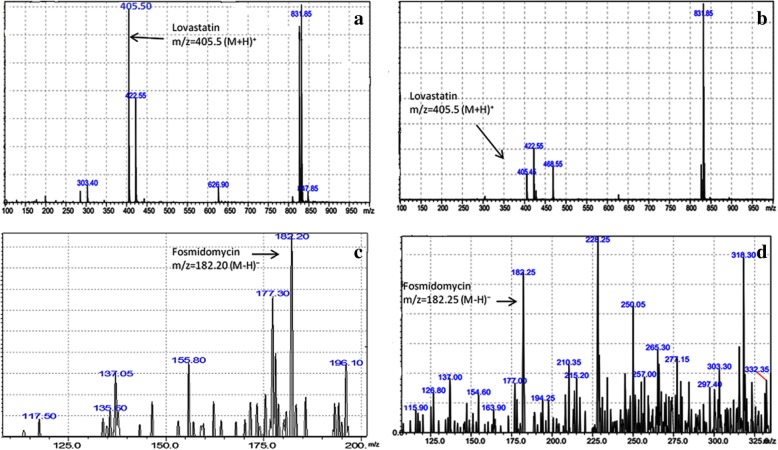
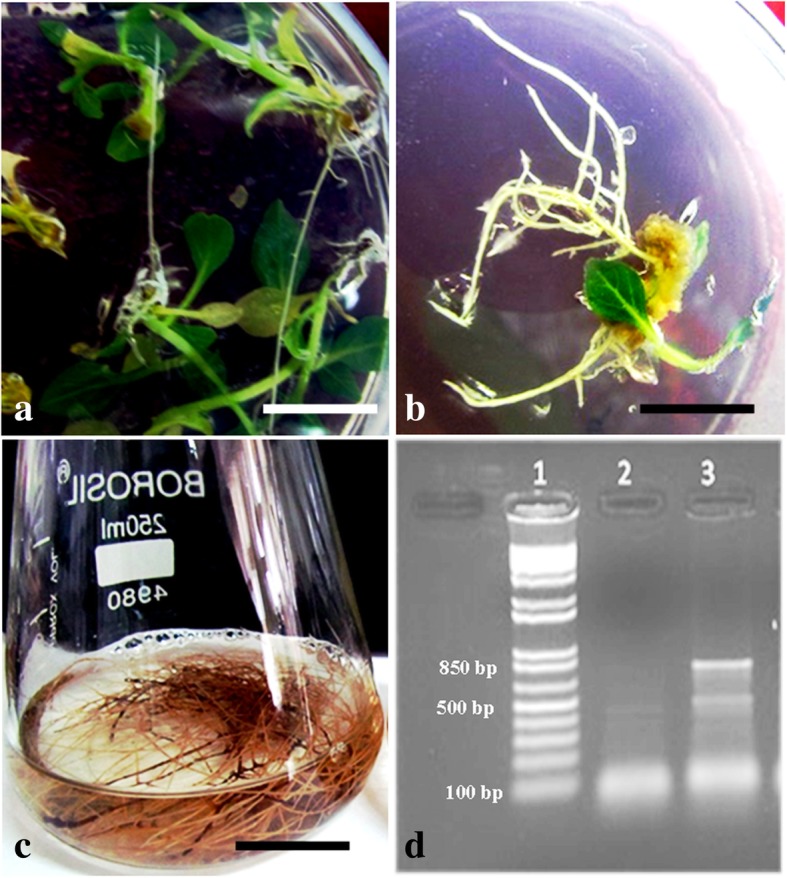
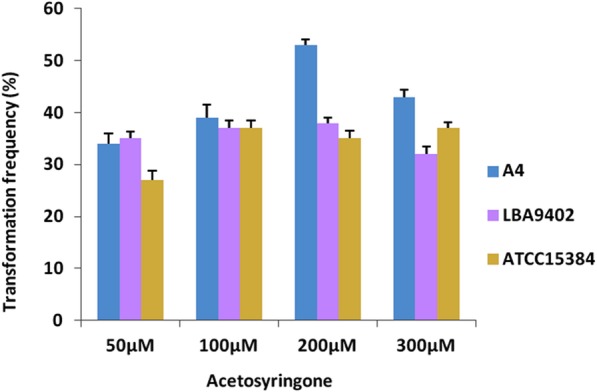
In present study, specific enzyme inhibitors of MVA (lovastatin) and MEP pathways (fosmidomycin) were used to perturb the metabolic flux in N. nimmoniana. Interaction of both these pathways was investigated at transcriptional level by using qRT-PCR and at metabolite level by evaluating secologanin, tryptamine and CPT contents. In fosmidomycin treated plants, highly significant reduction was observed in both secologanin and CPT accumulation in the range 40-57% and 64-71.5% respectively, while 4.61-7.69% increase was observed in tryptamine content as compared to control. Lovastatin treatment showed reduction in CPT (7-11%) and secologanin (7.5%) accumulation while tryptamine registered slight increase (3.84%) in comparison to control. These inhibitor mediated changes were reflected at transcriptional level via altering expression levels of deoxy-xylulose-5-phosphate reductoisomerase (DXR) and hydroxymethylglutaryl-CoA reductase (HMG). Further, mRNA expression of four more genes downstream to DXR and HMG of MEP and MVA pathways respectively were also investigated. Expression analysis also included secologanin synthase (SLS) and strictosidine synthase (STR) of seco-iridoid pathway. Present investigation also entailed development of an efficient in vitro multiplication system as a precursor to pathway flux studies. Further, a robust Agrobacterium-mediated transformed hairy root protocol was also developed for its amenability for up-scaling as a future prospect.
Metabolic and transcriptional changes reveal differential efficacy of cytosolic and plastidial inhibitors in context to pathway flux perturbations on seco-iridoid end-product camptothecin. MEP pathway plausibly is the major precursor contributor towards CPT production. These empirical findings allude towards developing suitable biotechnological interventions for enhanced CPT production.
异叶南洋杉是一种具有重要药用价值的植物,是一种强效抗癌单萜吲哚生物碱(MIA)喜树碱(CPT)的来源。这种化合物之所以具有强大的功效,是因为它具有拓扑异构酶-I 抑制活性。然而,CPT 生物合成的生物合成和调节方面迄今为止仍然难以捉摸。由于缺乏合适的体外实验系统,CPT 的生产也受到限制。从上下文来看,MIA 的生物合成有两条途径:在细胞质中运行的甲羟戊酸(MVA)途径和在质体中运行的甲基赤藓醇磷酸(MEP)途径。通过这些途径中的任何一种途径确定相对前体通量,可能为操纵增强的 CPT 生产提供新的视角。
在本研究中,使用 MVA(洛伐他汀)和 MEP 途径(福米地霉素)的特异性酶抑制剂来扰乱异叶南洋杉的代谢通量。通过 qRT-PCR 在转录水平和通过评估苦马豆素、色胺和 CPT 含量在代谢物水平上研究了这两种途径的相互作用。在福米地霉素处理的植物中,苦马豆素和 CPT 的积累分别观察到 40-57%和 64-71.5%的极显著降低,而色胺含量与对照相比增加了 7.69%。洛伐他汀处理显示 CPT(7-11%)和苦马豆素(7.5%)积累减少,而色胺与对照相比略有增加(3.84%)。这些抑制剂介导的变化通过改变 MEP 和 MVA 途径下游的脱氧木酮糖-5-磷酸还原异构酶(DXR)和羟甲基戊二酰辅酶 A 还原酶(HMG)的表达水平在转录水平上得到反映。此外,还研究了 MEP 和 MVA 途径中 DXR 和 HMG 下游的另外四个基因的 mRNA 表达。表达分析还包括裂环马钱素途径中的裂环马钱素合酶(SLS)和斯克里托辛合酶(STR)。本研究还涉及开发一种有效的体外繁殖系统,作为途径通量研究的前体。此外,还开发了一种稳健的农杆菌介导的转化毛状根方案,以便将来进行扩大规模作为未来的前景。
代谢和转录变化揭示了胞质和质体抑制剂在影响裂环马钱素末端产物喜树碱(CPT)的途径通量方面的不同效果。MEP 途径可能是 CPT 生产的主要前体贡献者。这些经验发现暗示着开发合适的生物技术干预措施以提高 CPT 产量。