Kawarada Osami, Hozawa Koji, Zen Kan, Huang Hsuan-Li, Kim Su Hong, Choi Donghoon, Park Kihyuk, Kato Kenichi, Kato Taku, Tsubakimoto Yoshinori, Ichihashi Shigeo, Fujimura Naoki, Higashimori Akihiro, Sato Tomoyasu, Yan Bryan Ping-Yen, Pang Skyi Yin-Chun, Wongwanit Chumpol, Leong Yew Pung, Chua Benjamin, George Robbie K, Chen I-Chih, Lee Jen-Kuang, Hsu Chung-Ho, Pua Uei, Iwata Yo, Miki Kojiro, Okada Kozo, Obara Hideaki
Department of Cardiovascular Medicine, Ikuwakai Memorial Hospital, 3-20-29 Tatsumikita, Ikunoku, Osaka, Osaka, 544-0004, Japan.
Department of Cardiology, New Tokyo Hospital, Matsudo, Japan.
Cardiovasc Interv Ther. 2020 Jan;35(1):52-61. doi: 10.1007/s12928-019-00602-z. Epub 2019 Jul 11.
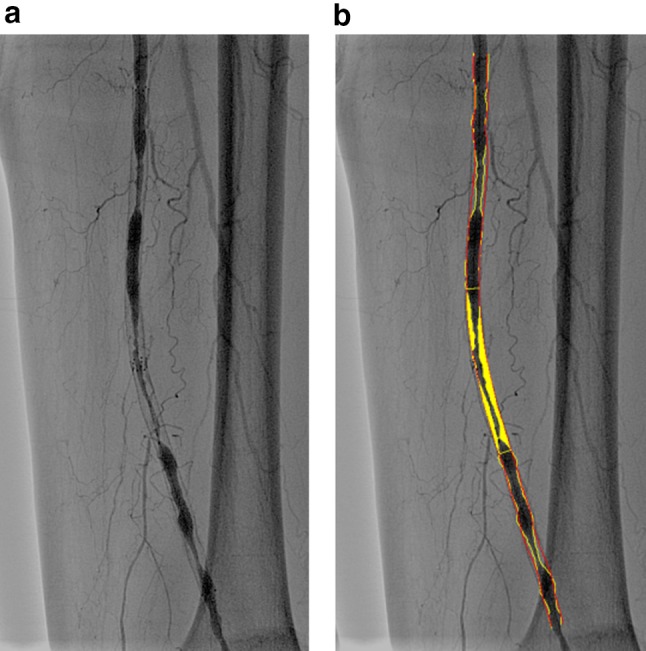
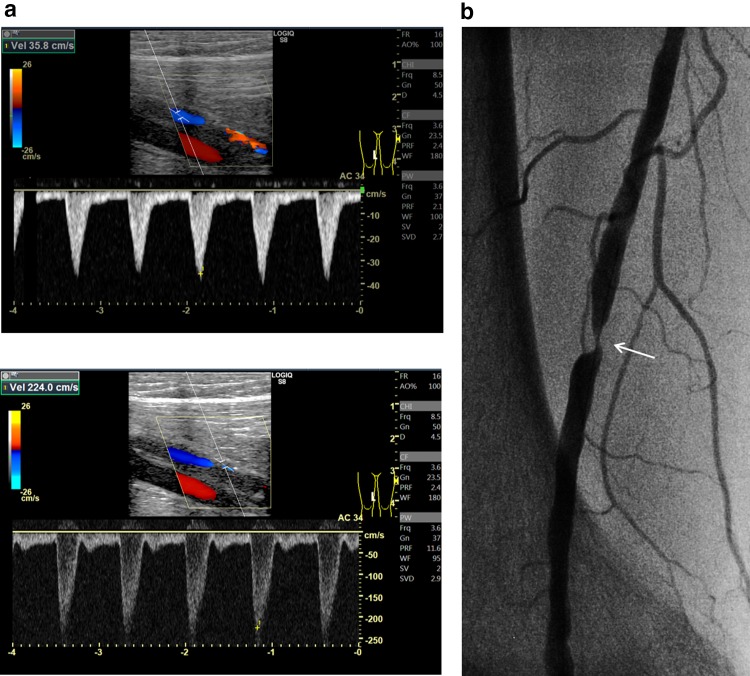
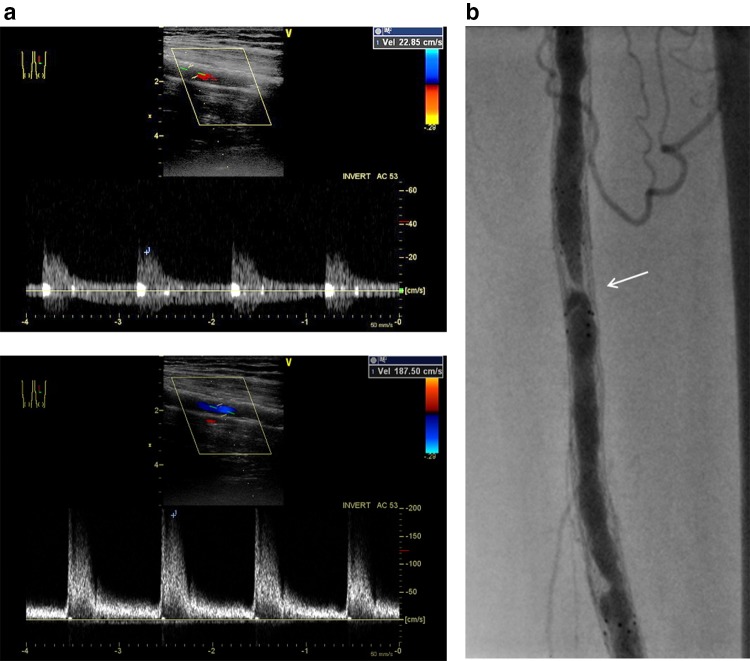
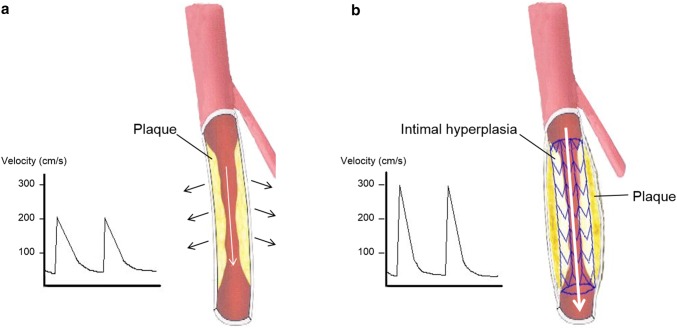
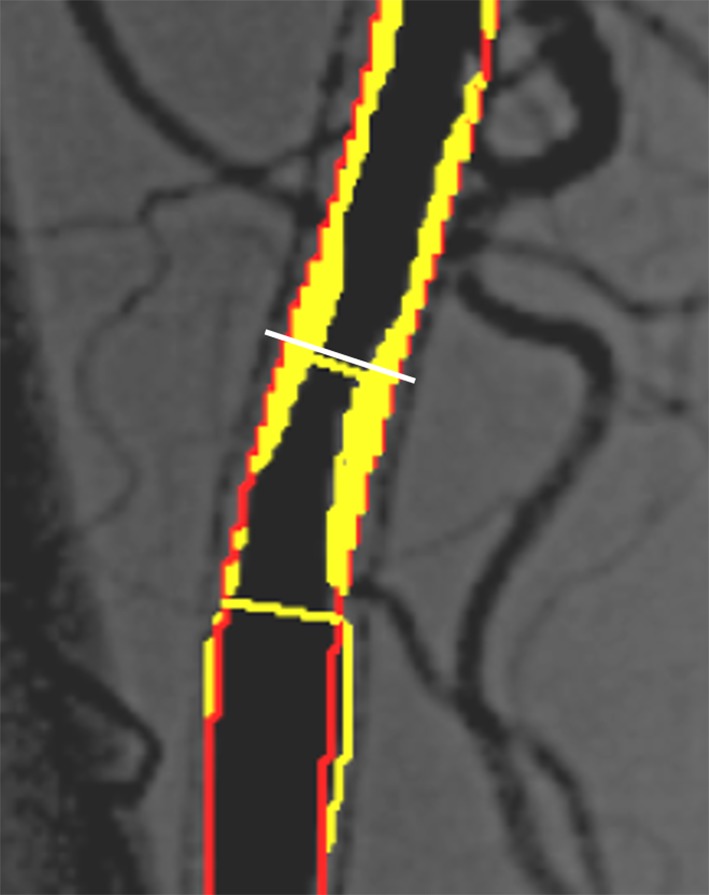
With technological improvements in the endovascular armamentarium, there have been tremendous advances in catheter-based femoropopliteal artery intervention during the last decade. However, standardization of the methodology for assessing outcomes has been underappreciated, and unvalidated peak systolic velocity ratios (PSVRs) of 2.0, 2.4, and 2.5 on duplex ultrasonography have been arbitrarily but routinely used for assessing restenosis. Quantitative vessel analysis (QVA) is a widely accepted method to identify restenosis in a broad spectrum of cardiovascular interventions, and PSVR needs to be validated by QVA. This multidisciplinary review is intended to disseminate the importance of QVA and a validated PSVR based on QVA for binary restenosis in contemporary femoropopliteal intervention.
随着血管内治疗器械的技术进步,在过去十年中,基于导管的股腘动脉介入治疗取得了巨大进展。然而,评估结果的方法标准化一直未得到充分重视,在双功超声检查中,收缩期峰值流速比(PSVR)为2.0、2.4和2.5这几个未经验证的数值被随意但常规地用于评估再狭窄。定量血管分析(QVA)是一种在广泛的心血管介入治疗中被广泛接受的识别再狭窄的方法,PSVR需要通过QVA进行验证。这篇多学科综述旨在传播QVA以及基于QVA的用于当代股腘动脉介入治疗中二元再狭窄的经过验证的PSVR的重要性。