Department of Clinical Medicine, School of Medicine, Trinity College Dublin, Dublin, Ireland.
Trinity College Institute of Neuroscience, Trinity College Dublin, Dublin, Ireland.
Front Immunol. 2019 Jun 25;10:1426. doi: 10.3389/fimmu.2019.01426. eCollection 2019.
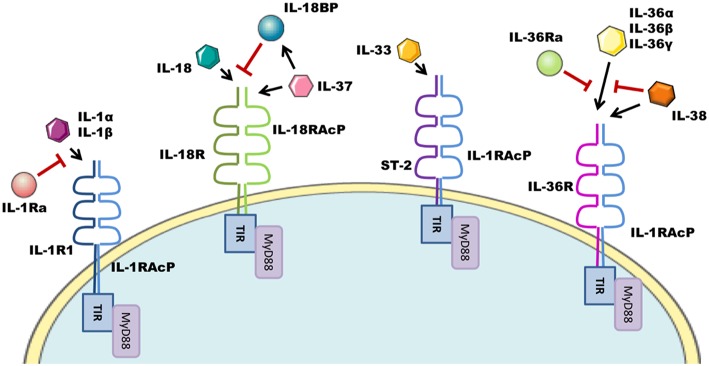
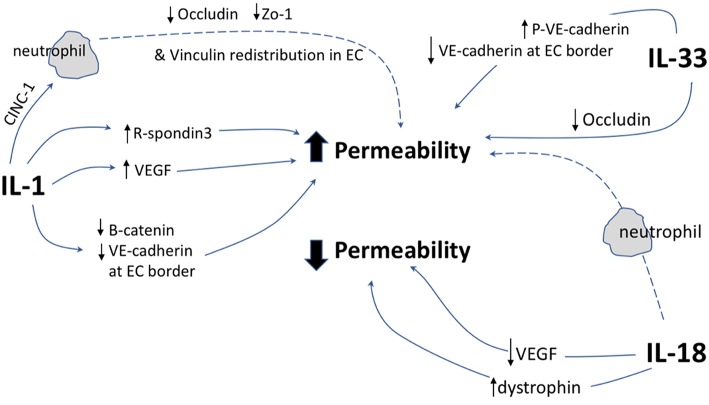
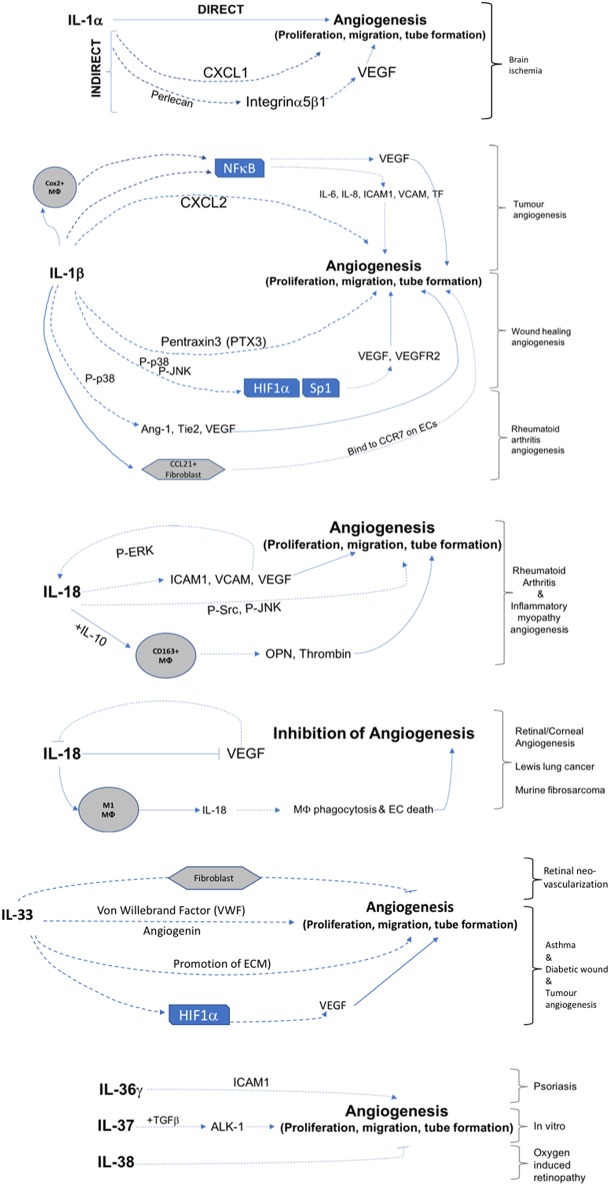
The IL-1 family of cytokines are well-known for their primary role in initiating inflammatory responses both in response to and acting as danger signals. It has long been established that IL-1 is capable of simultaneously regulating inflammation and angiogenesis, indeed one of IL-1's earliest names was haemopoeitn-1 due to its pro-angiogenic effects. Other IL-1 family cytokines are also known to have roles in mediating angiogenesis, either directly or indirectly via induction of proangiogenic factors such as VEGF. Of note, some of these family members appear to have directly opposing effects in different tissues and pathologies. Here we will review what is known about how the various IL-1 family members regulate vascular permeability and angiogenic function in a range of different tissues, and describe some of the mechanisms employed to achieve these effects.
白细胞介素-1(IL-1)家族细胞因子以其在炎症反应中的主要作用而闻名,无论是在对炎症反应的响应中还是作为危险信号发挥作用。长期以来,人们已经确立了白细胞介素-1(IL-1)能够同时调节炎症和血管生成的功能,事实上,IL-1 最早的名称之一是造血细胞生成素-1,因为它具有促血管生成的作用。其他白细胞介素-1 家族细胞因子也被认为在介导血管生成中具有作用,无论是通过直接作用还是通过诱导血管内皮生长因子(VEGF)等促血管生成因子间接作用。值得注意的是,在不同的组织和病理条件下,这些家族成员中的一些似乎具有直接相反的作用。在这里,我们将回顾一下各种白细胞介素-1 家族成员如何调节多种不同组织中的血管通透性和血管生成功能,并描述一些用于实现这些效应的机制。