Zhu Liang-Fei, Ma Peng, Hu Yi-Lin, Feng Ying, Li Peng, Wang Hua, Guo Yi-Bing, Mao Qin-Sheng, Xue Wan-Jiang
Department of Gastrointestinal Surgery , Nantong University Affiliated Hospital, Nantong 226001, Jiangsu, China.
Research Center of Clinical Medicine, Nantong University Affiliated Hospital, Nantong 226001, Jiangsu, China.
J Cancer. 2019 Jun 9;10(15):3533-3542. doi: 10.7150/jca.22462. eCollection 2019.
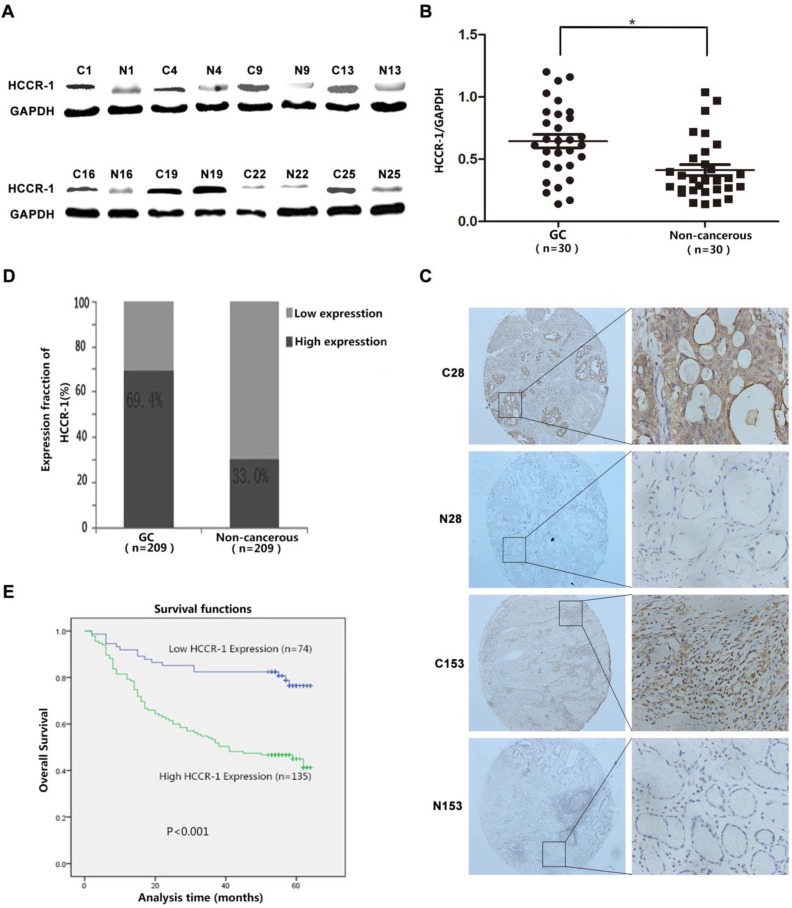
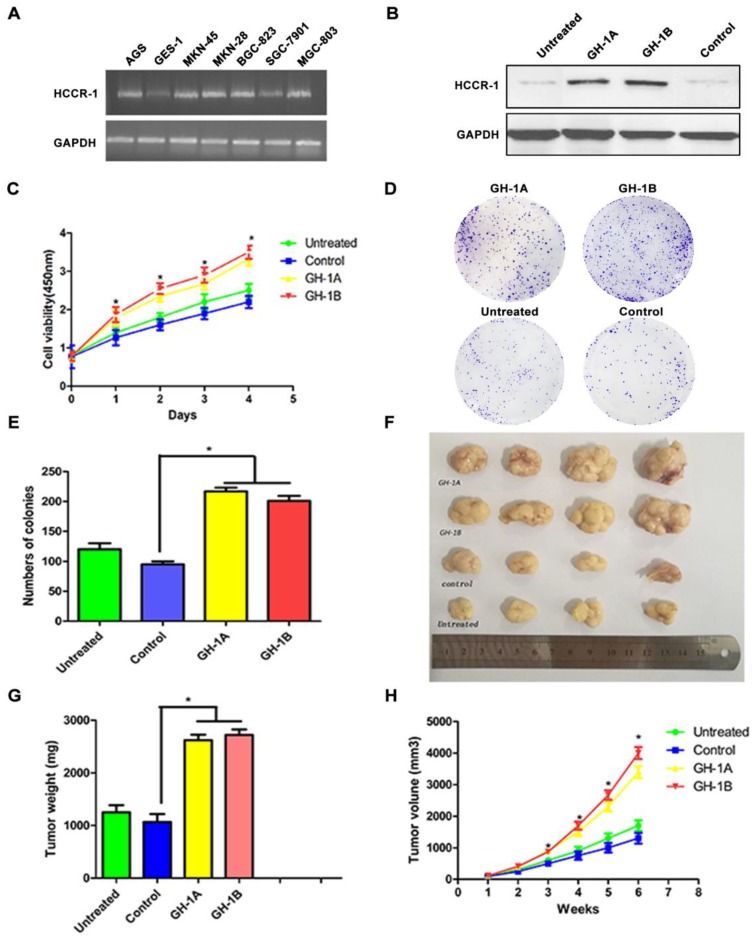
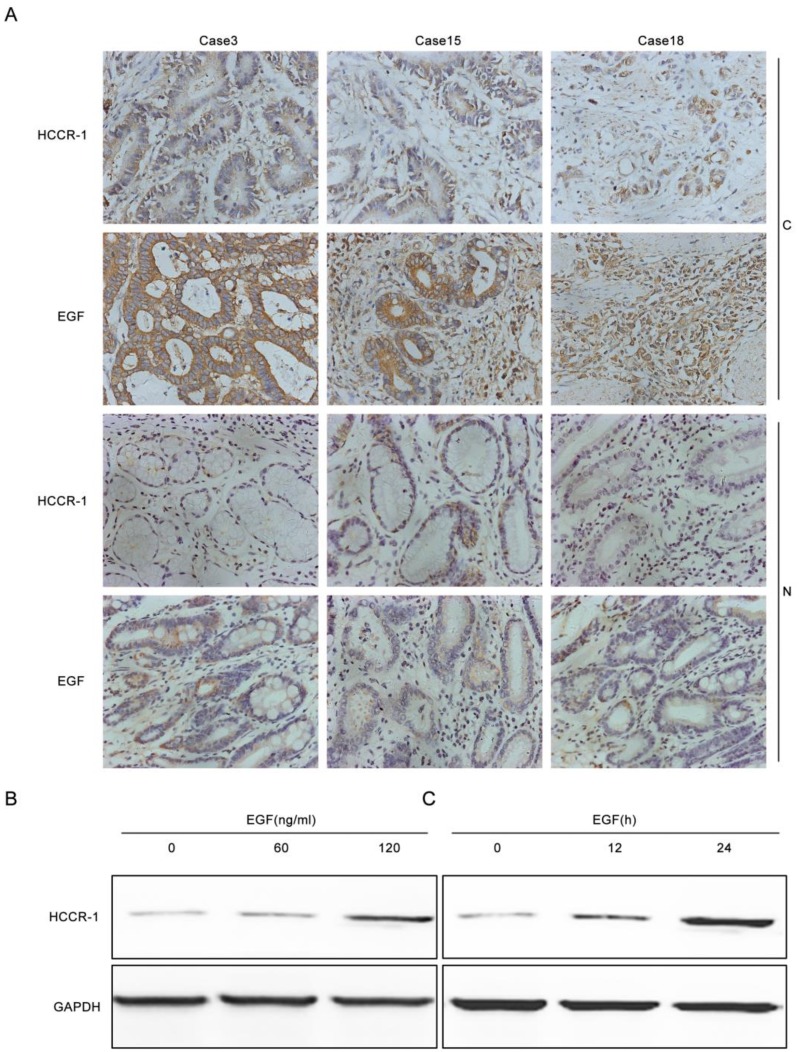
The role of the human cervical cancer oncogene () in the development of various tumors has been elucidated; however, its expression and function in gastric cancer remains largely unknown. Accordingly, the expression of HCCR-1 and epidermal growth factor (EGF) were detected in paired gastric cancer tissues and cell lines by western blotting (WB) and immunohistochemistry (IHC). Furthermore, the correlations between HCCR-1 expression in 209 gastric cancer tissues and the clinicopathological features and disease prognosis were analyzed. A stable HCCR-1 overexpression cell line was established, and the influence of increased HCCR-1 expression on the growth of gastric cancer cells was observed and . The expression of HCCR-1 generally increased in gastric cancer tissues. Further, increased HCCR-1 expression in gastric cancer tissues was associated with tumor T stage and was an independent factor that influenced poor postoperative prognosis in gastric cancer patients. A positive correlation was also detected between the expression of EGF and HCCR-1 in a time- and dose-dependent manner. The overexpression of HCCR-1 might enhance the growth rate of gastric cancer cells , increase the number of colony forming units, and promote the growth, volume, and weight of subcutaneous tumors in nude mice. In conclusion, is a gastric cancer oncogene, and its increased expression plays a critical role in the occurrence and development of gastric cancer. Hence, HCCR-1 could serve as a valuable marker for the postoperative prognostic assessment of gastric cancer patients.
人类宫颈癌致癌基因()在各种肿瘤发生发展中的作用已得到阐明;然而,其在胃癌中的表达及功能仍 largely 未知。因此,通过蛋白质印迹法(WB)和免疫组织化学(IHC)检测配对的胃癌组织和细胞系中HCCR-1和表皮生长因子(EGF)的表达。此外,分析了209例胃癌组织中HCCR-1表达与临床病理特征及疾病预后之间的相关性。建立了稳定的HCCR-1过表达细胞系,并观察了HCCR-1表达增加对胃癌细胞生长的影响以及。HCCR-1在胃癌组织中的表达普遍升高。此外,胃癌组织中HCCR-1表达增加与肿瘤T分期相关,且是影响胃癌患者术后预后不良的独立因素。还检测到EGF和HCCR-1的表达呈时间和剂量依赖性正相关。HCCR-1的过表达可能提高胃癌细胞的生长速率,增加集落形成单位数量,并促进裸鼠皮下肿瘤的生长、体积和重量。总之,是一种胃癌致癌基因,其表达增加在胃癌的发生发展中起关键作用。因此,HCCR-1可作为胃癌患者术后预后评估的有价值标志物。