Department of Ultrasound, Jiangyuan Hospital Affiliated to Jiangsu Institute of Nuclear Medicine (Key Laboratory of Nuclear Medicine, Ministry of Health/Jiangsu Key Laboratory of Molecular Nuclear Medicine), Wuxi, Jiangsu, China.
Clinical Molecular Biology Laboratory, Jiangyuan Hospital Affiliated to Jiangsu Institute of Nuclear Medicine (Key Laboratory of Nuclear Medicine, Ministry of Health/Jiangsu Key Laboratory of Molecular Nuclear Medicine), Wuxi, Jiangsu, China.
PLoS One. 2019 Jul 11;14(7):e0219383. doi: 10.1371/journal.pone.0219383. eCollection 2019.
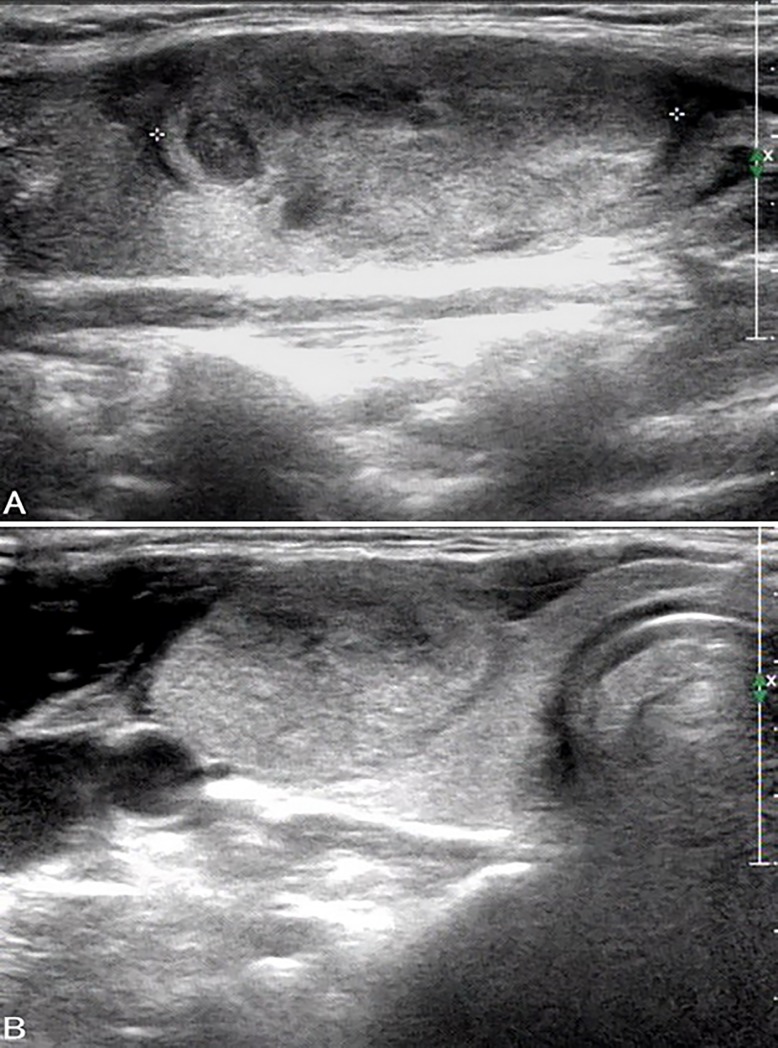
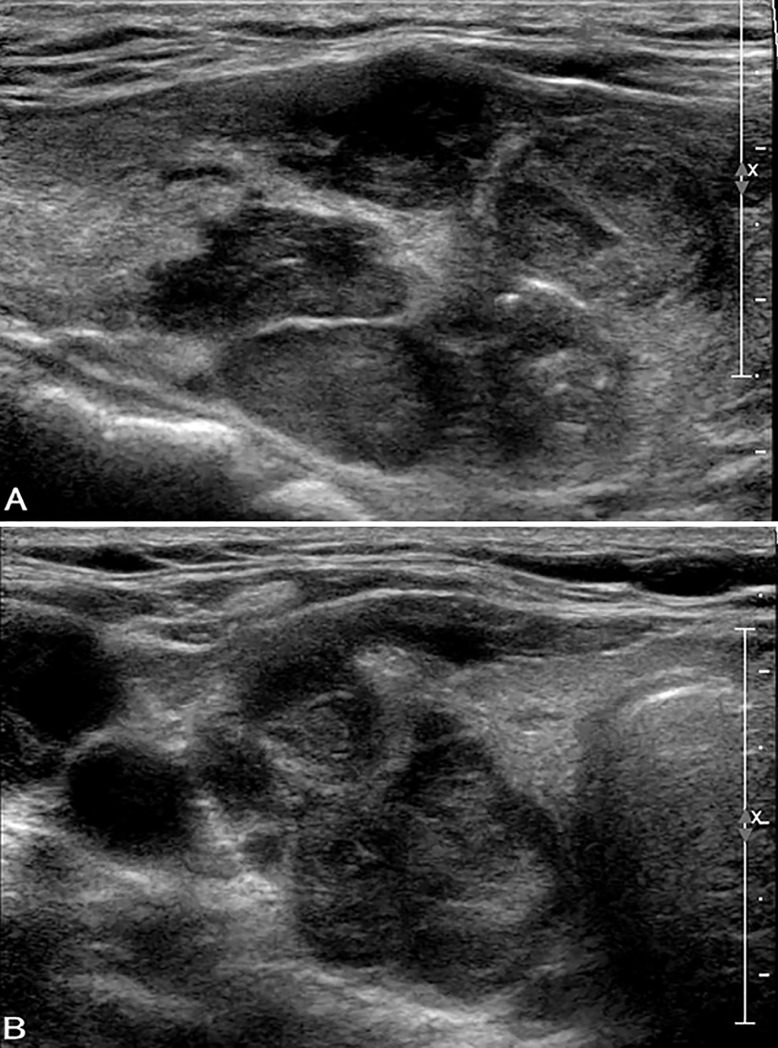
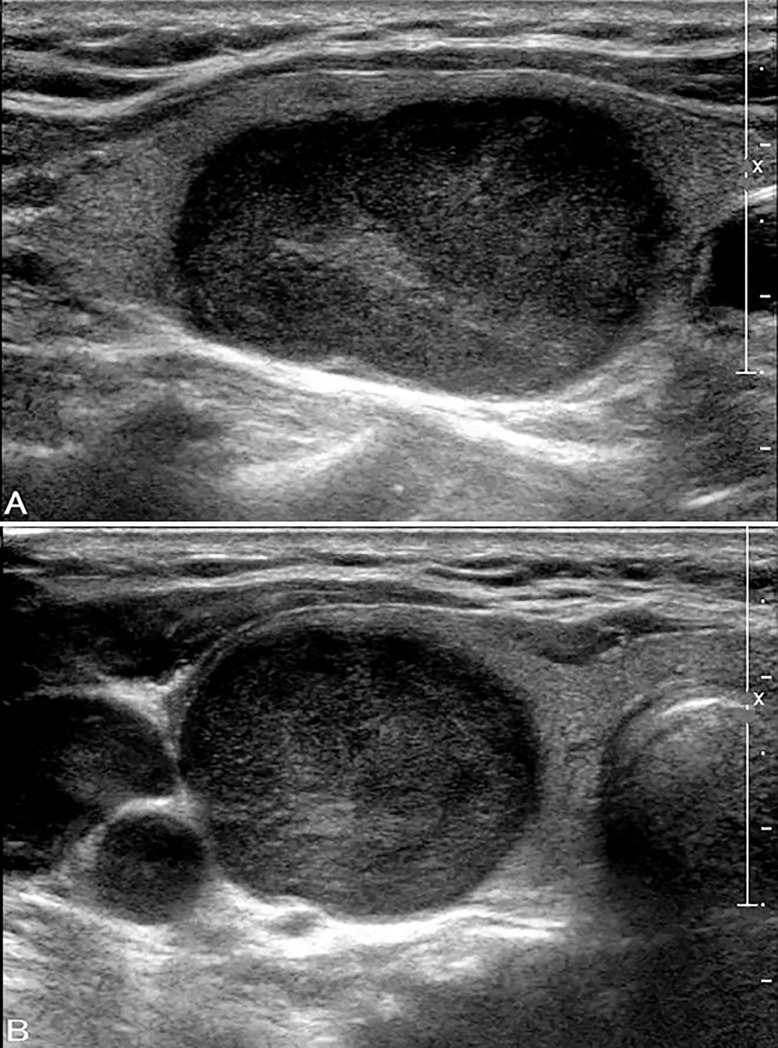
We investigated whether use of American College of Radiology thyroid imaging report and data system (ACR TIRADS) in combination with K-RAS mutation status may facilitate risk stratification of patients with cytological Bethesda Category III and IV thyroid nodules. Ultrasonographic, cytological, and histopathological diagnoses were retrospectively correlated with K-RAS mutation status in a series of 43 cytologically indeterminate thyroid nodules (CITNs) that were referred for surgical excision. K-RAS mutations were detected in 8/43 (18.6%) fine-needle aspiration (FNA) samples as against 11/43 (25.6%) surgical specimens. ACR TIRADS level (TR) TR3 lesions had a malignancy risk of 40%; the K-RAS mutation rate in FNA samples and surgical specimens of category TR3 lesions was 40% and 60%, respectively. K-RAS mutation-positive malignancy was significantly more frequently detected in follicular neoplasm/suspicious for follicular neoplasm (FN/SFN) lesions than that in atypia or follicular lesion of undetermined significance (AUS/FLUS) (P<0.01). Combined use of ACR TIRADS (TR5 as the diagnostic threshold) and K-RAS mutation status helped identify 83.3% (10/12) malignant nodules (58.6% specificity, 45.5% positive predictive value, 89.5% negative predictive value, and 65.9% accuracy). CITNs with ACR TIRADS category TR3 showed an unexpectedly high risk of malignancy. K-RAS mutation-positive FN/SFN nodules have a 50% risk of malignancy and surgery should be recommended. Combined use of ACR TIRADS and K-RAS mutation may facilitate risk-stratification of patients with CITNs. The high negative predictive value (NPV) for malignancy seems sufficient to allow conservative management of patients with active surveillance.
我们研究了美国放射学院甲状腺影像报告和数据系统(ACR TIRADS)联合 K-RAS 突变状态是否有助于对细胞学 Bethesda 分类为 III 类和 IV 类的甲状腺结节患者进行风险分层。在一系列 43 个细胞学不确定的甲状腺结节(CITN)中,我们回顾性地将超声、细胞学和组织病理学诊断与 K-RAS 突变状态相关联,这些结节被转诊进行手术切除。在 43 个细针抽吸(FNA)样本中,有 8/43(18.6%)检测到 K-RAS 突变,而在 43 个手术标本中,有 11/43(25.6%)检测到 K-RAS 突变。ACR TIRADS 水平(TR)TR3 病变的恶性风险为 40%;FNA 样本和 TR3 病变的手术标本中的 K-RAS 突变率分别为 40%和 60%。在滤泡性肿瘤/疑似滤泡性肿瘤(FN/SFN)病变中,K-RAS 突变阳性的恶性肿瘤明显比不典型或滤泡性病变意义未确定(AUS/FLUS)更为常见(P<0.01)。联合使用 ACR TIRADS(TR5 作为诊断阈值)和 K-RAS 突变状态有助于识别 83.3%(10/12)恶性结节(特异性 58.6%,阳性预测值 45.5%,阴性预测值 89.5%,准确性 65.9%)。ACR TIRADS 分类为 TR3 的 CITN 显示出出乎意料的高恶性风险。K-RAS 突变阳性的 FN/SFN 结节有 50%的恶性风险,应建议手术。联合使用 ACR TIRADS 和 K-RAS 突变可以帮助对 CITN 患者进行风险分层。恶性的阴性预测值(NPV)似乎足以允许对主动监测患者进行保守管理。