1 Wolfson Institute of Preventive Medicine Barts and The London School of Medicine & Dentistry Queen Mary University of London London United Kingdom.
J Am Heart Assoc. 2019 Jul 16;8(14):e012923. doi: 10.1161/JAHA.119.012923. Epub 2019 Jul 11.
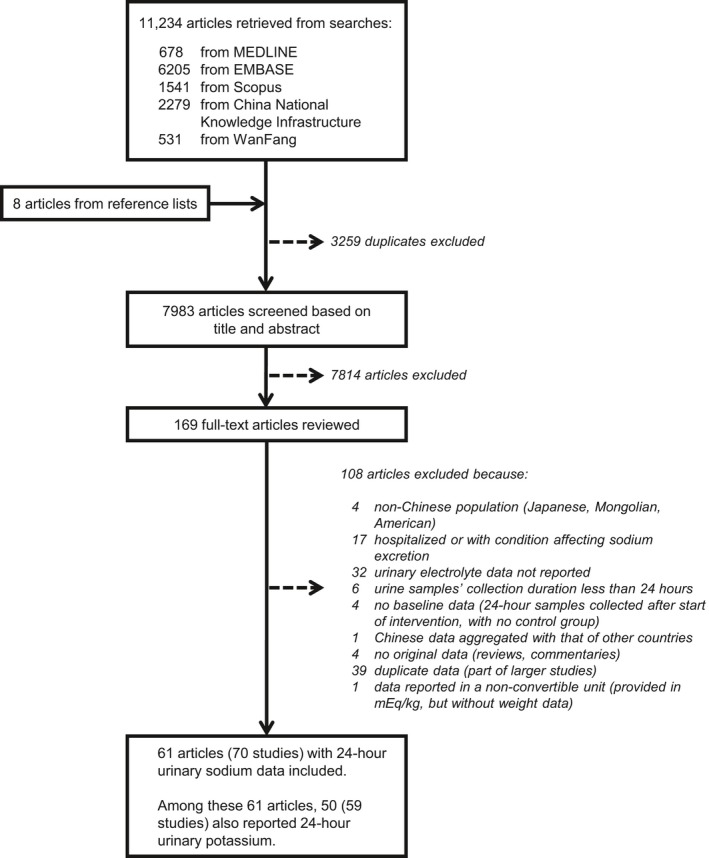
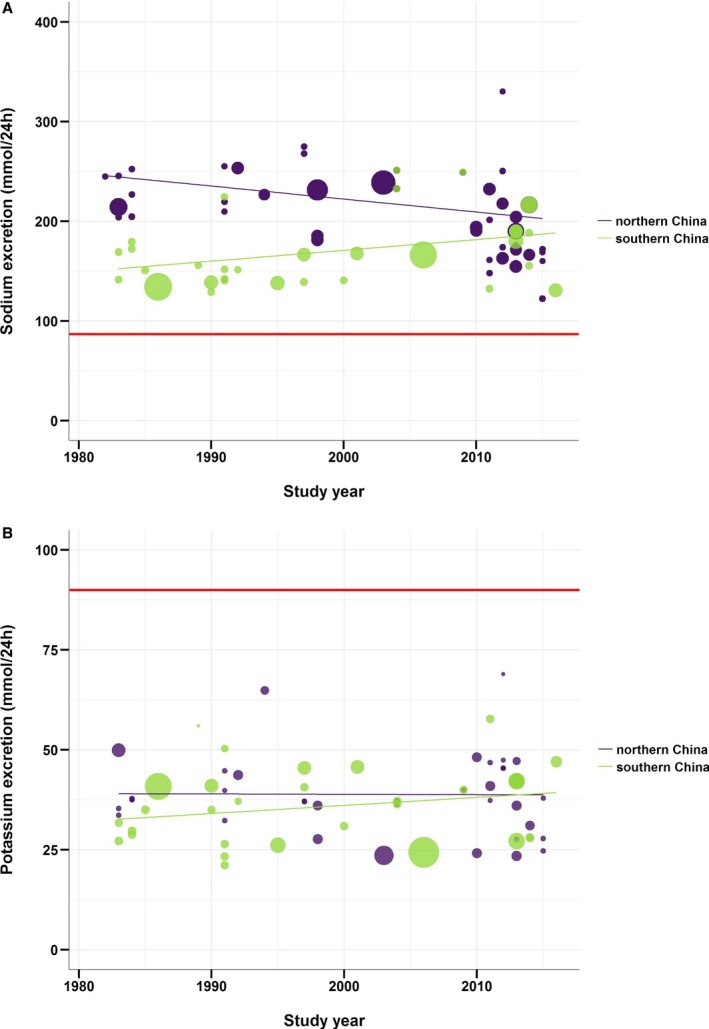
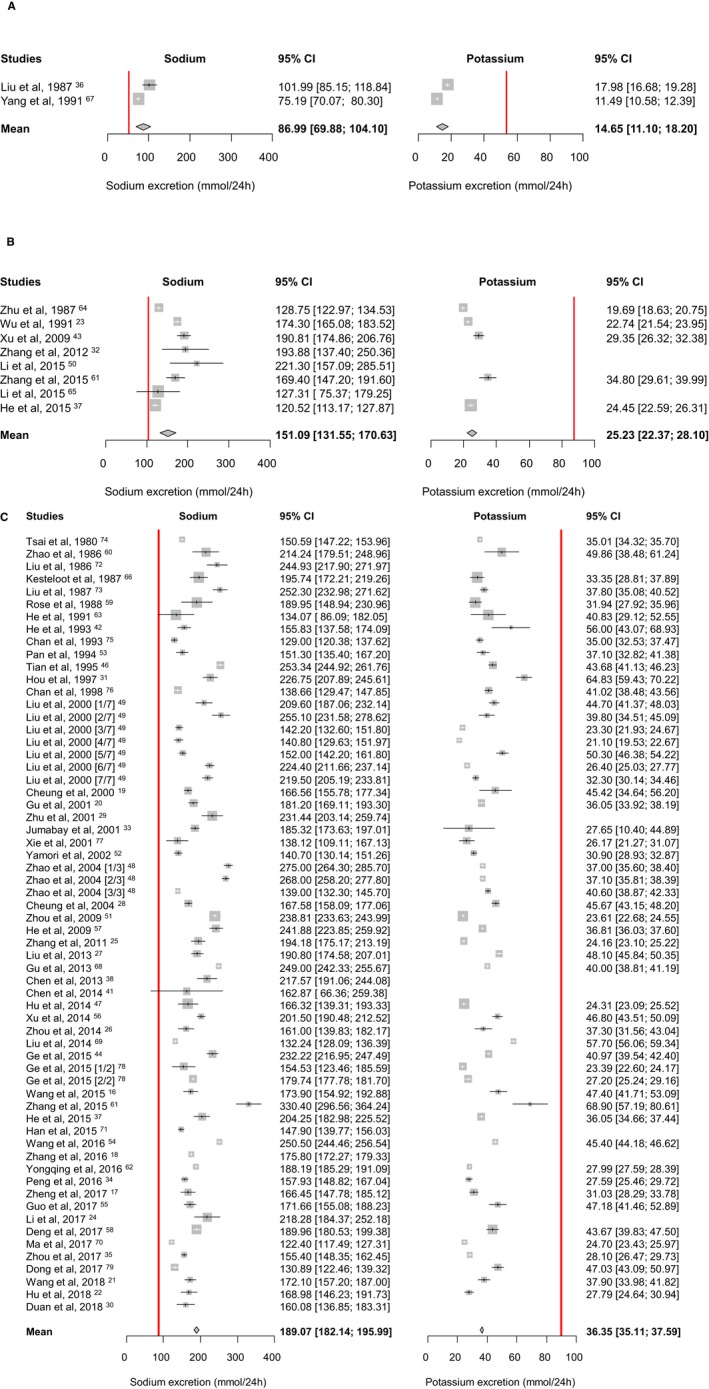
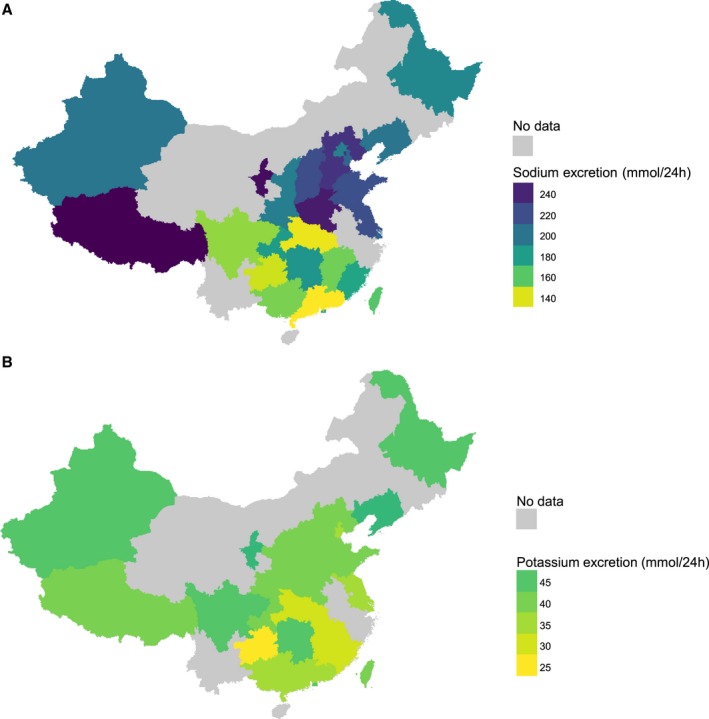
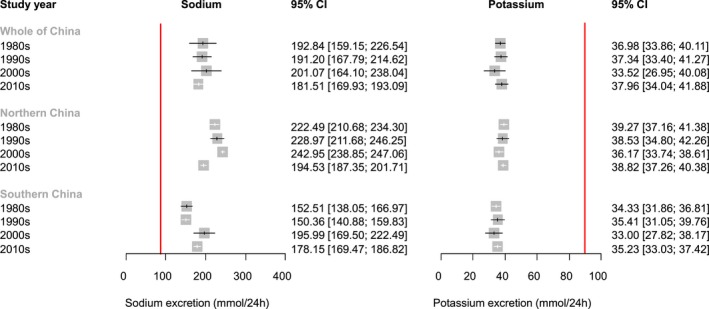
Background In China, high sodium and low potassium intakes result in elevated blood pressure, a major cause of cardiovascular disease, yet the intake estimates lack accuracy and nutritional strategies remain limited. Methods and Results We aimed to determine sodium and potassium intake by systematically searching for and quantitatively summarizing all published 24-hour urinary sodium and potassium data (ie, the most accurate method). MEDLINE , EMBASE , Scopus, China National Knowledge Infrastructure, and Wanfang were searched up to February 2019. All studies reporting 24-hour urinary sodium or potassium in China were included; hospitalized patients were excluded. Data were pooled using random-effects meta-analysis and heterogeneity was explored with meta-regression. Sodium data were reported in 70 studies (n=26 767), 59 of which also reported potassium (n=24 738). Mean sodium and potassium excretions were 86.99 mmol/24 h (95% CI , 69.88-104.10) and 14.65 mmol/24 h (95% CI , 11.10-18.20) in children aged 3 to 6 years, 151.09 mmol/24 h (95% CI , 131.55-170.63) and 25.23 mmol/24 h (95% CI , 22.37-28.10) in children aged 6 to 16 years, and 189.07 mmol/24 h (95% CI , 182.14-195.99) and 36.35 mmol/24 h (95% CI , 35.11-37.59) in adults aged >16 years. Compared with southern China, sodium intake was higher in northern China ( P<0.0001) but is declining ( P=0.0066). Conclusions Average sodium intake in all age groups across China is approximately double the recommended maximum limits, and potassium intake is less than half that recommended. Despite a decline, sodium intake in northern China is still among the highest in the world, and the North-South divide persists. Urgent action is needed to simultaneously reduce sodium and increase potassium intake across China.
在中国,高钠低钾的饮食习惯导致血压升高,这是心血管疾病的主要病因,但目前的摄入量估计缺乏准确性,营养策略仍然有限。
我们旨在通过系统地搜索和定量总结所有已发表的 24 小时尿钠和钾数据来确定钠和钾的摄入量(即最准确的方法)。检索了 MEDLINE、EMBASE、Scopus、中国知网和万方,截至 2019 年 2 月。纳入所有报告中国 24 小时尿钠或钾的研究;排除住院患者。使用随机效应荟萃分析汇总数据,并通过荟萃回归探索异质性。有 70 项研究(n=26767)报告了钠数据,其中 59 项研究(n=24738)同时报告了钾数据。3 至 6 岁儿童的平均钠排泄量为 86.99mmol/24h(95%CI,69.88-104.10),钾排泄量为 14.65mmol/24h(95%CI,11.10-18.20);6 至 16 岁儿童的平均钠排泄量为 151.09mmol/24h(95%CI,131.55-170.63),钾排泄量为 25.23mmol/24h(95%CI,22.37-28.10);>16 岁成年人的平均钠排泄量为 189.07mmol/24h(95%CI,182.14-195.99),钾排泄量为 36.35mmol/24h(95%CI,35.11-37.59)。与中国南方相比,中国北方的钠摄入量更高(P<0.0001),但呈下降趋势(P=0.0066)。
中国所有年龄段人群的平均钠摄入量约为推荐最高限量的两倍,而钾摄入量不到推荐量的一半。尽管有所下降,但中国北方的钠摄入量仍居世界前列,南北差距依然存在。迫切需要采取行动,在中国各地同时减少钠的摄入并增加钾的摄入。