Chang Ke-Vin, Wu Wei-Ting, Chen Mei-Chu, Chiu Yi-Chi, Han Der-Sheng, Chen Chih-Cheng
Department of Physical Medicine and Rehabilitation, National Taiwan University Hospital, Bei-Hu Branch 10845, Taiwan.
Community and Geriatric Medicine Research Center, National Taiwan University Hospital, Bei-Hu Branch 10845, Taiwan.
Diagnostics (Basel). 2019 Jul 10;9(3):71. doi: 10.3390/diagnostics9030071.
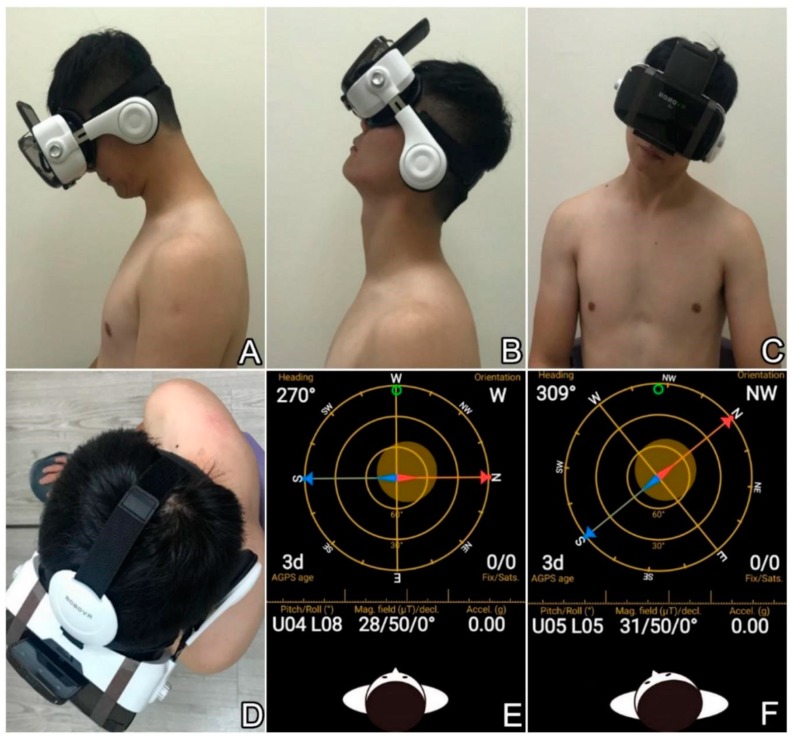
This study aimed to determine the intra-rater and inter-rater reliability and validity of a hybrid device, combining virtual reality goggles, a magnetometer and an inclinometer application for smartphones, to measure craniocervical range.
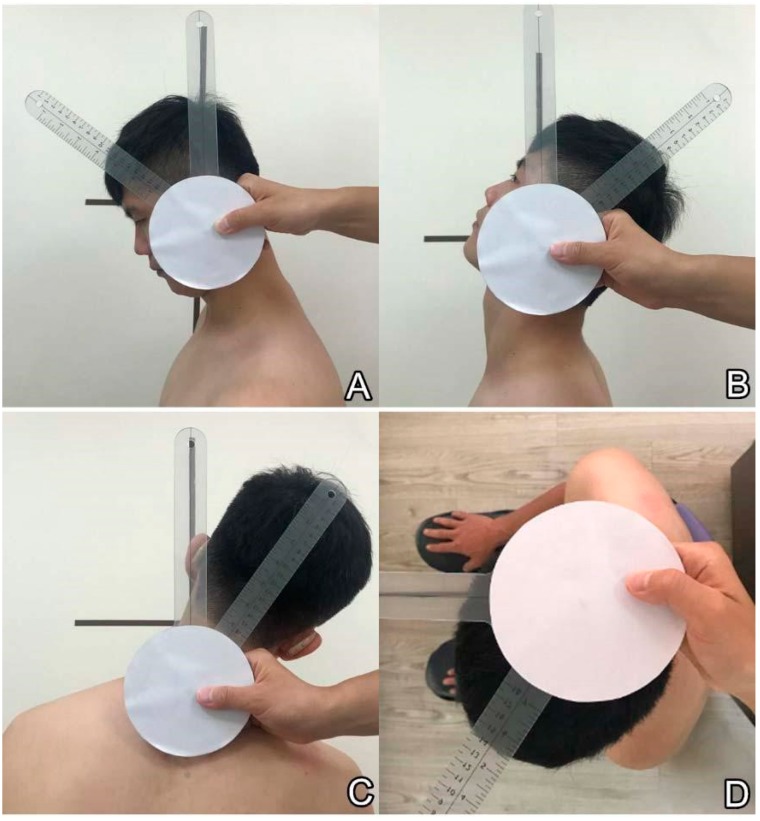
Accurate evaluation of craniocervical range of motion is important for early detection of certain diseased conditions and monitoring the progress of interventions. The universal goniometer is widely used for the measurement but it requires experienced practitioners. Whether a combination of virtual reality goggles and smartphone applications can provide the same or better performance compared with the goniometer is still unknown.
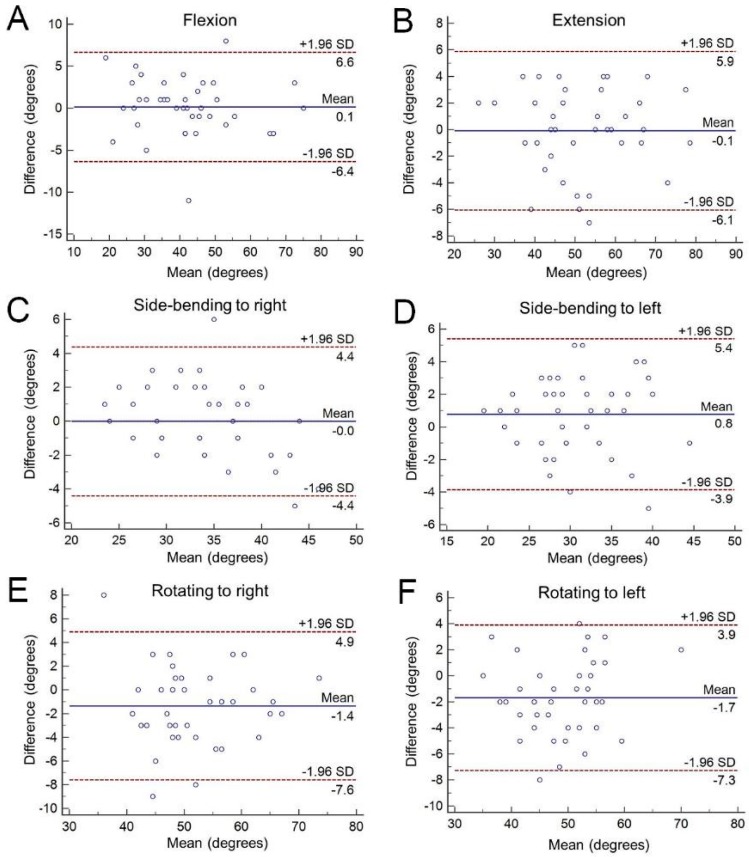
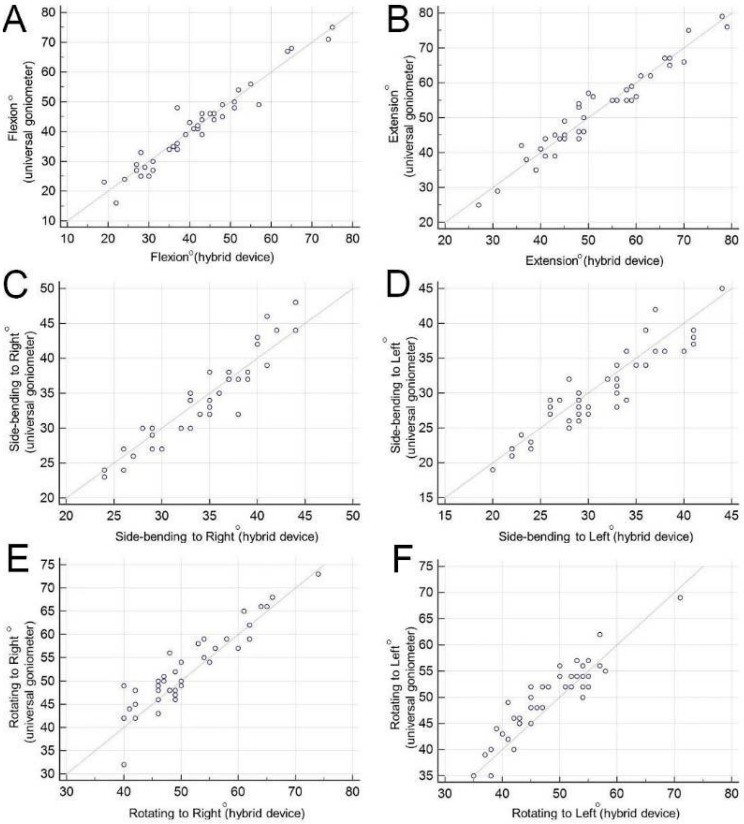
Forty-one healthy adults from the department of physical medicine and rehabilitation were recruited for craniocervical range examination (flexion, extension, side-bending to the right or left and rotating to the right or left) by using the hybrid device and universal goniometer. Using the hybrid device, repeated measurements were performed twice by a primary rater and once by a second rater. The primary rater also conducted a measurement using the universal goniometer in the same cohort. The intra-rater and inter-rater reliability (intra-class correlation coefficient (ICC)) were calculated using the two-way random effect model, whereas the validity was examined by the Pearson correlation coefficient and Bland-and-Altman plot. The interval between the first and second sessions of the measurement for intra-rater reliability was set at 30 min.
Excellent intra-rater (ICC ≥ 0.925) and inter-rater (ICC ≥ 0.880) reliability was noted for the hybrid device. The minimal detectable changes from intra-observer and inter-observer comparisons ranged between 4.12° and 7.42° in all six directions. The Bland-and-Altman plot revealed small mean differences (≤1.68°) between the hybrid device and universal goniometer. Both instruments had highly correlated measurements of craniocervical motion ( values ≥ 0.918).
For healthy participants, excellent intra-rater and inter-rater reliability was noted for the hybrid device, and the measurements were consistent with the universal goniometer measurements. Future studies are needed to examine whether the device can perform similarly for patients with neck disorders.
本研究旨在确定一种混合设备的评分者内和评分者间的可靠性及有效性,该设备结合了虚拟现实护目镜、磁力计和适用于智能手机的倾角计应用程序,用于测量颅颈活动范围。
准确评估颅颈活动范围对于某些疾病的早期检测和监测干预进展至关重要。通用测角仪广泛用于测量,但需要经验丰富的从业者。与测角仪相比,虚拟现实护目镜和智能手机应用程序的组合能否提供相同或更好的性能仍不清楚。
招募了41名来自物理医学与康复科的健康成年人,使用混合设备和通用测角仪进行颅颈活动范围检查(前屈、后伸、向右侧或左侧侧屈以及向右侧或左侧旋转)。使用混合设备时,由一名主要评分者重复测量两次,另一名评分者测量一次。主要评分者还对同一队列使用通用测角仪进行了测量。使用双向随机效应模型计算评分者内和评分者间的可靠性(组内相关系数(ICC)),而有效性通过Pearson相关系数和Bland-Altman图进行检验。评分者内可靠性测量的第一次和第二次测量之间的间隔设定为30分钟。
混合设备的评分者内(ICC≥0.925)和评分者间(ICC≥0.880)可靠性极佳。在所有六个方向上,观察者内和观察者间比较的最小可检测变化范围在4.12°至7.42°之间。Bland-Altman图显示混合设备和通用测角仪之间的平均差异较小(≤1.68°)。两种仪器对颅颈运动的测量高度相关(值≥0.918)。
对于健康参与者,混合设备的评分者内和评分者间可靠性极佳,且测量结果与通用测角仪的测量结果一致。未来需要进行研究,以检查该设备对颈部疾病患者的表现是否类似。