Wang Jin, Shao Weili, Niu Hui, Yang Tianli, Wang Yuning, Cai Yun
Center of Medicine Clinical Research, Department of Pharmacy, PLA General Hospital, Beijing, China.
Clinical Surgery Division, PLA General Hospital, Beijing, China.
Front Pharmacol. 2019 Jun 26;10:729. doi: 10.3389/fphar.2019.00729. eCollection 2019.
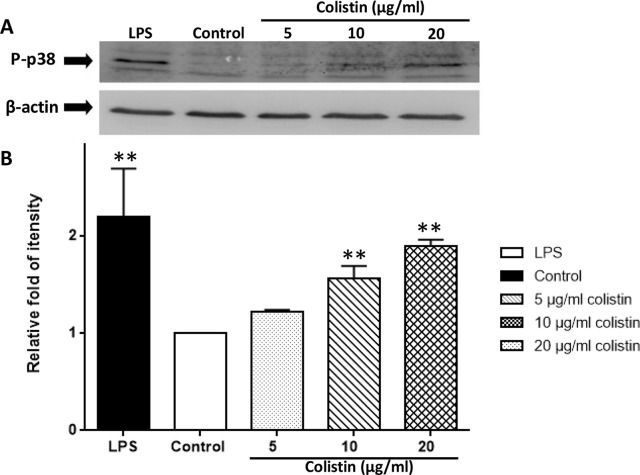
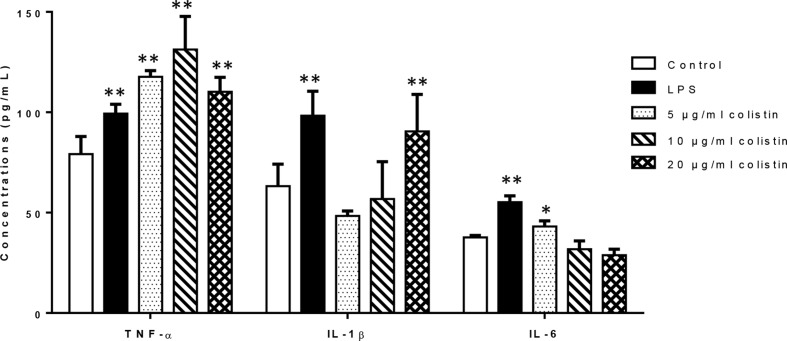
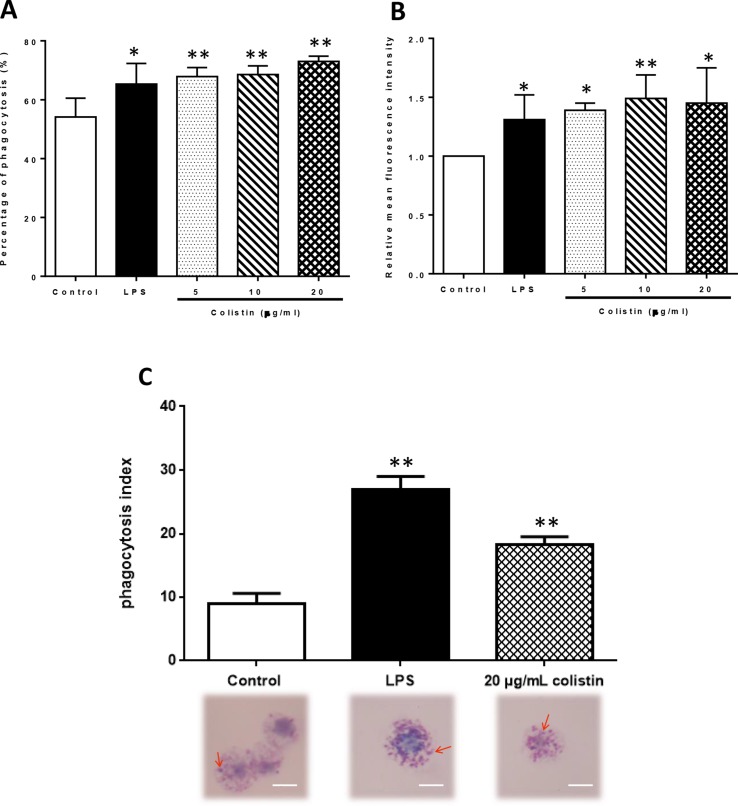
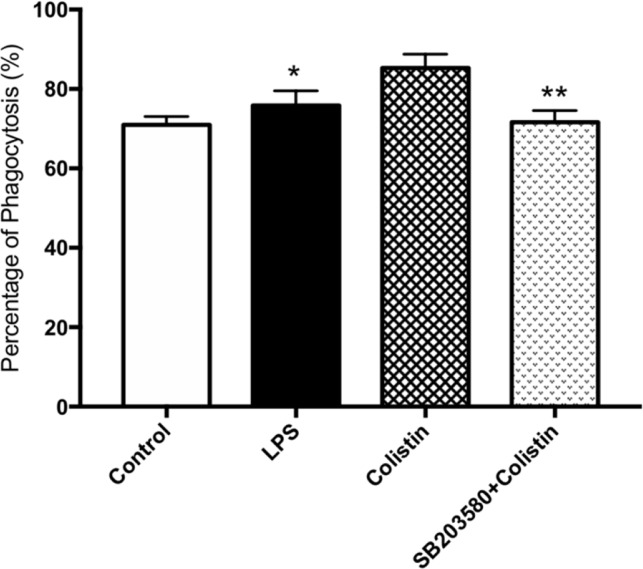
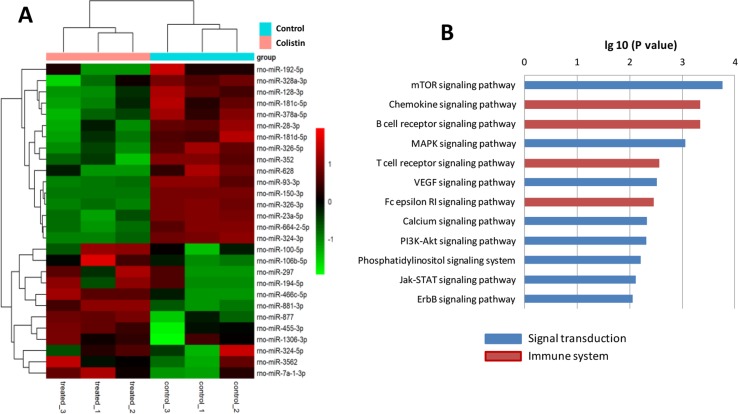
Colistin has been identified in a chemical screening as an immunostimulatory agent that activates the conserved p38/PMK-1 pathway and provides protection against pathogens. Here we aimed to extend those findings to a mammalian model and evaluate the immunomodulatory effects of colistin on rat macrophages. Macrophages were isolated from Sprague-Dawley (SD) rat. The effects of colistin on the cytokine secretion, phagocytic activity and protein expression were determined by enzyme-linked immunosorbent assay (ELISA), flow cytometry, and Western blotting analysis, respectively. The relative microRNA expression was determined by microarray, and Kyoto Encylopedia of Genes and Genomes (KEGG) was used to identify potential signaling pathways. Our data showed that 5, 10, and 20 µg/ml colistin significantly increased the secretion of TNF-α, while 20 and 5 µg/ml colistin significantly increased the levels of IL-1β and IL-6, respectively. Flow cytometry results showed that the relative mean fluorescence intensity and percentage of phagocytosis in colistin treatment groups were significantly higher compared with the control group, while the increased phagocytosis phenomenon can be blocked by p38 inhibitor. The phagocytic ability of macrophages against was significantly increased after colistin treatment. Microarray and KEGG pathway analyses revealed that mitogen-activated protein kinase (MAPK), mammalian target of rapamycin (mTOR), chemokine, and B cell receptor were the main pathways involved in the colistin stimulation process. Western blotting analysis demonstrated that the phosphorylated p38 protein level of colistin treatment groups was increased in a dose dependent manner. Present study is the first to demonstrate that colistin had immunomodulatory effects on macrophages in mammals, and the p38/MAPK pathway was involved in such colistin-induced immunomodulatory effect.
在一项化学筛选中,黏菌素被鉴定为一种免疫刺激剂,它可激活保守的p38/PMK-1通路并提供针对病原体的保护作用。在此,我们旨在将这些发现扩展至哺乳动物模型,并评估黏菌素对大鼠巨噬细胞的免疫调节作用。从Sprague-Dawley(SD)大鼠中分离出巨噬细胞。分别通过酶联免疫吸附测定(ELISA)、流式细胞术和蛋白质印迹分析来确定黏菌素对细胞因子分泌、吞噬活性和蛋白质表达的影响。通过微阵列测定相对微小RNA表达,并使用京都基因与基因组百科全书(KEGG)来识别潜在的信号通路。我们的数据显示,5、10和20μg/ml的黏菌素显著增加了TNF-α的分泌,而20和5μg/ml的黏菌素分别显著增加了IL-1β和IL-6的水平。流式细胞术结果显示,与对照组相比,黏菌素处理组的相对平均荧光强度和吞噬百分比显著更高,而p38抑制剂可阻断吞噬增加的现象。黏菌素处理后巨噬细胞对[此处原文缺失相关内容]的吞噬能力显著增强。微阵列和KEGG通路分析显示,丝裂原活化蛋白激酶(MAPK)、雷帕霉素靶蛋白(mTOR)、趋化因子和B细胞受体是黏菌素刺激过程中涉及的主要通路。蛋白质印迹分析表明,黏菌素处理组的磷酸化p38蛋白水平呈剂量依赖性增加。本研究首次证明黏菌素对哺乳动物巨噬细胞具有免疫调节作用,且p38/MAPK通路参与了这种黏菌素诱导的免疫调节作用。