Department of Neurosciences, Experimental Neurology and Leuven Brain Institute (LBI), KU Leuven - University of Leuven, Leuven, Belgium.
Laboratory of Neurobiology, Center for Brain & Disease Research, VIB, KU Leuven, Leuven, Belgium.
Acta Neuropathol Commun. 2019 Jul 12;7(1):114. doi: 10.1186/s40478-019-0759-6.
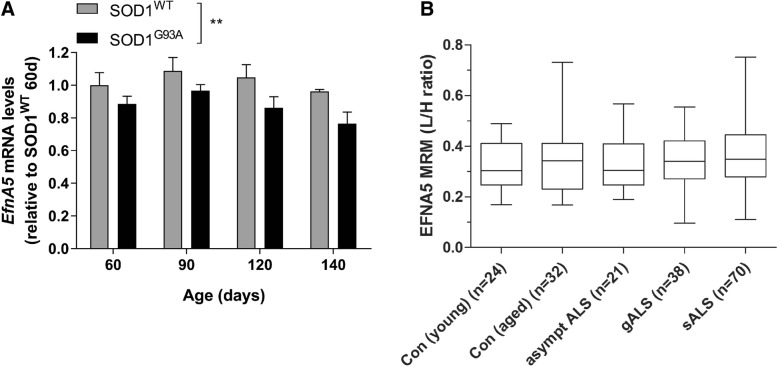
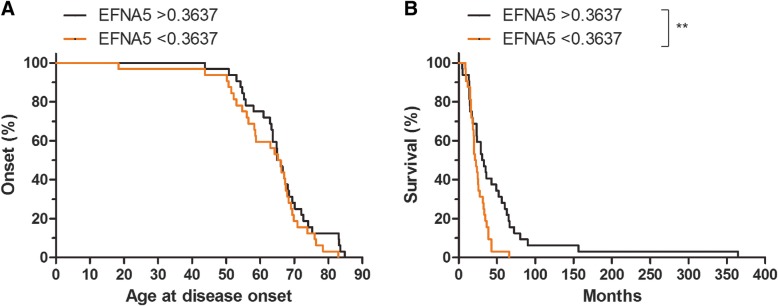
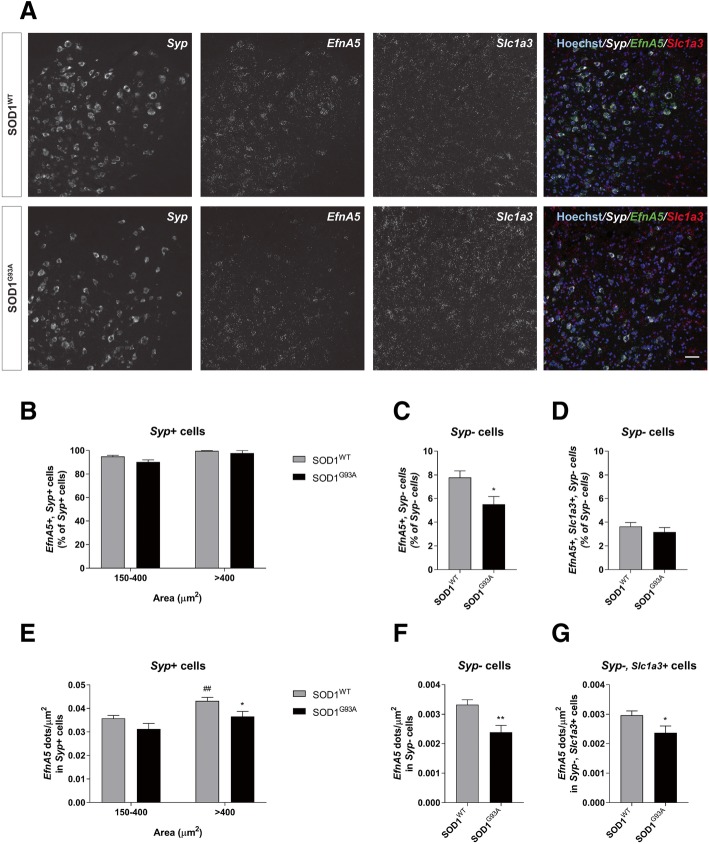
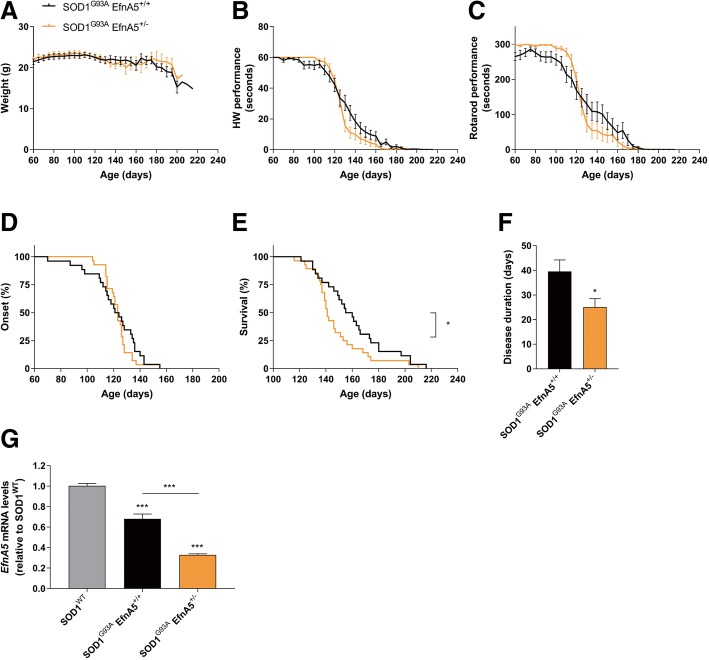
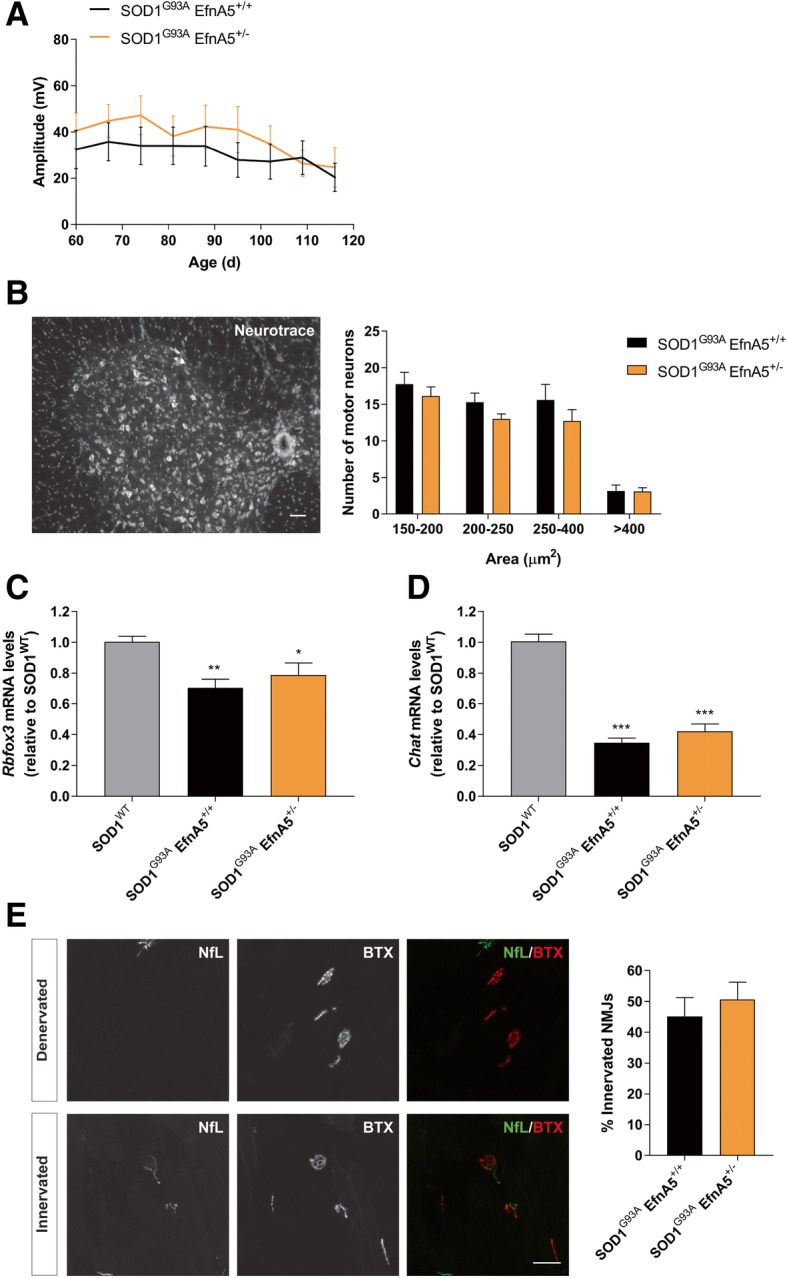
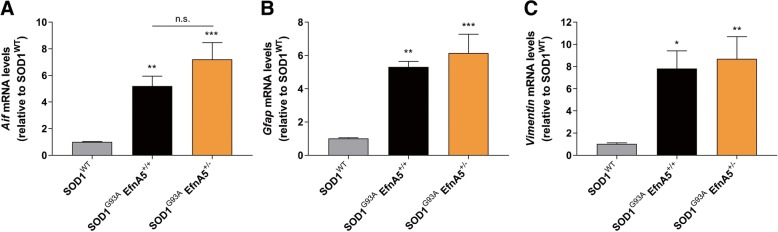
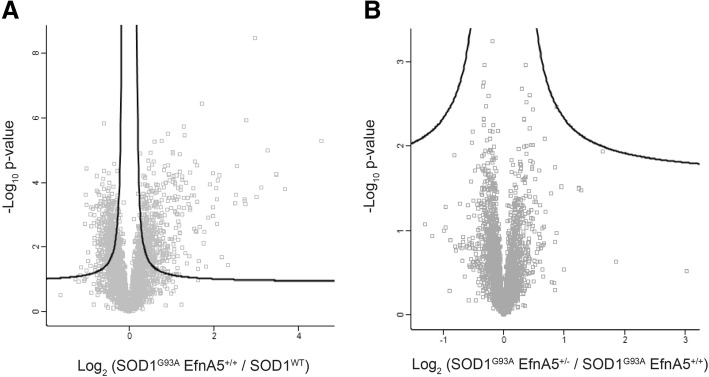
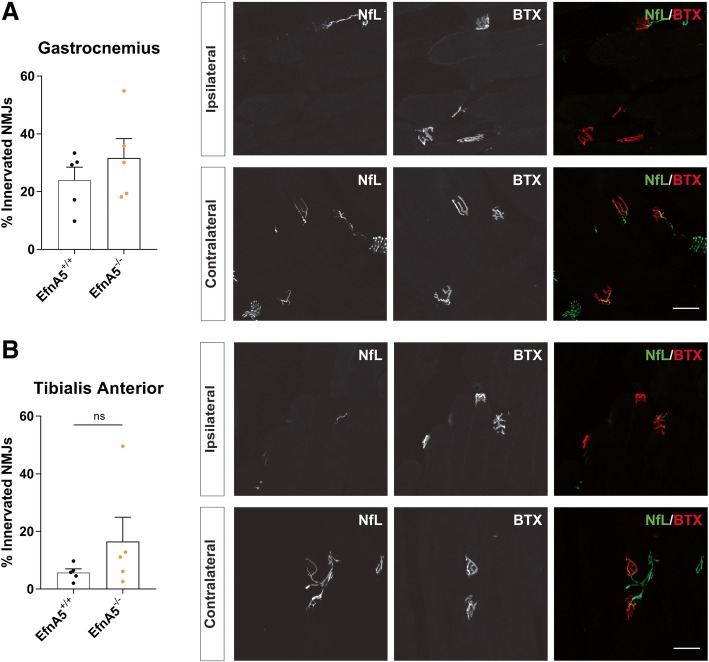
Amyotrophic lateral sclerosis (ALS) is a fatal neurodegenerative disease that affects motor neurons in the brainstem, spinal cord and motor cortex. ALS is characterized by genetic and clinical heterogeneity, suggesting the existence of genetic factors that modify the phenotypic expression of the disease. We previously identified the axonal guidance EphA4 receptor, member of the Eph-ephrin system, as an ALS disease-modifying factor. EphA4 genetic inhibition rescued the motor neuron phenotype in zebrafish and a rodent model of ALS. Preventing ligands from binding to the EphA4 receptor also successfully improved disease, suggesting a role for EphA4 ligands in ALS. One particular ligand, ephrin-A5, is upregulated in reactive astrocytes after acute neuronal injury and inhibits axonal regeneration. Moreover, it plays a role during development in the correct pathfinding of motor axons towards their target limb muscles. We hypothesized that a constitutive reduction of ephrin-A5 signalling would benefit disease progression in a rodent model for ALS. We discovered that in the spinal cord of control and symptomatic ALS mice ephrin-A5 was predominantly expressed in neurons. Surprisingly, reduction of ephrin-A5 levels in SOD1 mice accelerated disease progression and reduced survival without affecting disease onset, motor neuron numbers or innervated neuromuscular junctions in symptomatic mice. These findings suggest ephrin-A5 as a modifier of disease progression that might play a role in the later stages of the disease. Similarly, we identified a more aggressive disease progression in patients with lower ephrin-A5 protein levels in the cerebrospinal fluid without modifying disease onset. In summary, we identified reduced expression of ephrin-A5 to accelerate disease progression in a mouse model of ALS as well as in humans. Combined with our previous findings on the role of EphA4 in ALS our current data suggests different contribution for various members of the Eph-ephrin system in the pathophysiology of a motor neuron disease.
肌萎缩侧索硬化症(ALS)是一种致命的神经退行性疾病,影响脑干、脊髓和运动皮层的运动神经元。ALS 的特征是遗传和临床异质性,表明存在修饰疾病表型表达的遗传因素。我们之前确定了轴突导向 EphA4 受体,即 Eph-ephrin 系统的成员,为 ALS 的疾病修饰因子。EphA4 基因抑制在斑马鱼和 ALS 啮齿动物模型中挽救了运动神经元表型。防止配体与 EphA4 受体结合也成功地改善了疾病,表明 EphA4 配体在 ALS 中起作用。一种特殊的配体,ephrin-A5,在急性神经元损伤后反应性星形胶质细胞中上调,并抑制轴突再生。此外,它在发育过程中对运动轴突向其靶肢体肌肉的正确路径形成发挥作用。我们假设 Ephrin-A5 信号的组成性降低将有益于 ALS 啮齿动物模型中的疾病进展。我们发现,在对照和症状性 ALS 小鼠的脊髓中,ephrin-A5 主要在神经元中表达。令人惊讶的是,在 SOD1 小鼠中降低 Ephrin-A5 水平会加速疾病进展并降低存活率,而不影响疾病发作、运动神经元数量或症状性小鼠中受神经支配的神经肌肉接头。这些发现表明 Ephrin-A5 是疾病进展的修饰因子,可能在疾病的后期阶段发挥作用。同样,我们在脑脊液中 Ephrin-A5 蛋白水平较低的患者中发现了更具侵袭性的疾病进展,而不改变疾病发作。总之,我们确定 Ephrin-A5 的表达降低会加速 ALS 小鼠模型以及人类的疾病进展。结合我们之前关于 EphA4 在 ALS 中的作用的发现,我们目前的数据表明,Eph-ephrin 系统的不同成员在运动神经元疾病的病理生理学中具有不同的贡献。