Liddelow Shane A, Guttenplan Kevin A, Clarke Laura E, Bennett Frederick C, Bohlen Christopher J, Schirmer Lucas, Bennett Mariko L, Münch Alexandra E, Chung Won-Suk, Peterson Todd C, Wilton Daniel K, Frouin Arnaud, Napier Brooke A, Panicker Nikhil, Kumar Manoj, Buckwalter Marion S, Rowitch David H, Dawson Valina L, Dawson Ted M, Stevens Beth, Barres Ben A
Department of Neurobiology, Stanford University, School of Medicine, Stanford, California 94305, USA.
Department of Pharmacology and Therapeutics, University of Melbourne, Parkville, Victoria 3010, Australia.
Nature. 2017 Jan 26;541(7638):481-487. doi: 10.1038/nature21029. Epub 2017 Jan 18.
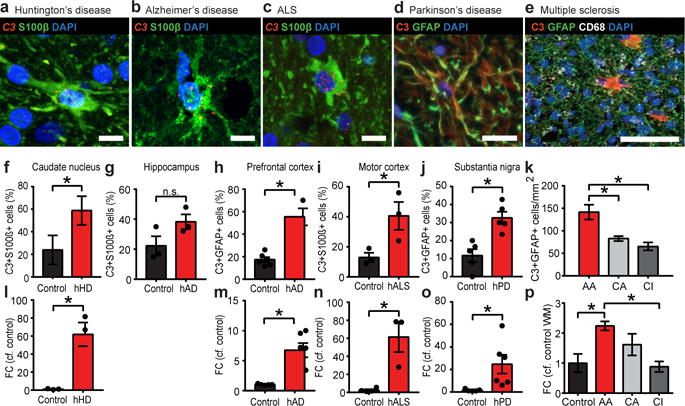
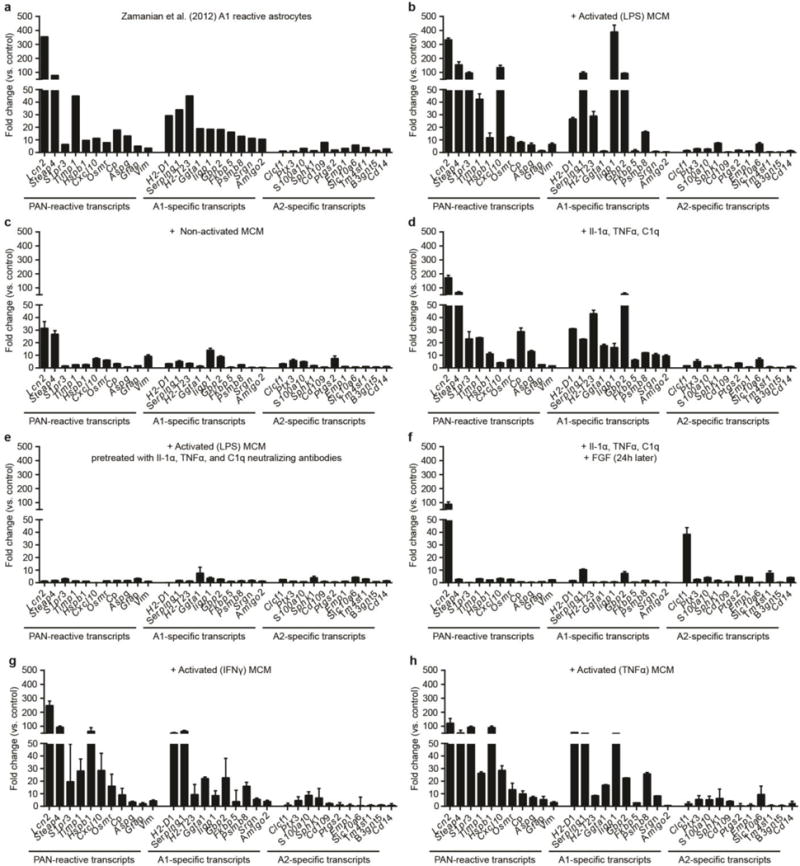
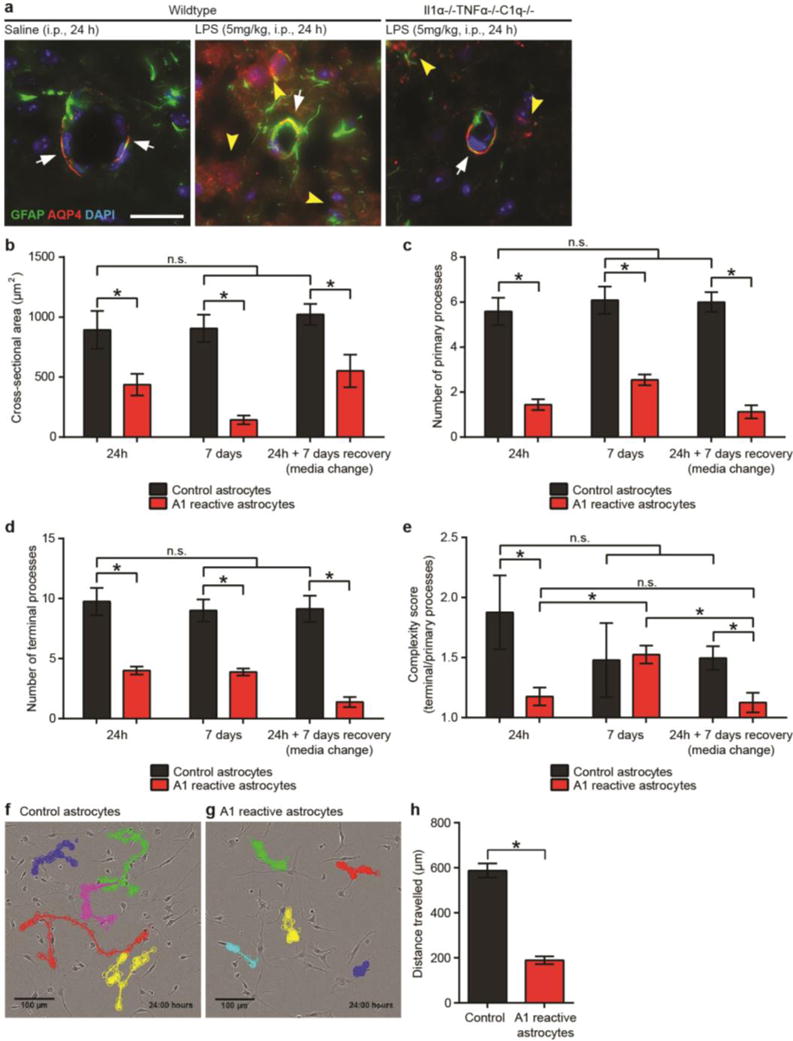
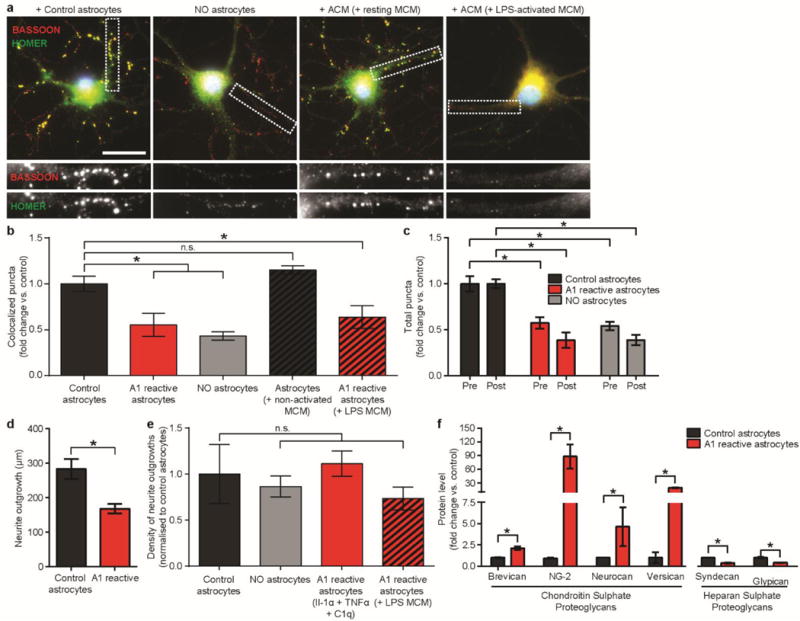
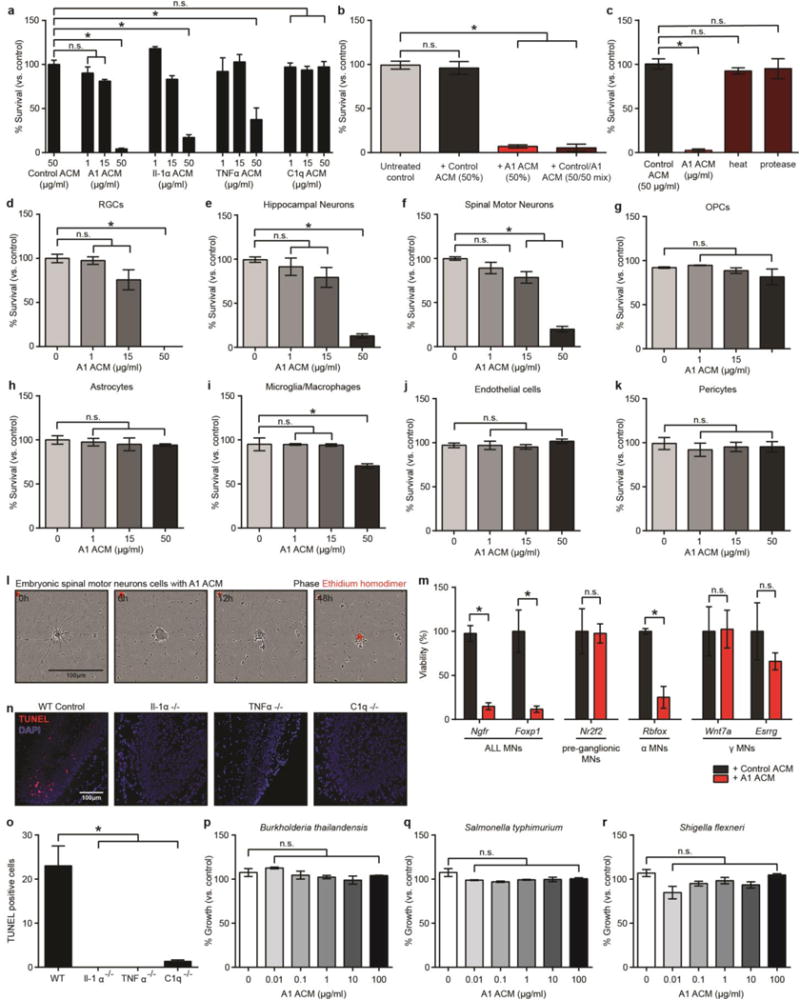
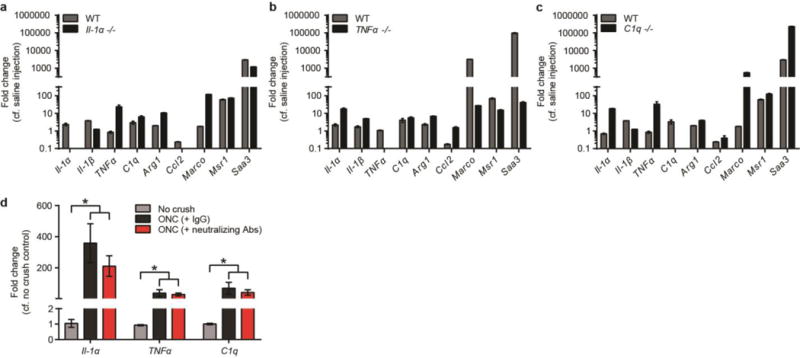
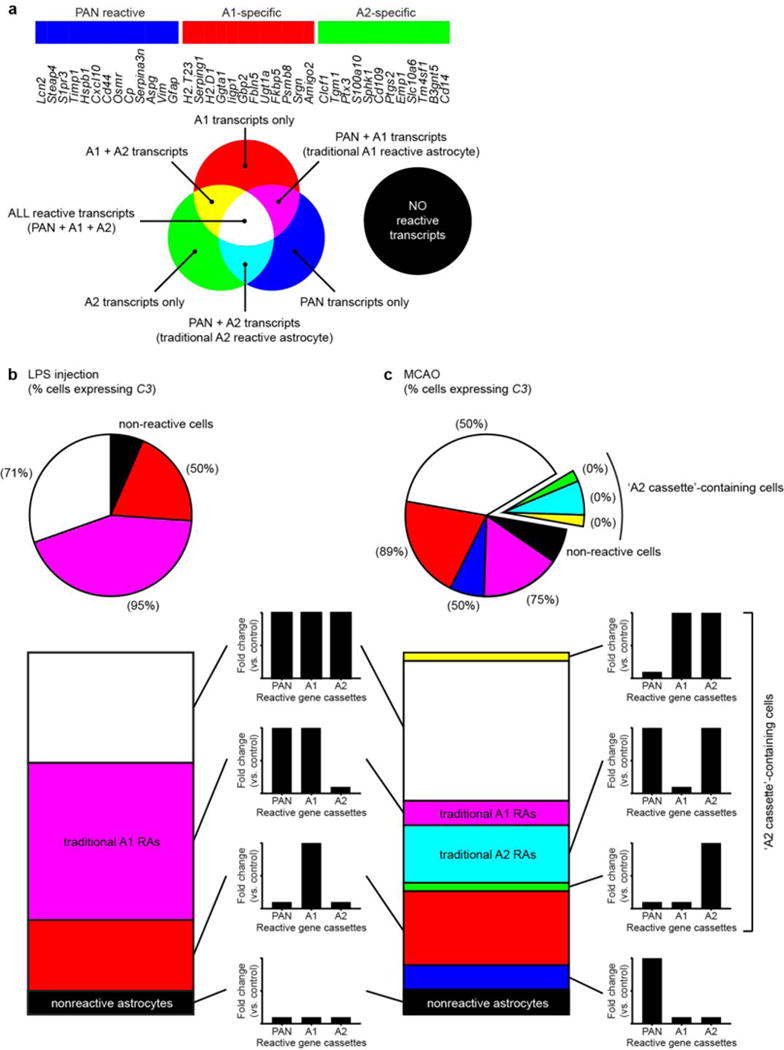
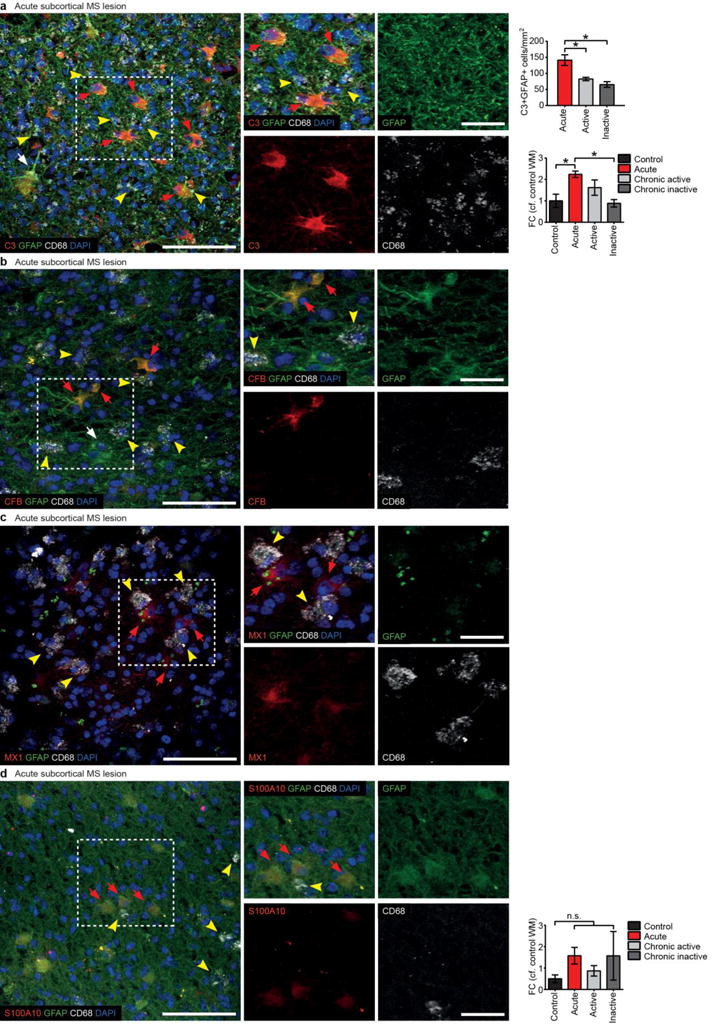
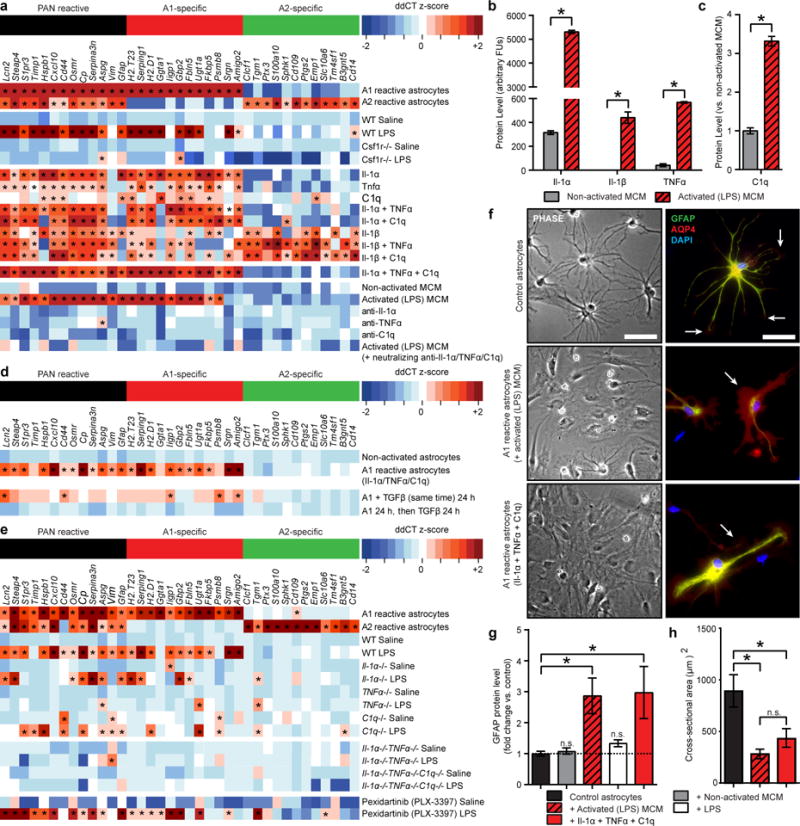
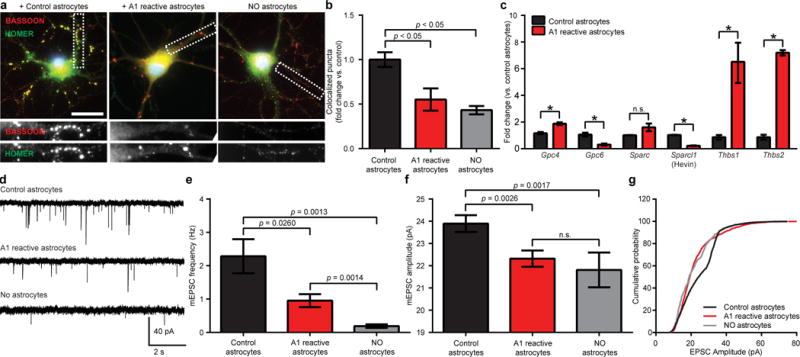
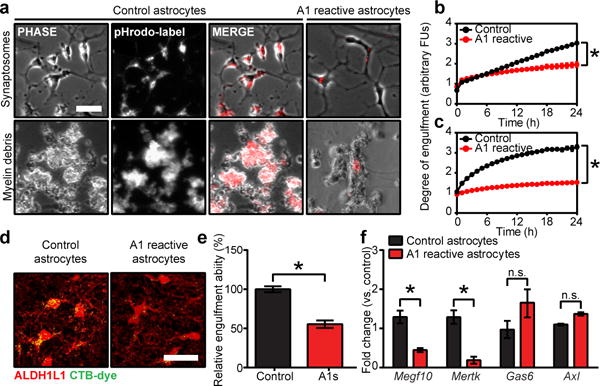
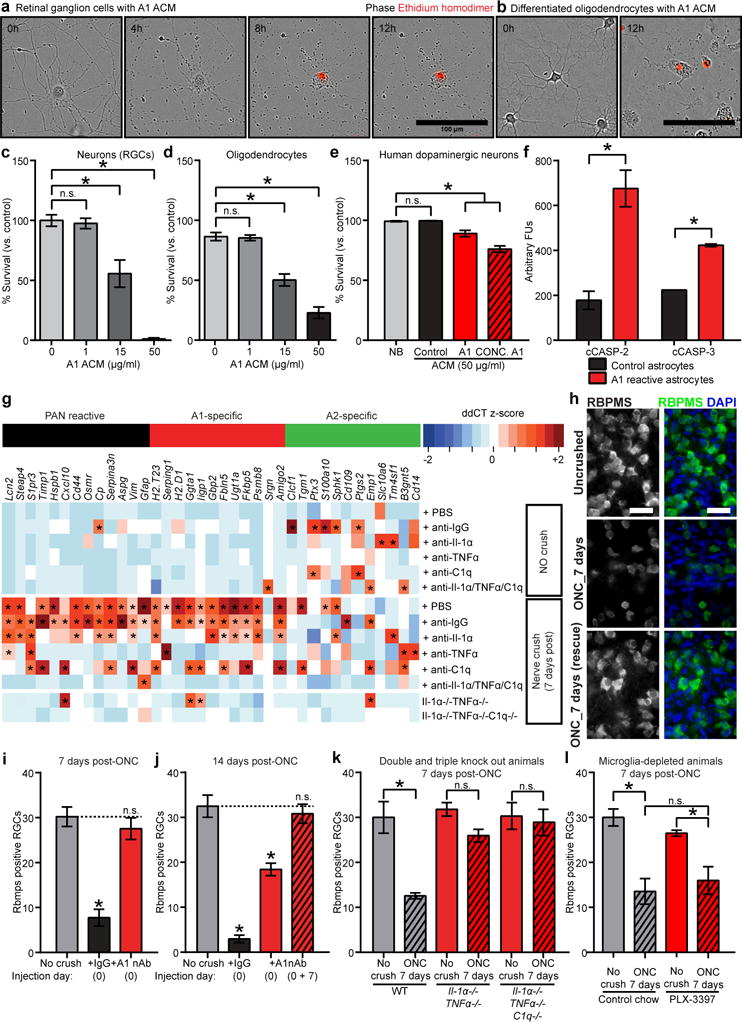
Reactive astrocytes are strongly induced by central nervous system (CNS) injury and disease, but their role is poorly understood. Here we show that a subtype of reactive astrocytes, which we termed A1, is induced by classically activated neuroinflammatory microglia. We show that activated microglia induce A1 astrocytes by secreting Il-1α, TNF and C1q, and that these cytokines together are necessary and sufficient to induce A1 astrocytes. A1 astrocytes lose the ability to promote neuronal survival, outgrowth, synaptogenesis and phagocytosis, and induce the death of neurons and oligodendrocytes. Death of axotomized CNS neurons in vivo is prevented when the formation of A1 astrocytes is blocked. Finally, we show that A1 astrocytes are abundant in various human neurodegenerative diseases including Alzheimer's, Huntington's and Parkinson's disease, amyotrophic lateral sclerosis and multiple sclerosis. Taken together these findings help to explain why CNS neurons die after axotomy, strongly suggest that A1 astrocytes contribute to the death of neurons and oligodendrocytes in neurodegenerative disorders, and provide opportunities for the development of new treatments for these diseases.
反应性星形胶质细胞由中枢神经系统(CNS)损伤和疾病强烈诱导产生,但其作用仍知之甚少。在此我们表明,一种我们称为A1的反应性星形胶质细胞亚型是由经典活化的神经炎性小胶质细胞诱导产生的。我们发现活化的小胶质细胞通过分泌白细胞介素-1α(Il-1α)、肿瘤坏死因子(TNF)和C1q来诱导A1星形胶质细胞,并且这些细胞因子共同作用对于诱导A1星形胶质细胞既是必要的也是充分的。A1星形胶质细胞失去了促进神经元存活、生长、突触形成和吞噬作用的能力,并诱导神经元和少突胶质细胞死亡。当A1星形胶质细胞的形成被阻断时,体内轴突切断的中枢神经系统神经元的死亡得以预防。最后,我们表明A1星形胶质细胞在包括阿尔茨海默病、亨廷顿病和帕金森病、肌萎缩侧索硬化症和多发性硬化症在内的各种人类神经退行性疾病中大量存在。综上所述,这些发现有助于解释为什么中枢神经系统神经元在轴突切断后会死亡,强烈提示A1星形胶质细胞在神经退行性疾病中促成神经元和少突胶质细胞的死亡,并为开发这些疾病的新治疗方法提供了机会。