Department of Microbiology and Immunology, Medical School of Southeast University, 87 Dingjiaqiao Road, Nanjing, 210009, China.
Department of Obstetrics and Gynecology, Zhongda Hospital, Medical School of Southeast University, 87 Dingjiaqiao Road, Nanjing, 210009, China.
J Immunother Cancer. 2019 Jul 12;7(1):178. doi: 10.1186/s40425-019-0646-5.
CD4 T cells are critical effectors of anti-tumor immunity, but how tumor cells influence CD4 T cell effector function is not fully understood. Tumor cell-released autophagosomes (TRAPs) are being recognized as critical modulators of host anti-tumor immunity during tumor progression. Here, we explored the mechanistic aspects of TRAPs in the modulation of CD4 T cells in the tumor microenvironment.
TRAPs isolated from tumor cell lines and pleural effusions or ascites of cancer patients were incubated with CD4 T cells to examine the function and mechanism of TRAPs in CD4 T cell differentiation and function. TRAPs-elicited CD4 T cells were tested for their suppression of effector T cell function, induction of regulatory B cells, and promotion of tumorigenesis and metastasis in a mouse model.
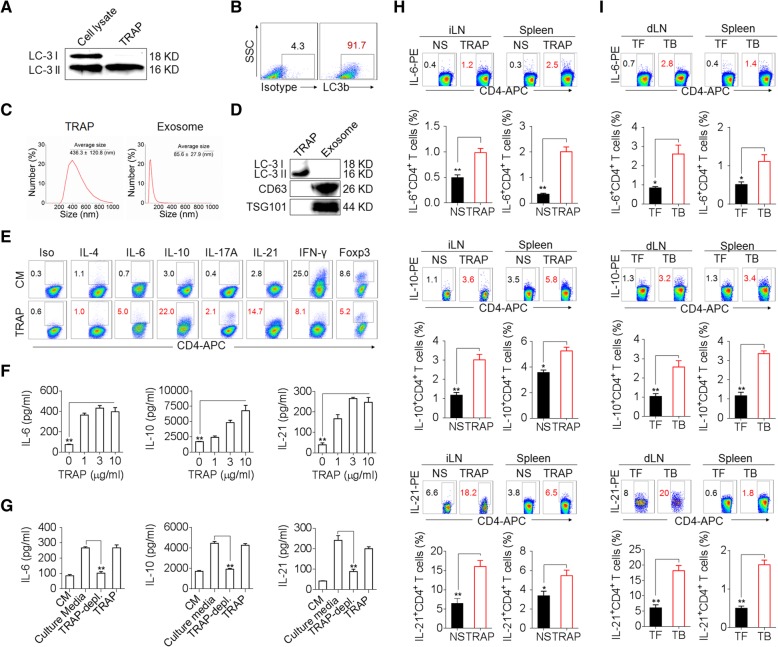
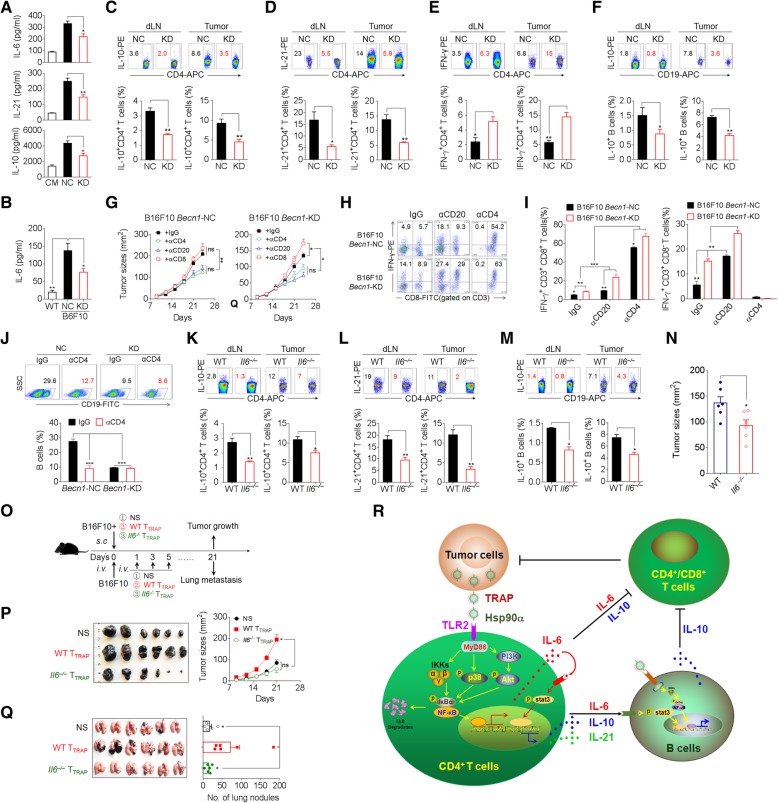
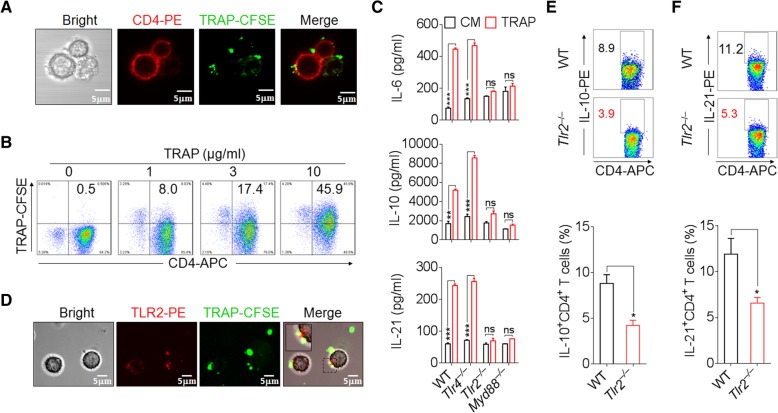
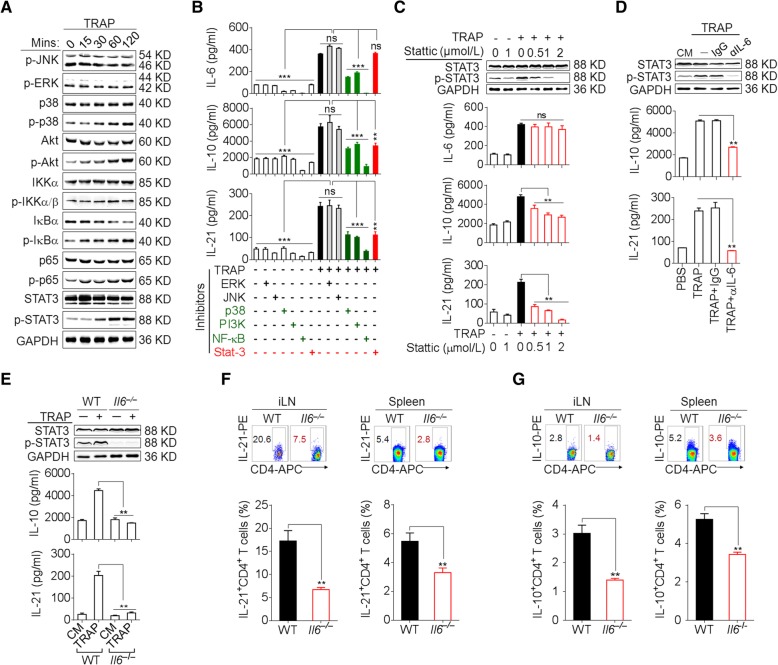
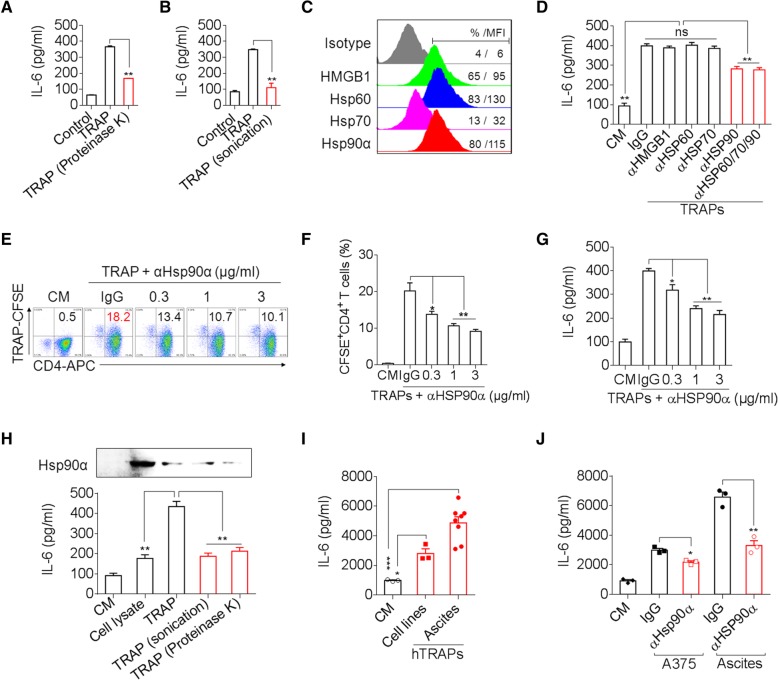
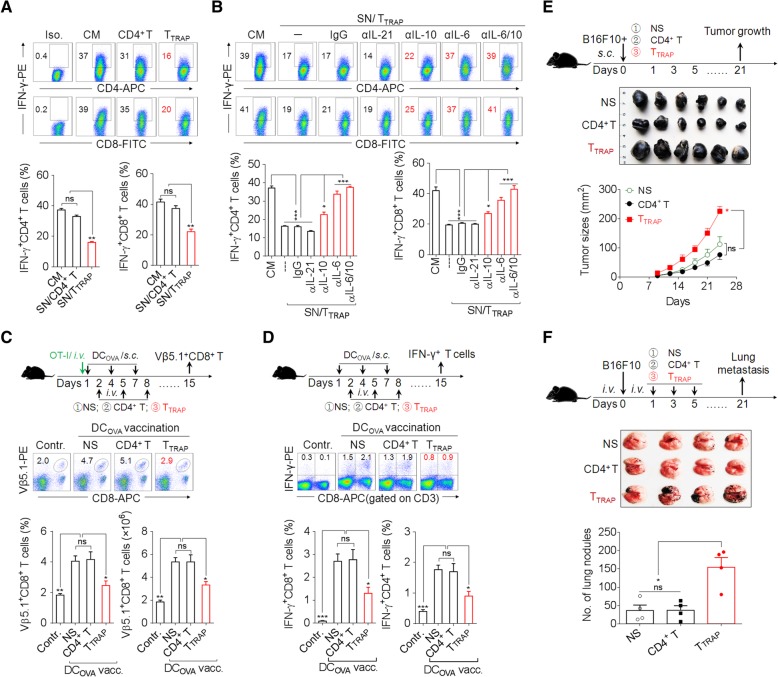
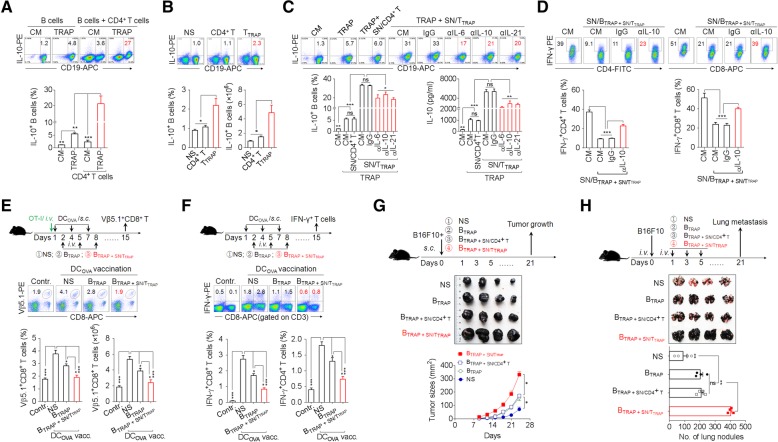
Heat shock protein 90α (HSP90α) on the surface of TRAPs from malignant effusions of cancer patients and tumor cell lines stimulated CD4 T cell production of IL-6 via a TLR2-MyD88-NF-κB signal cascade. TRAPs-induced autocrine IL-6 further promoted CD4 T cells secretion of IL-10 and IL-21 via STAT3. Notably, TRAPs-elicited CD4 T cells inhibited CD4 and CD8 effector T cell function in an IL-6- and IL-10-dependent manner and induced IL-10-producing regulatory B cells (Bregs) via IL-6, IL-10 and IL-21, thereby promoting tumor growth and metastasis. Consistently, inhibition of tumor autophagosome formation or IL-6 secretion by CD4 T cells markedly retarded tumor growth. Furthermore, B cell or CD4 T cell depletion impeded tumor growth by increasing effector T cell function.
HSP90α on the surface of TRAPs programs the immunosuppressive functions of CD4 T cells to promote tumor growth and metastasis. TRAPs or their membrane-bound HSP90α represent important therapeutic targets to reverse cancer-associated immunosuppression and improve immunotherapy.
CD4 T 细胞是抗肿瘤免疫的关键效应器,但肿瘤细胞如何影响 CD4 T 细胞效应功能尚不完全清楚。肿瘤细胞释放的自噬体(TRAPs)在肿瘤进展过程中被认为是宿主抗肿瘤免疫的关键调节剂。在这里,我们探讨了 TRAPs 在肿瘤微环境中调节 CD4 T 细胞的机制。
从肿瘤细胞系和癌症患者的胸腔积液或腹水中分离出 TRAPs,与 CD4 T 细胞孵育,以研究 TRAPs 在 CD4 T 细胞分化和功能中的作用和机制。在小鼠模型中测试 TRAP 诱导的 CD4 T 细胞对效应 T 细胞功能的抑制、调节性 B 细胞的诱导以及促进肿瘤发生和转移的作用。
来自癌症患者恶性积液和肿瘤细胞系的 TRAP 表面的热休克蛋白 90α(HSP90α)通过 TLR2-MyD88-NF-κB 信号级联刺激 CD4 T 细胞产生 IL-6。TRAP 诱导的自分泌 IL-6 进一步通过 STAT3 促进 CD4 T 细胞分泌 IL-10 和 IL-21。值得注意的是,TRAP 诱导的 CD4 T 细胞以 IL-6 和 IL-10 依赖的方式抑制 CD4 和 CD8 效应 T 细胞的功能,并通过 IL-6、IL-10 和 IL-21 诱导产生 IL-10 的调节性 B 细胞(Bregs),从而促进肿瘤生长和转移。一致地,通过 CD4 T 细胞抑制肿瘤自噬体形成或 IL-6 分泌,显著延缓肿瘤生长。此外,B 细胞或 CD4 T 细胞耗竭通过增加效应 T 细胞功能来阻碍肿瘤生长。
TRAPs 表面的 HSP90α赋予 CD4 T 细胞免疫抑制功能,以促进肿瘤生长和转移。TRAPs 或其膜结合 HSP90α 代表重要的治疗靶点,可逆转与癌症相关的免疫抑制并改善免疫治疗。