Department of Oral Immunology and Infectious Diseases, University of Louisville School of Dentistry, Louisville, KY 40202, USA.
Department of Medicine, Diabetes and Obesity Center, University of Louisville, Louisville, KY 40202, USA.
Dis Model Mech. 2019 Jul 3;12(7):dmm039073. doi: 10.1242/dmm.039073.
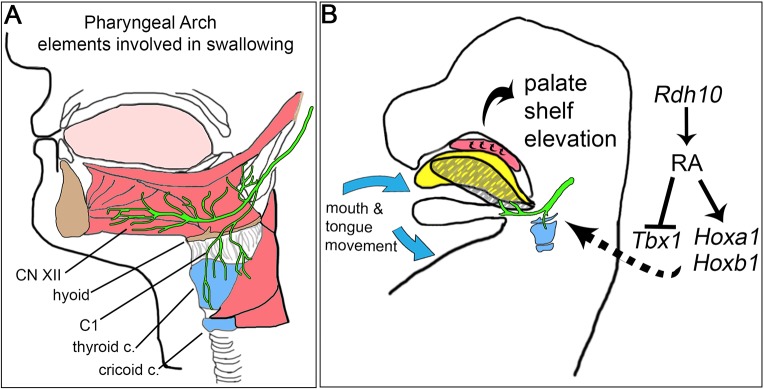
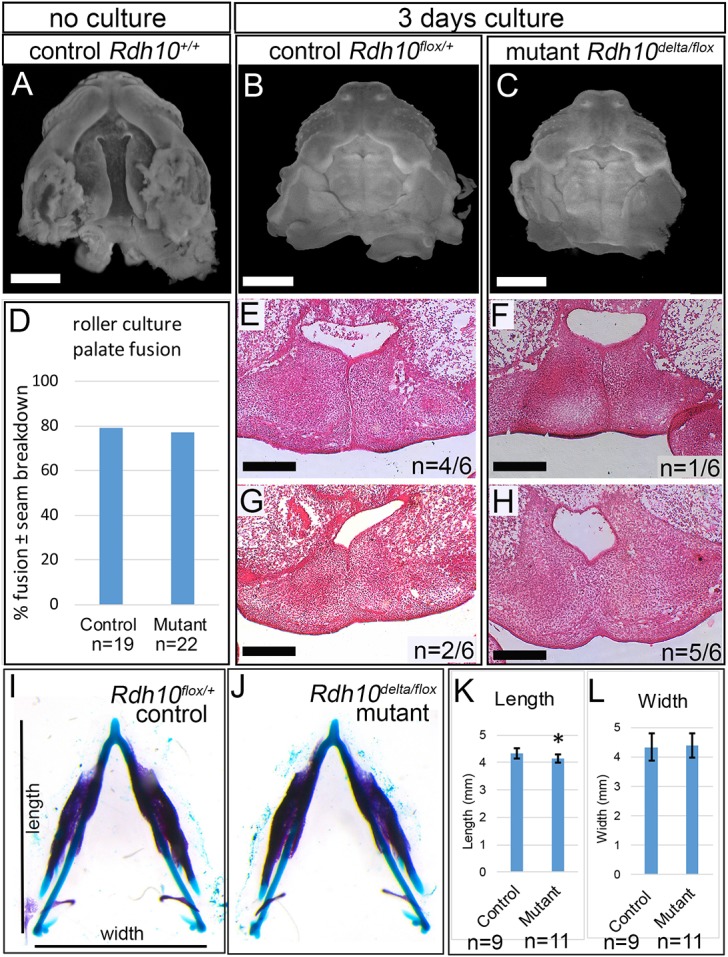
Cleft palate is a common birth defect, occurring in approximately 1 in 1000 live births worldwide. Known etiological mechanisms of cleft palate include defects within developing palate shelf tissues, defects in mandibular growth and defects in spontaneous fetal mouth movement. Until now, experimental studies directly documenting fetal mouth immobility as an underlying cause of cleft palate have been limited to models lacking neurotransmission. This study extends the range of anomalies directly demonstrated to have fetal mouth movement defects correlated with cleft palate. Here, we show that mouse embryos deficient in retinoic acid (RA) have mispatterned pharyngeal nerves and skeletal elements that block spontaneous fetal mouth movement Using X-ray microtomography, ultrasound video, culture and tissue staining, we demonstrate that proper retinoid signaling and pharyngeal patterning are crucial for the fetal mouth movement needed for palate formation. Embryos with deficient retinoid signaling were generated by stage-specific inactivation of retinol dehydrogenase 10 (), a gene crucial for the production of RA during embryogenesis. The finding that cleft palate in retinoid deficiency results from a lack of fetal mouth movement might help elucidate cleft palate etiology and improve early diagnosis in human disorders involving defects of pharyngeal development.
腭裂是一种常见的出生缺陷,全球大约每 1000 例活产儿中就有 1 例。腭裂的已知病因机制包括:正在发育的腭突组织缺陷、下颌生长缺陷和自发性胎儿口腔运动缺陷。直到现在,直接证明胎儿口腔运动障碍是腭裂潜在病因的实验研究仅限于缺乏神经传递的模型。本研究扩展了直接证明与腭裂相关的胎儿口腔运动缺陷的异常范围。在这里,我们发现缺乏视黄酸(RA)的小鼠胚胎具有错误模式的咽神经和骨骼元素,这些元素会阻止自发性胎儿口腔运动。我们使用 X 射线微断层扫描、超声视频、培养和组织染色,证明适当的视黄醇信号和咽模式对于形成腭所需的胎儿口腔运动至关重要。通过特异性失活视黄醇脱氢酶 10 () 来生成缺乏视黄醇信号的胚胎,该基因在胚胎发生过程中对视黄酸的产生至关重要。视黄酸缺乏导致的腭裂是由于胎儿口腔运动缺乏引起的,这一发现可能有助于阐明腭裂的病因,并改善涉及咽发育缺陷的人类疾病的早期诊断。