Department of Neurology, Zhongshan Hospital, Fudan University, Fenglin Road, Shanghai 200032, China; Shanghai Medical College of Fudan University, Dongan Road, Shanghai 200032, China.
Department of Neurology, Zhongshan Hospital, Fudan University, Fenglin Road, Shanghai 200032, China.
Brain Behav Immun. 2019 Oct;81:535-544. doi: 10.1016/j.bbi.2019.07.014. Epub 2019 Jul 12.
This study aimed to investigate whether 1-trifluoromethoxyphenyl-3-(1-propionylpiperidin-4-yl) urea (TPPU), a soluble epoxide hydrolase inhibitor with anti-inflammatory effects, could alleviate spontaneous recurrent seizures (SRS) and epilepsy-associated depressive behaviours in the lithium chloride (LiCl)-pilocarpine-induced post-status epilepticus (SE) rat model.
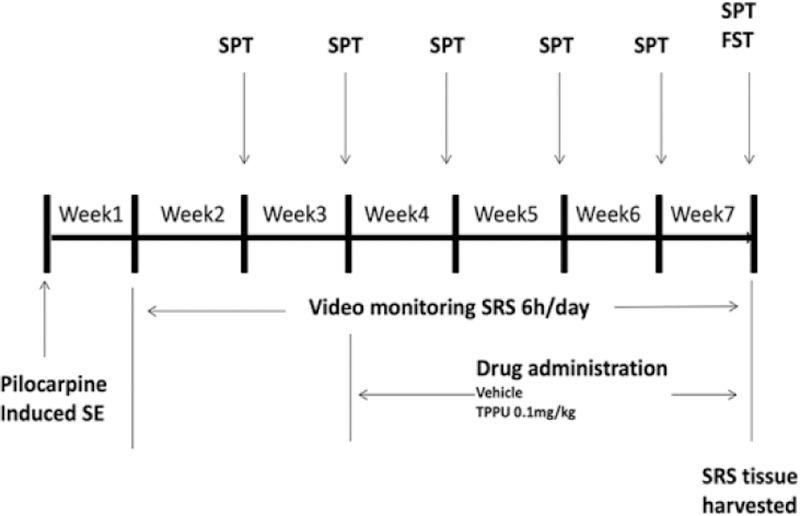
The rats were intraperitoneally (IP) injected with LiCl (127 mg/kg) and pilocarpine (40 mg/kg) to induce SE. A video surveillance system was used to monitor SRS in the post-SE model for 6 weeks (from the onset of the 2nd week to the end of the 7th week after SE induction). TPPU (0.1 mg/kg/d) was intragastrically given for 4 weeks from the 21st day after SE induction in the SRS + 0.1 TPPU group. The SRS + PEG 400 group was given the vehicle (40% polyethylene glycol 400) instead, and the control group was given LiCl and PEG 400 but not pilocarpine. The sucrose preference test (SPT) and forced swim test (FST) were conducted to evaluate the depression-like behaviours of rats. Immunofluorescent staining, enzyme-linked immunosorbent assay, and western blot analysis were performed to measure astrocytic and microglial gliosis, neuronal loss, and levels of soluble epoxide hydrolase (sEH), cytokines [tumour necrosis factor alpha (TNF-α), interleukin (IL)-1β, and IL-6], and cyclic adenosine monophosphate (cAMP)-response element binding protein (CREB).
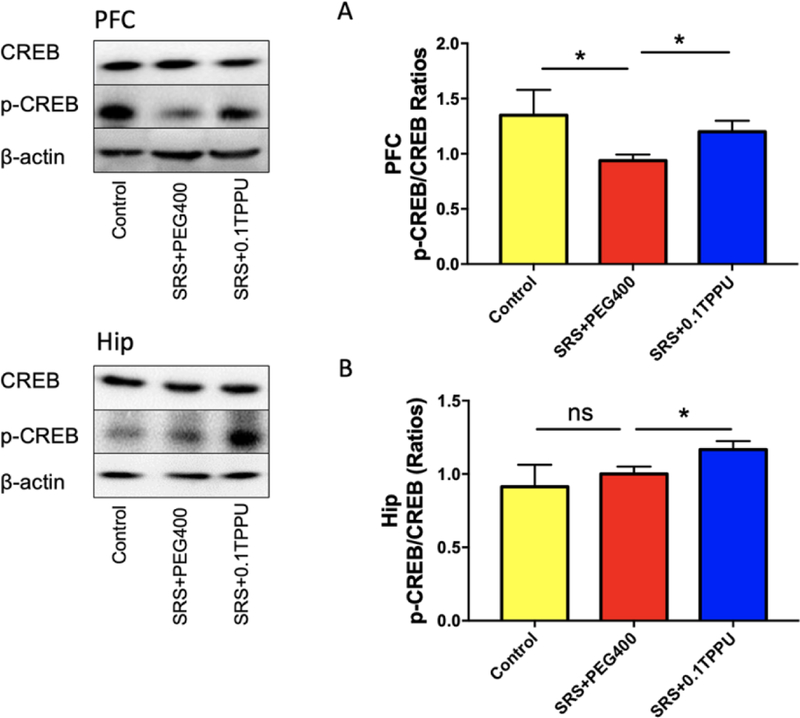
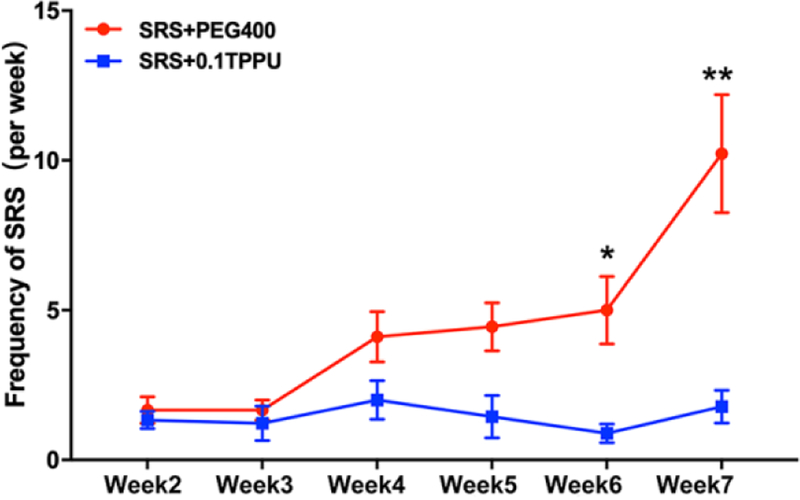
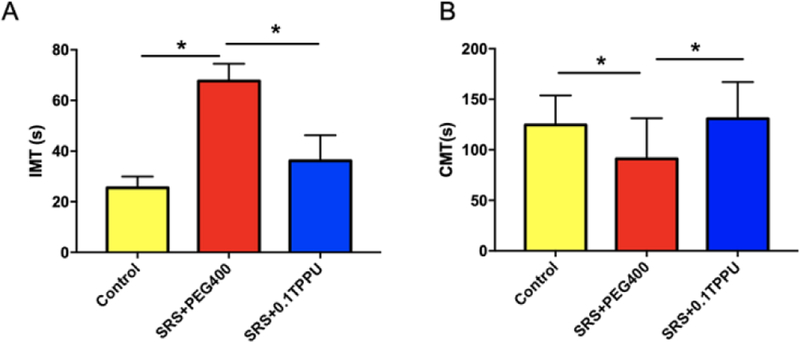
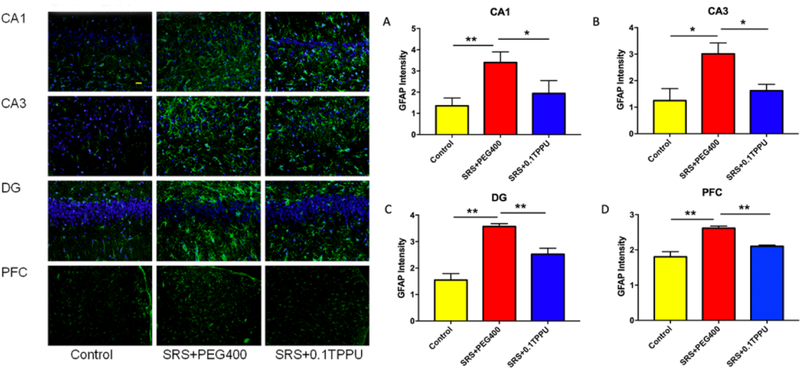
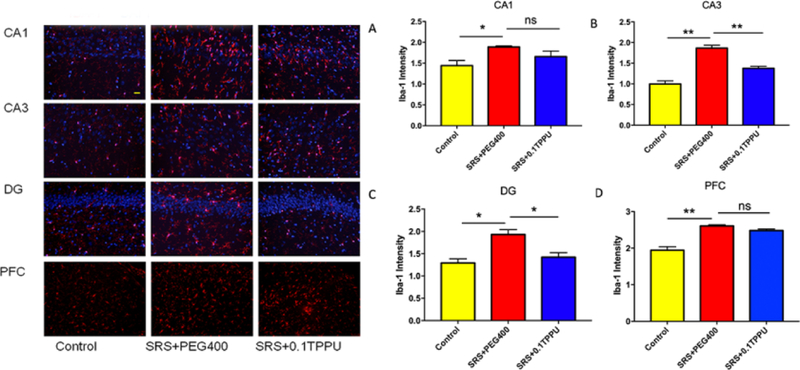
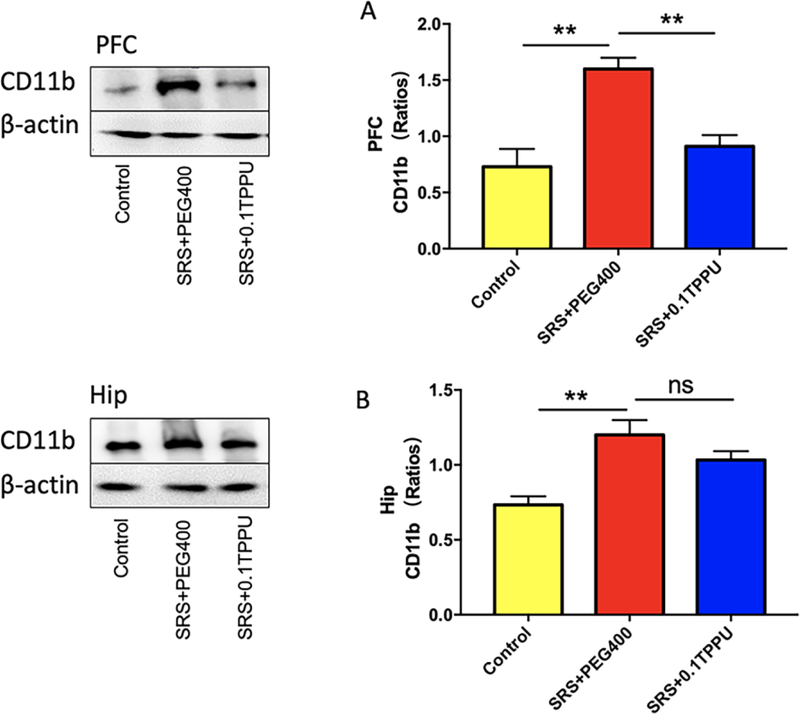
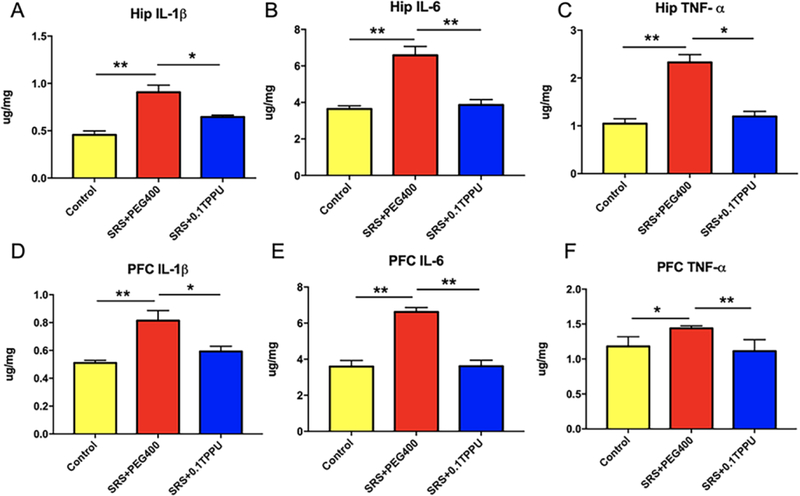
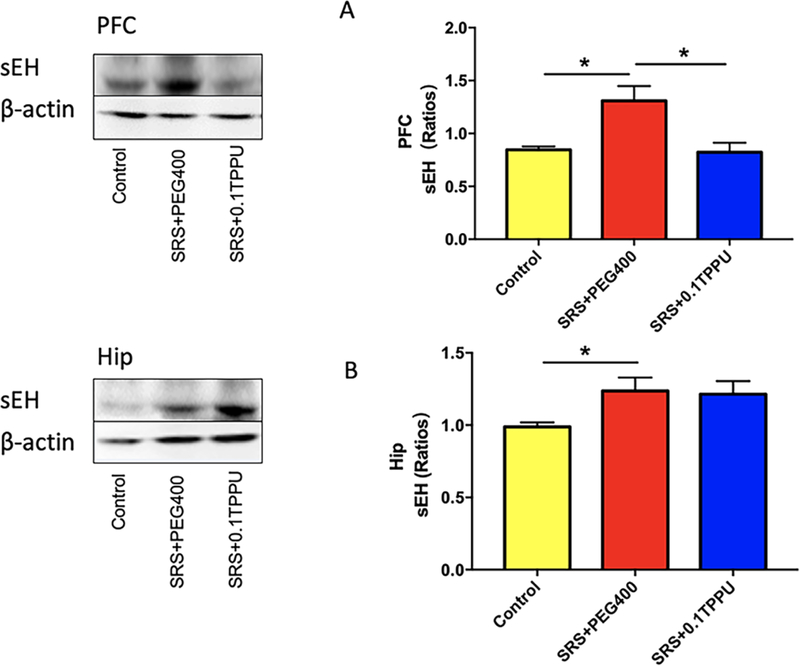
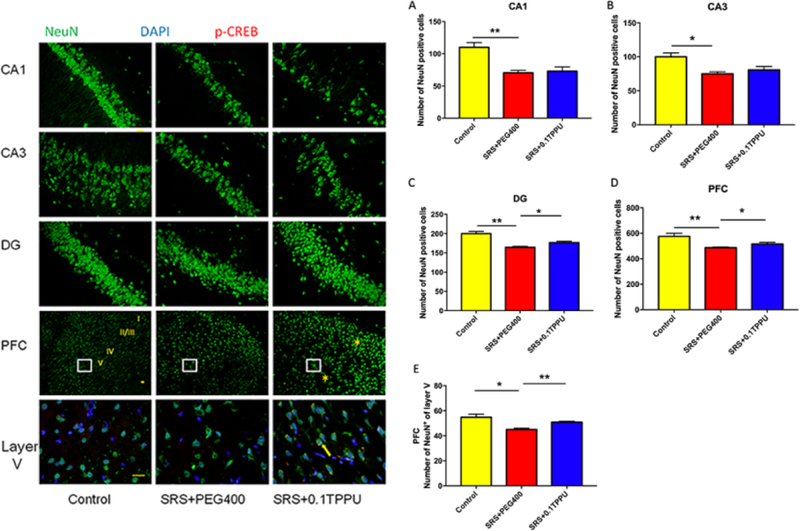
The frequency of SRS was significantly decreased at 6 weeks and 7 weeks after SE induction in the 0.1TPP U group compared with the SRS + PEG 400 group. The immobility time (IMT) evaluated by FST was significantly decreased, whereas the climbing time (CMT) was increased, and the sucrose preference rate (SPR) evaluated by SPT was in an increasing trend. The levels of sEH, TNF-α, IL-1β, and IL-6 in the hippocampus (Hip) and prefrontal cortex (PFC) were all significantly increased in the SRS + PEG 400 group compared with the control group; neuronal loss, astrogliosis, and microglial activation were also observed. The astrocytic and microglial activation and levels of the pro-inflammatory cytokines in the Hip and PFC were significantly attenuated in the TPPU group compared with the SRS + PEG 400 group; moreover, neuronal loss and the decreased CREB expression were significantly alleviated as well.
TPPU treatment after SE attenuates SRS and epilepsy-associated depressive behaviours in the LiCl-pilocarpine induced post-SE rat model, and it also exerts anti-inflammatory effects in the brain. Our findings suggest a new therapeutic approach for epilepsy and its comorbidities, especially depression.
本研究旨在探讨可溶性环氧化物水解酶抑制剂 1-三氟甲氧基苯基-3-(1-丙酰基哌啶-4-基)脲(TPPU)是否能减轻锂-匹罗卡品诱导的癫痫持续状态(SE)后自发性复发性癫痫(SRS)和癫痫相关抑郁行为。
通过腹腔(IP)注射氯化锂(127mg/kg)和匹罗卡品(40mg/kg)诱导 SE,使用视频监测系统监测 SE 后模型中的 SRS 6 周(从第 2 周开始到 SE 诱导后第 7 周结束)。TPPU(0.1mg/kg/d)从 SE 诱导后第 21 天开始连续 4 周灌胃给药于 SRS+0.1TPPU 组,SRS+PEG400 组给予载体(40%聚乙二醇 400),对照组给予氯化锂和 PEG400,但不给匹罗卡品。通过蔗糖偏好测试(SPT)和强迫游泳测试(FST)评估大鼠的抑郁样行为。免疫荧光染色、酶联免疫吸附测定和 Western blot 分析用于测量星形胶质细胞和小胶质细胞增生、神经元丢失以及可溶性环氧化物水解酶(sEH)、细胞因子[肿瘤坏死因子-α(TNF-α)、白细胞介素(IL)-1β和 IL-6]和环磷酸腺苷反应元件结合蛋白(CREB)的水平。
与 SRS+PEG400 组相比,SRS+0.1TPPU 组在 SE 诱导后 6 周和 7 周时 SRS 发作频率明显降低。FST 评估的不动时间(IMT)明显减少,而攀爬时间(CMT)增加,SPT 评估的蔗糖偏好率(SPR)呈上升趋势。与对照组相比,SRS+PEG400 组海马(Hip)和前额叶皮层(PFC)中的 sEH、TNF-α、IL-1β和 IL-6 水平均显著升高;也观察到神经元丢失、星形胶质细胞增生和小胶质细胞激活。与 SRS+PEG400 组相比,TPPU 组 Hip 和 PFC 中的星形胶质细胞和小胶质细胞激活以及促炎细胞因子水平显著降低,神经元丢失和降低的 CREB 表达也显著减轻。
SE 后 TPPU 治疗可减轻锂-匹罗卡品诱导的 SE 后大鼠模型中的 SRS 和癫痫相关抑郁行为,并在大脑中发挥抗炎作用。我们的研究结果表明,TPPU 为癫痫及其共病,特别是抑郁症,提供了一种新的治疗方法。