Systems Biology Institute, Yale University, 850 West Campus Drive, West Haven, CT, 06516, USA.
Interdepartmental Program in Computational Biology and Bioinformatics, Yale University, 300 George Street, Suite 501, New Haven, CT, 06511, USA.
BMC Bioinformatics. 2019 Jul 15;20(1):391. doi: 10.1186/s12859-019-2921-3.
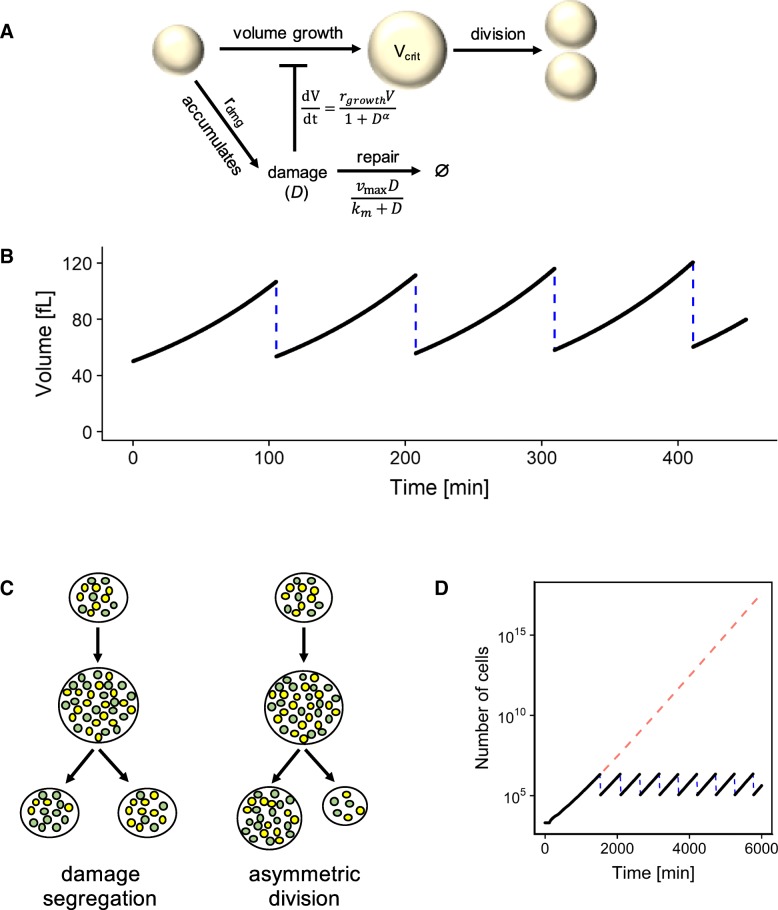
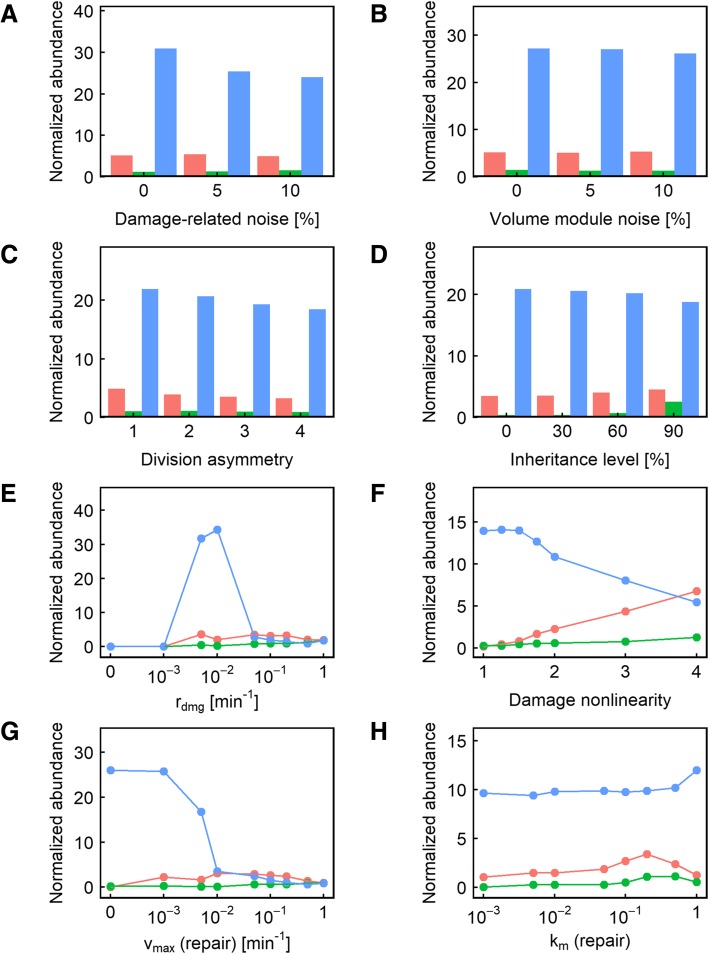
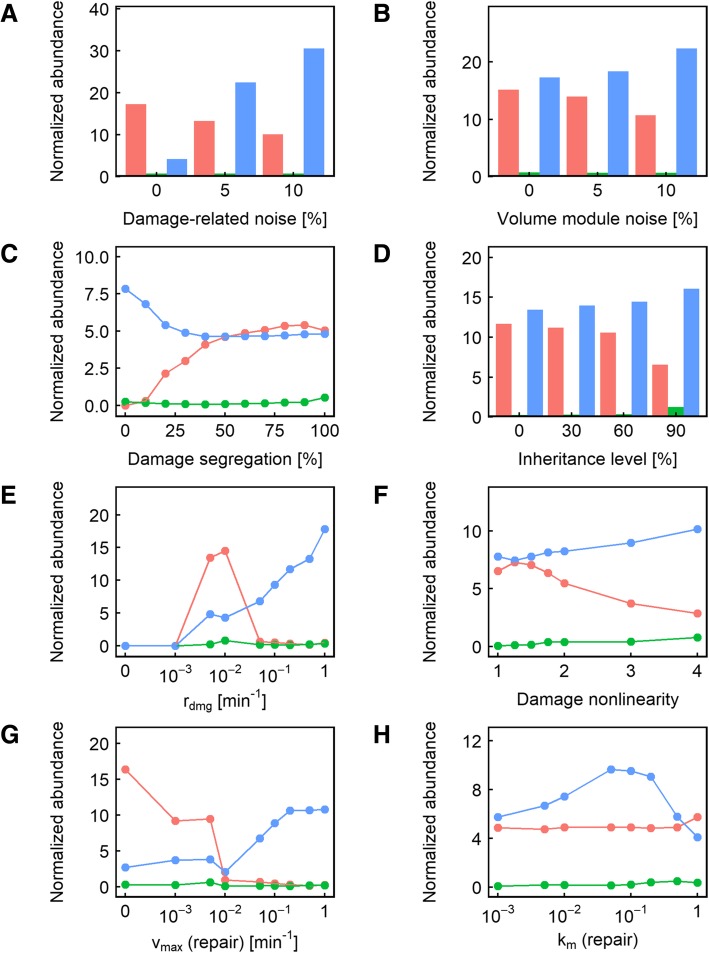
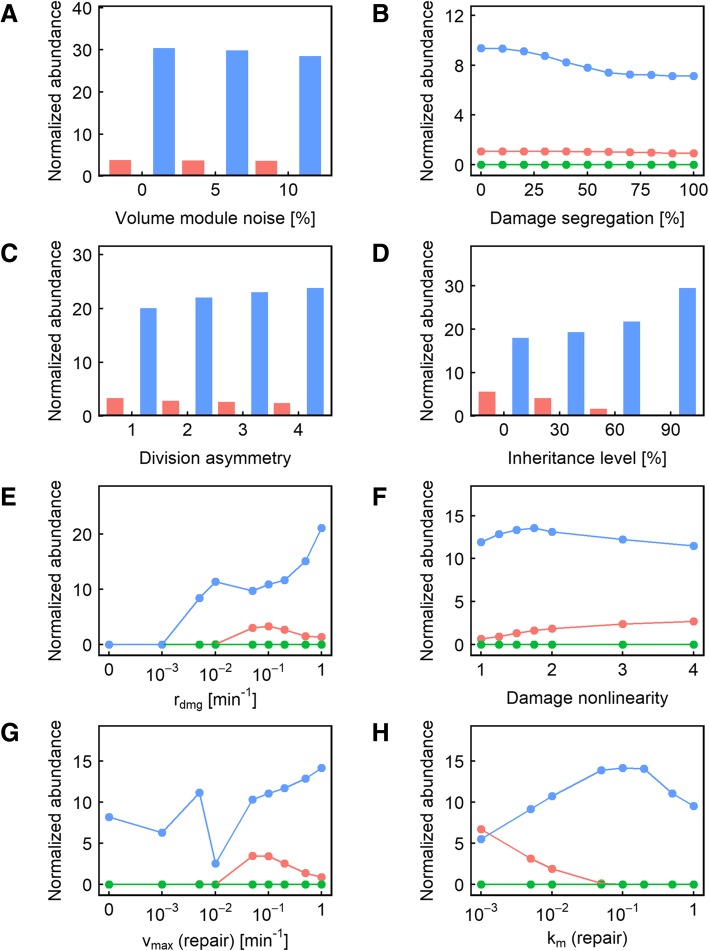
Asymmetry during cellular division, both in the uneven partitioning of damaged cellular components and of cell volume, is a cell biological phenomenon experienced by many unicellular organisms. Previous work based on a deterministic model claimed that such asymmetry in the partitioning of cell volume and of aging-associated damage confers a fitness benefit in avoiding clonal senescence, primarily by diversifying the cellular population. However, clonal populations of unicellular organisms are already naturally diversified due to the inherent stochasticity of biological processes.
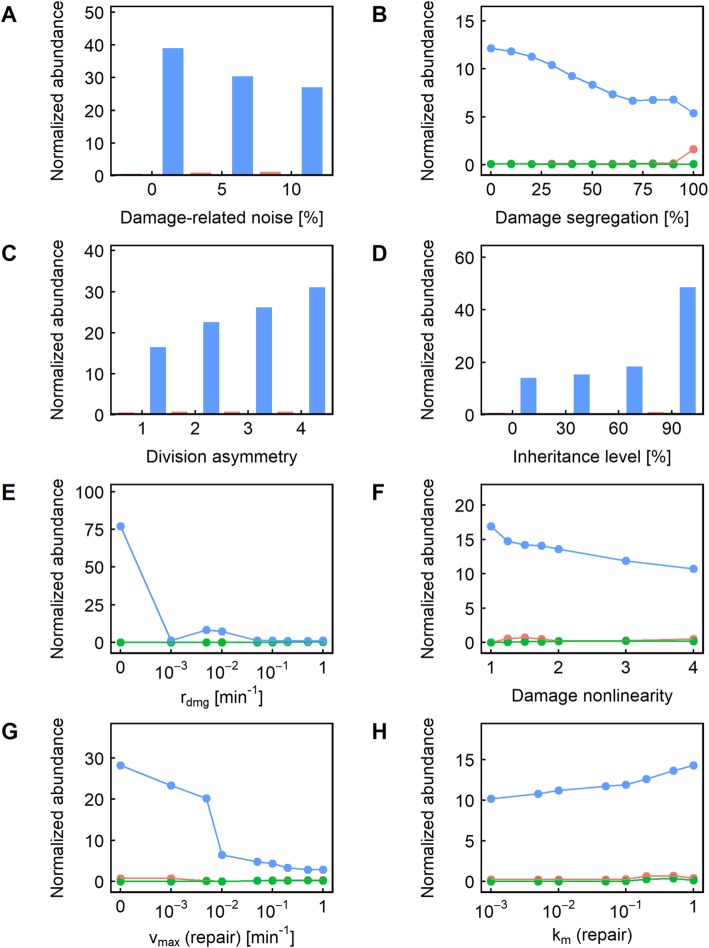
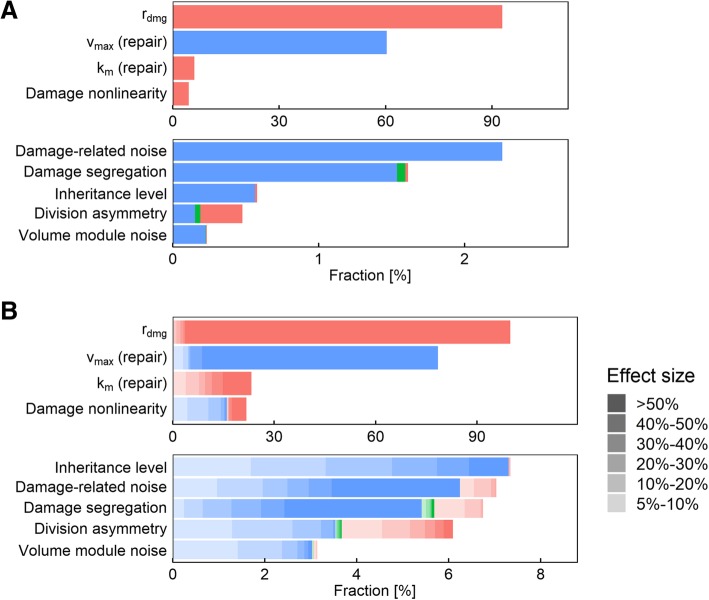
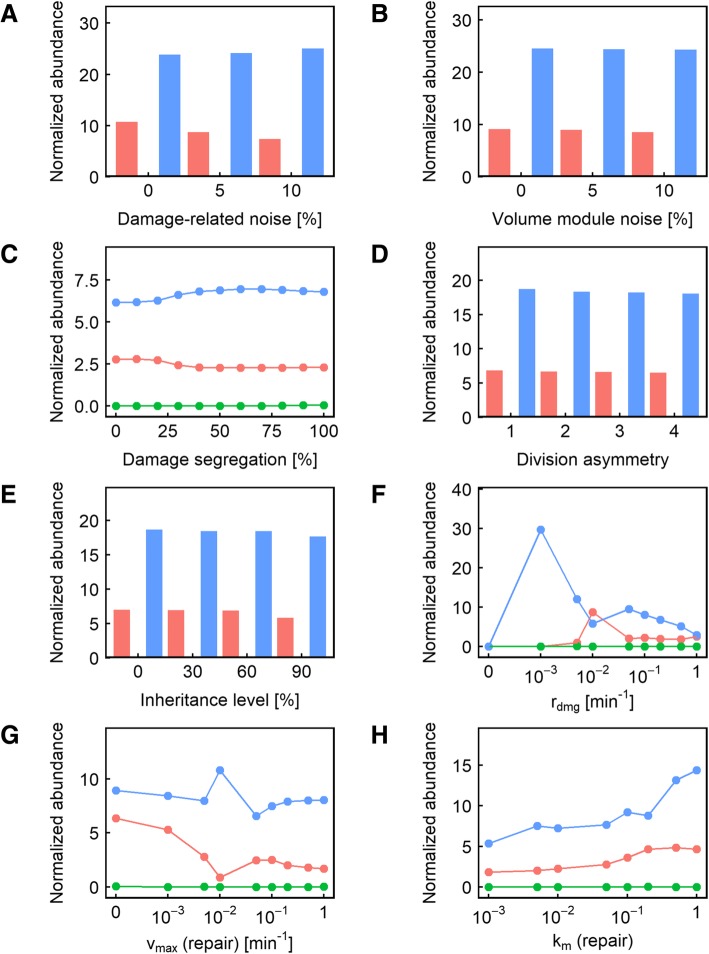
Applying a model of aging cells that accounts for natural cell-to-cell variations across a broad range of parameter values, here we show that the parameters directly controlling the accumulation and repair of damage are the most important factors affecting fitness and clonal senescence, while the effects of both segregation of damaged components and division asymmetry are frequently minimal and generally context-dependent.
We conclude that damage segregation and division asymmetry, perhaps counterintuitively, are not necessarily beneficial from an evolutionary perspective.
细胞分裂过程中的不对称性,无论是在受损细胞成分的不均匀分配还是在细胞体积的分配上,都是许多单细胞生物经历的细胞生物学现象。基于确定性模型的先前工作声称,细胞体积和与衰老相关的损伤分配的这种不对称性通过使细胞群体多样化,从而在避免克隆衰老方面赋予了适应性优势。然而,由于生物过程固有的随机性,单细胞生物的克隆群体已经自然多样化。
在这里,我们应用了一种衰老细胞模型,该模型考虑了在广泛的参数值范围内的自然细胞间变化,结果表明,直接控制损伤积累和修复的参数是影响适应性和克隆衰老的最重要因素,而受损成分的分离和分裂不对称的影响通常最小,并且通常取决于上下文。
我们的结论是,从进化的角度来看,损伤分离和分裂不对称性可能并非必然有利。