Glycosciences Laboratory, Department of Medicine, Imperial College London, London W12 0NN, United Kingdom.
Glycosciences Laboratory, Department of Medicine, Imperial College London, London W12 0NN, United Kingdom; Department of Surgery, Beth Israel Deaconess Medical Center, Harvard Medical School, Boston, Massachusetts 02215.
Mol Cell Proteomics. 2019 Oct;18(10):1981-2002. doi: 10.1074/mcp.RA119.001309. Epub 2019 Jul 15.
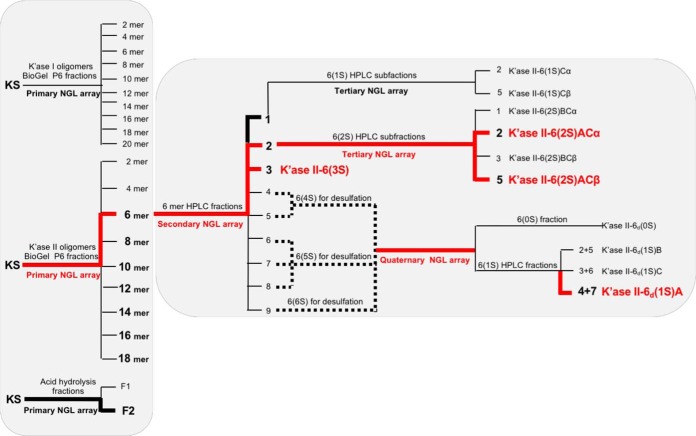
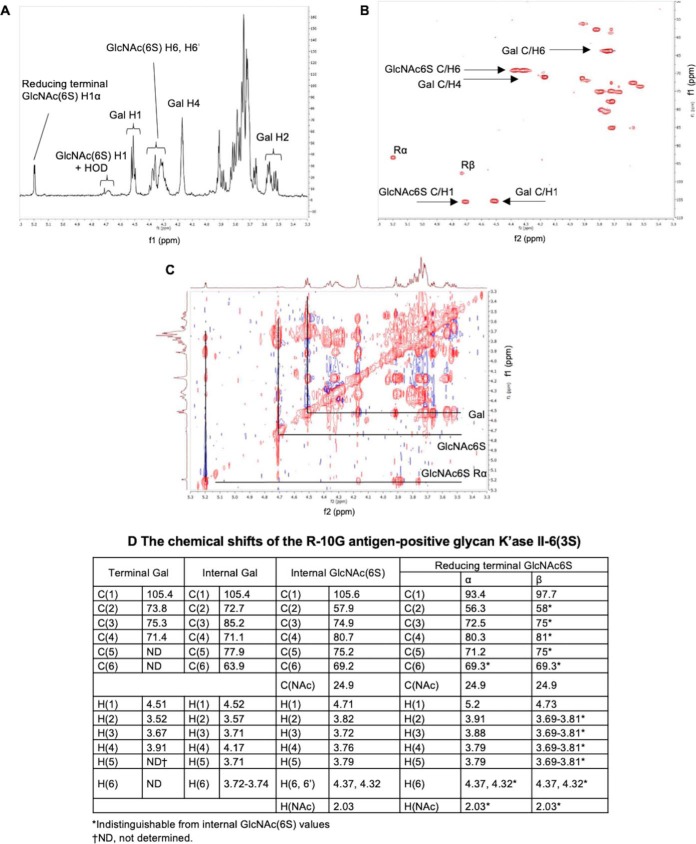
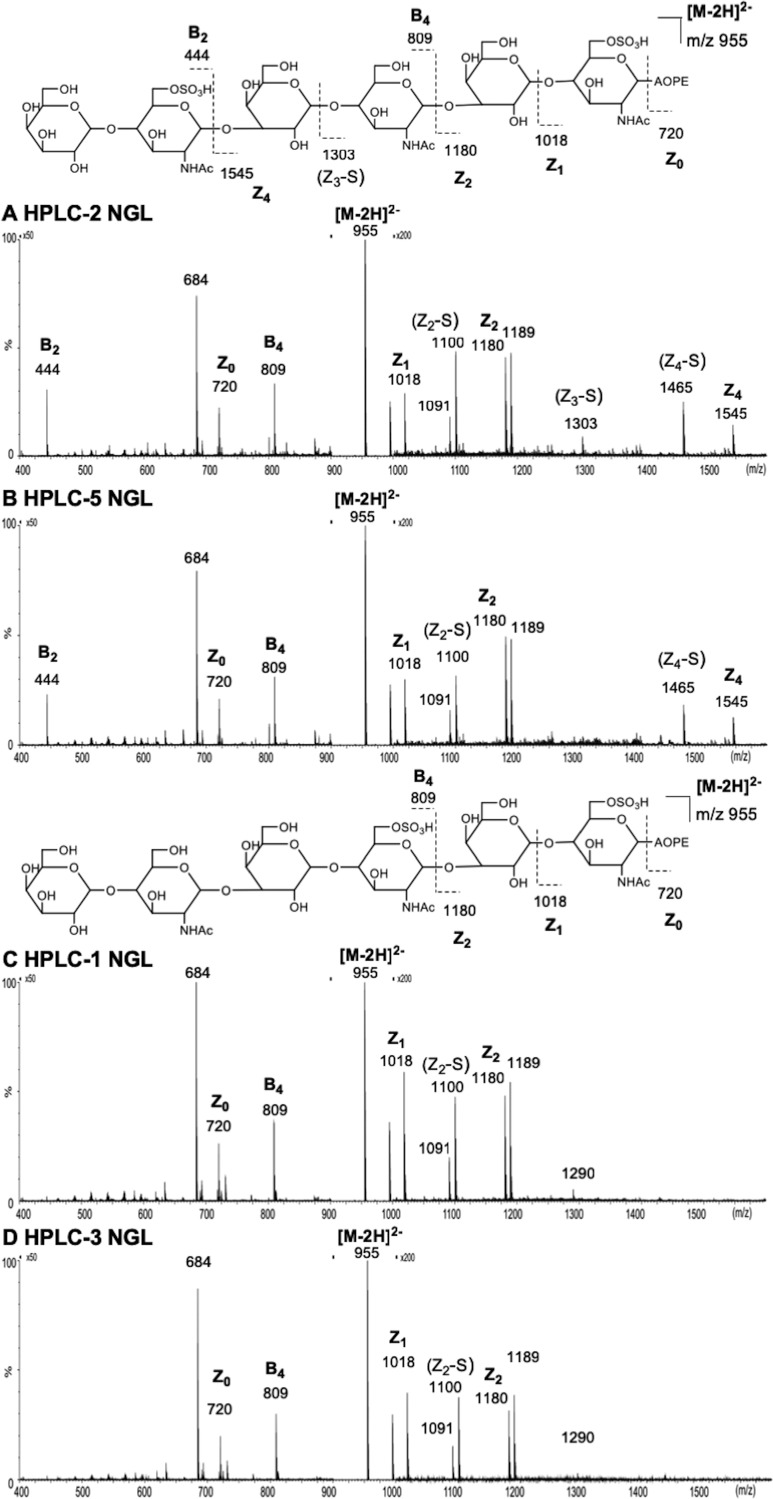
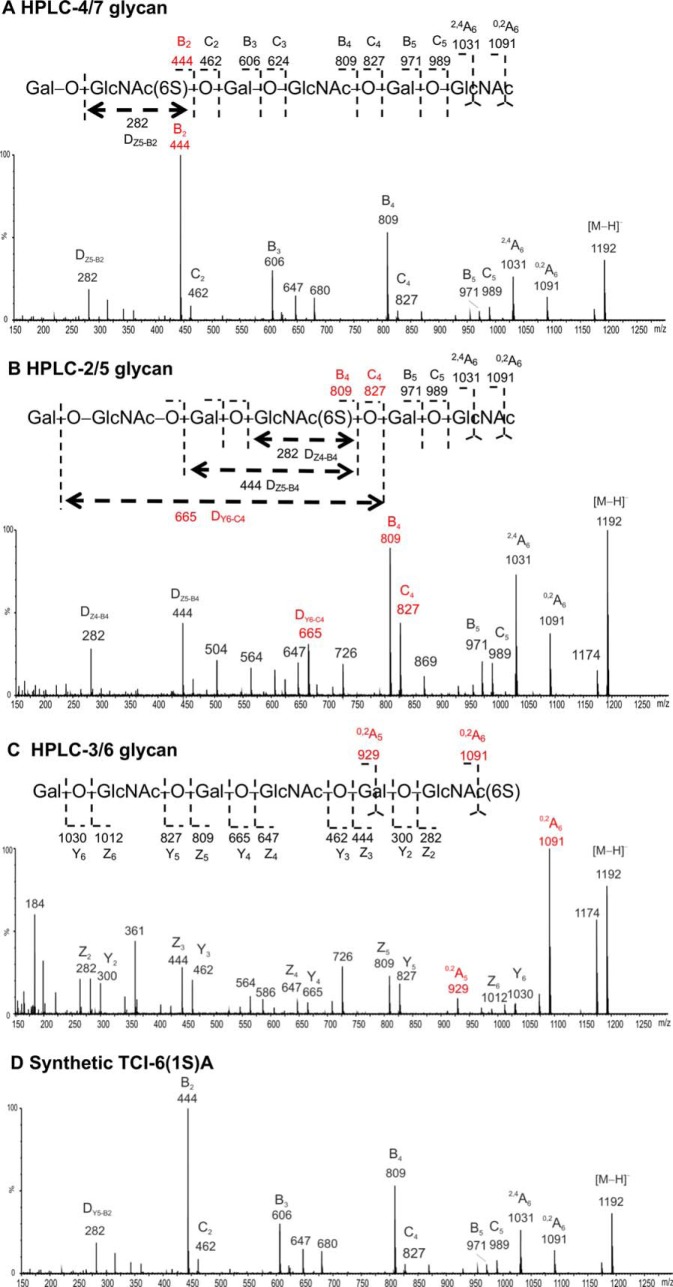
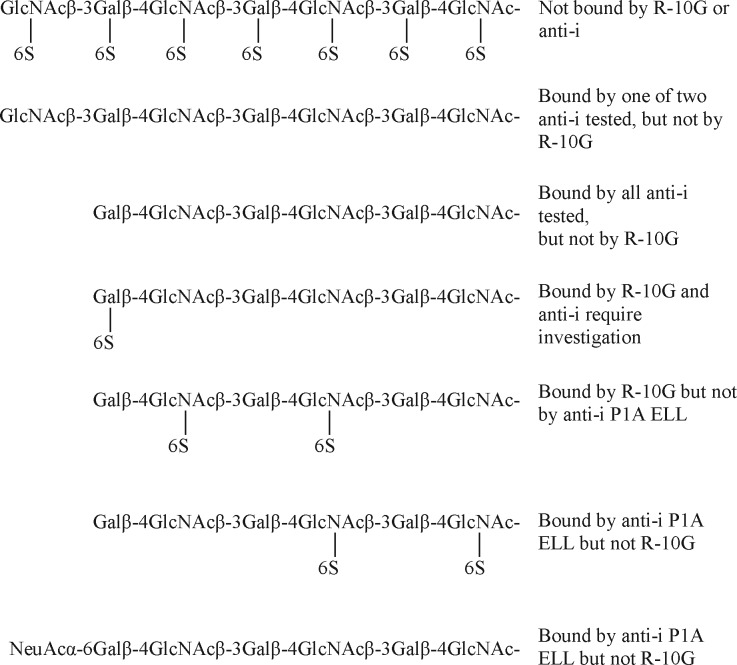
Glycan antigens recognized by monoclonal antibodies have served as stem cell markers. To understand regulation of their biosynthesis and their roles in stem cell behavior precise assignments are required. We have applied state-of-the-art glycan array technologies to compare the glycans bound by five antibodies that recognize carbohydrates on human stem cells. These are: FC10.2, TRA-1-60, TRA-1-81, anti-i and R-10G. Microarray analyses with a panel of sequence-defined glycans corroborate that FC10.2, TRA-1-60, TRA-1-81 recognize the type 1-(Galβ-3GlcNAc)-terminating backbone sequence, -3Galβ-4GlcNAcβ-3Galβ-4GlcNAc, and anti-i, the type 2-(Galβ-4GlcNAc) analog, -3Galβ-4GlcNAcβ-3Galβ-4GlcNAc, and we determine substituents they can accommodate. They differ from R-10G, which requires sulfate. By approach, starting with an antigen-positive keratan sulfate polysaccharide, followed by targeted iterative microarray analyses of glycan populations released with keratanases and mass spectrometric monitoring, R-10G is assigned as a mono-sulfated type 2 chain with 6-sulfation at the penultimate -acetylglucosamine, Galβ-4GlcNAc(6S)β-3Galβ-4GlcNAcβ-3Galβ-4GlcNAc. Microarray analyses using newly synthesized glycans corroborate the assignment of this unique determinant raising questions regarding involvement as a ligand in the stem cell niche.
糖抗原被单克隆抗体识别,可用作干细胞标志物。为了了解它们生物合成的调控及其在干细胞行为中的作用,需要进行精确的分配。我们应用最先进的聚糖阵列技术来比较五种识别人类干细胞上碳水化合物的抗体所结合的聚糖。它们是:FC10.2、TRA-1-60、TRA-1-81、抗-i 和 R-10G。用一系列序列定义的聚糖进行微阵列分析证实,FC10.2、TRA-1-60、TRA-1-81 识别 1-(Galβ-3GlcNAc)-末端主链序列-3Galβ-4GlcNAcβ-3Galβ-4GlcNAc,抗-i 识别 2-(Galβ-4GlcNAc)类似物-3Galβ-4GlcNAcβ-3Galβ-4GlcNAc,我们确定了它们可以容纳的取代基。它们与需要硫酸盐的 R-10G 不同。通过这种方法,从抗原阳性的硫酸角质素多糖开始,然后用角质酶靶向释放的聚糖进行迭代微阵列分析,并进行质谱监测,将 R-10G 分配为具有 6-硫酸化的单硫酸化 2 型链,在前一个 -乙酰葡萄糖胺处有 6-硫酸化,Galβ-4GlcNAc(6S)β-3Galβ-4GlcNAcβ-3Galβ-4GlcNAc。使用新合成的聚糖进行微阵列分析证实了这一独特决定因素的分配,这引发了关于其作为干细胞龛配体参与的问题。