Botanical Institute and Cluster of Excellence on Plant Sciences (CEPLAS), BioCenter, University of Cologne, Zülpicher Str. 47a, Cologne, 50674, Germany.
Center for Familial Breast and Ovarian Cancer, Medical Faculty, University Hospital Cologne, University of Cologne, Cologne, 50931, Germany.
Sci Rep. 2019 Jul 15;9(1):10227. doi: 10.1038/s41598-019-46734-3.
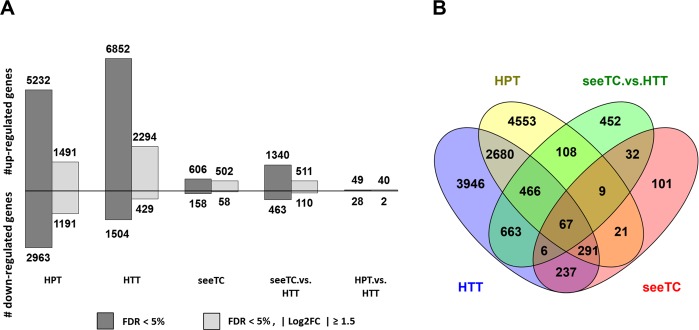
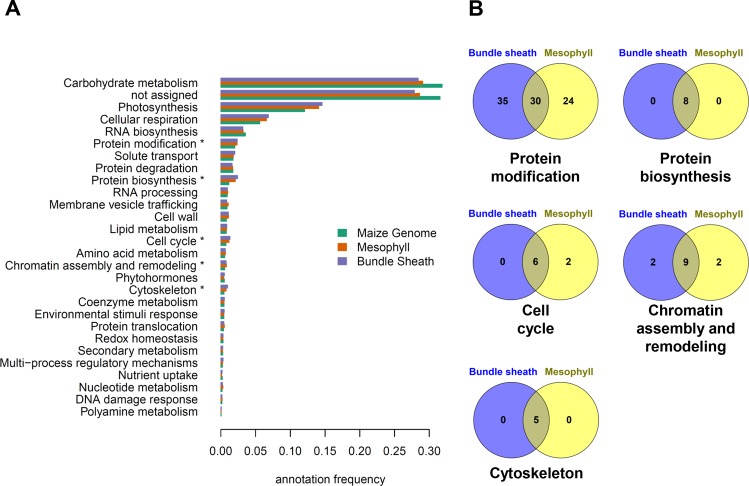
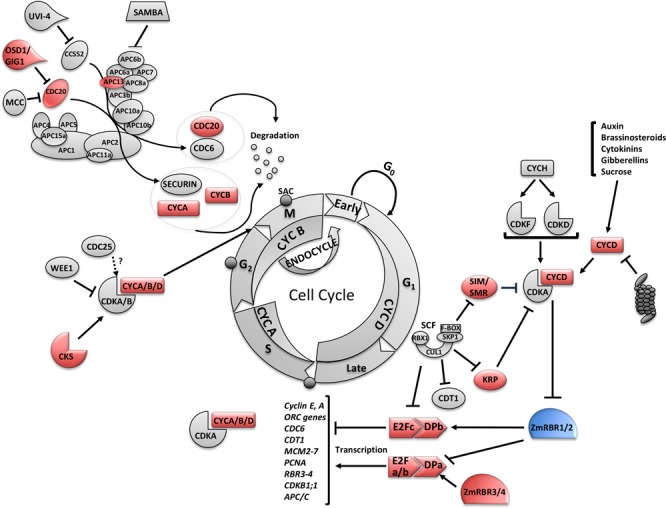
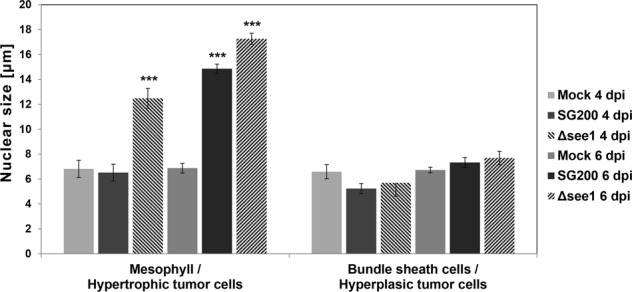
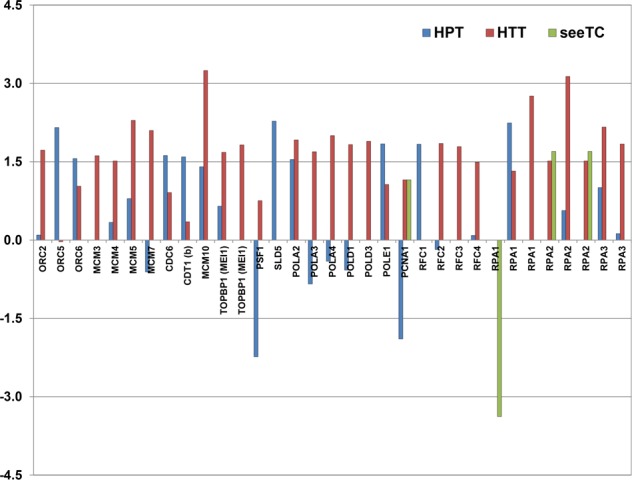
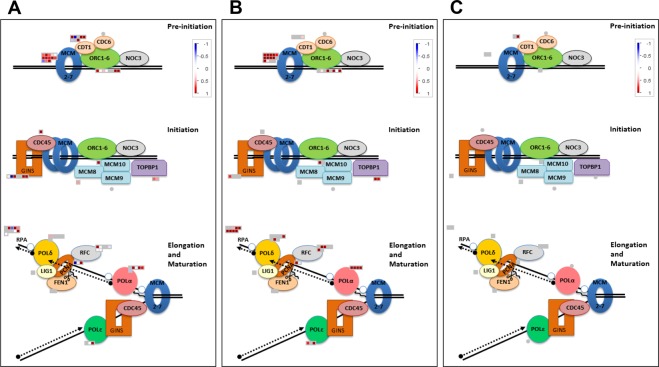
Ustilago maydis is a biotrophic pathogen and well-established genetic model to understand the molecular basis of biotrophic interactions. U. maydis suppresses plant defense and induces tumors on all aerial parts of its host plant maize. In a previous study we found that U. maydis induced leaf tumor formation builds on two major processes: the induction of hypertrophy in the mesophyll and the induction of cell division (hyperplasia) in the bundle sheath. In this study we analyzed the cell-type specific transcriptome of maize leaves 4 days post infection. This analysis allowed identification of key features underlying the hypertrophic and hyperplasic cell identities derived from mesophyll and bundle sheath cells, respectively. We examined the differentially expressed (DE) genes with particular focus on maize cell cycle genes and found that three A-type cyclins, one B-, D- and T-type are upregulated in the hyperplasic tumorous cells, in which the U. maydis effector protein See1 promotes cell division. Additionally, most of the proteins involved in the formation of the pre-replication complex (pre-RC, that assure that each daughter cell receives identic DNA copies), the transcription factors E2F and DPa as well as several D-type cyclins are deregulated in the hypertrophic cells.
玉米黑粉菌是一种生物营养性病原体,也是研究生物营养性相互作用分子基础的成熟遗传模型。玉米黑粉菌抑制植物防御系统,并在其宿主玉米的所有气生部分诱导肿瘤。在之前的研究中,我们发现玉米黑粉菌诱导叶片肿瘤形成依赖于两个主要过程:在叶肉中诱导肥大和在维管束鞘中诱导细胞分裂(增生)。在这项研究中,我们分析了感染后 4 天玉米叶片的细胞类型特异性转录组。该分析鉴定了肥大和增生细胞特性的关键特征,分别源自叶肉和维管束鞘细胞。我们研究了差异表达(DE)基因,特别关注玉米细胞周期基因,发现三个 A 型细胞周期蛋白、一个 B 型、D 型和 T 型在增生性肿瘤细胞中上调,其中玉米黑粉菌效应蛋白 See1 促进细胞分裂。此外,参与前复制复合物(pre-RC)形成的大多数蛋白质、转录因子 E2F 和 DPa 以及几个 D 型细胞周期蛋白在肥大细胞中失调。