KEMRI-Wellcome Trust Research Programme, Kilifi, Kenya.
The Jenner Institute, University of Oxford, Oxford OX1 2JD, UK.
J Gen Virol. 2019 Aug;100(8):1187-1199. doi: 10.1099/jgv.0.001296. Epub 2019 Jul 16.
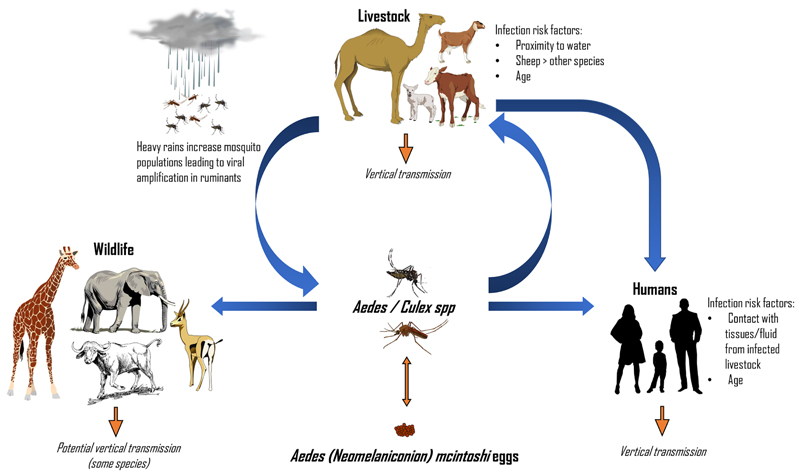
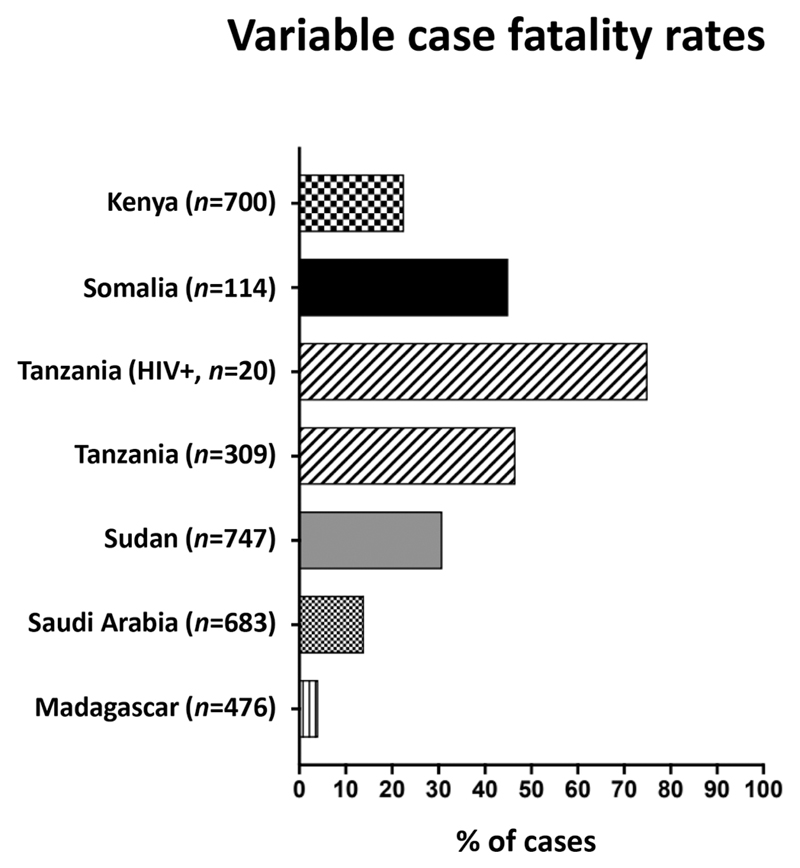
Rift Valley fever (RVF) is a mosquito-borne viral zoonosis that was first discovered in Kenya in 1930 and is now endemic throughout multiple African countries and the Arabian Peninsula. RVF virus primarily infects domestic livestock (sheep, goats, cattle) causing high rates of neonatal mortality and abortion, with human infection resulting in a wide variety of clinical outcomes, ranging from self-limiting febrile illness to life-threatening haemorrhagic diatheses, and miscarriage in pregnant women. Since its discovery, RVF has caused many outbreaks in Africa and the Arabian Peninsula with major impacts on human and animal health. However, options for the control of RVF outbreaks are limited by the lack of licensed human vaccines or therapeutics. For this reason, RVF is prioritized by the World Health Organization for urgent research and development of countermeasures for the prevention and control of future outbreaks. In this review, we highlight the current understanding of RVF, including its epidemiology, pathogenesis, clinical manifestations and status of vaccine development.
裂谷热(RVF)是一种由蚊子传播的病毒性人畜共患病,于 1930 年首次在肯尼亚发现,现已在多个非洲国家和阿拉伯半岛流行。RVF 病毒主要感染家畜(绵羊、山羊、牛),导致高比例的新生儿死亡率和流产,人类感染则导致多种临床结果,从自限性发热疾病到危及生命的出血性素质,以及孕妇流产。自发现以来,RVF 在非洲和阿拉伯半岛多次暴发,对人类和动物健康造成重大影响。然而,由于缺乏许可的人类疫苗或疗法,对 RVF 暴发的控制选择有限。出于这个原因,世界卫生组织将 RVF 列为优先事项,以紧急研究和开发预防和控制未来暴发的对策。在这篇综述中,我们强调了对 RVF 的现有理解,包括其流行病学、发病机制、临床表现和疫苗开发状况。