Biosecurity and Public Health, Bioscience Division, Los Alamos National Laboratory , Los Alamos , NM , USA.
Department of Pathology, University of New Mexico School of Medicine , Albuquerque , NM , USA.
MAbs. 2019 Oct;11(7):1206-1218. doi: 10.1080/19420862.2019.1632113. Epub 2019 Jul 16.
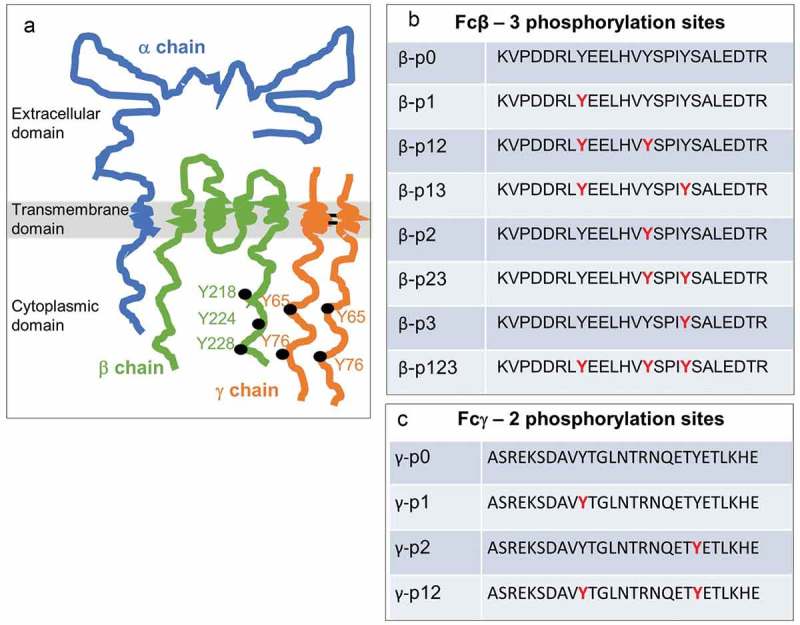
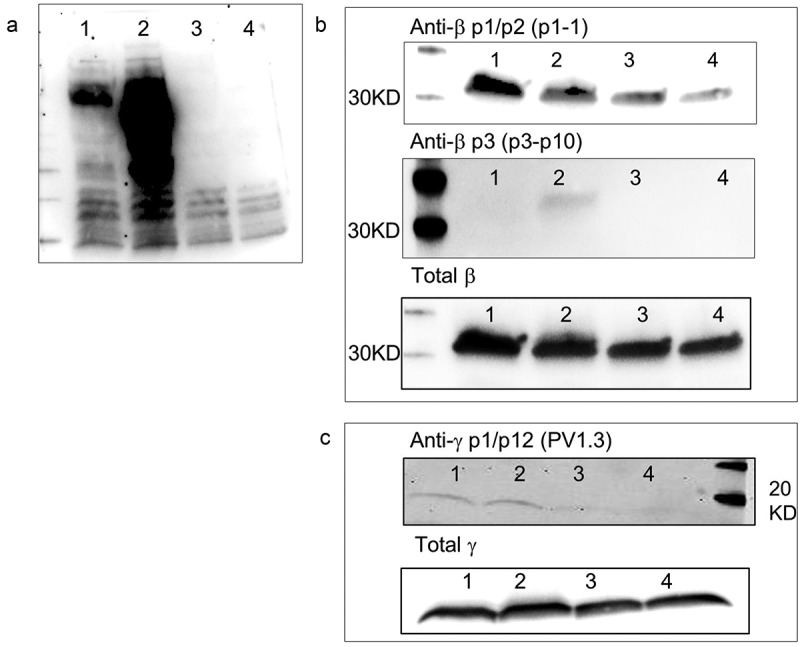
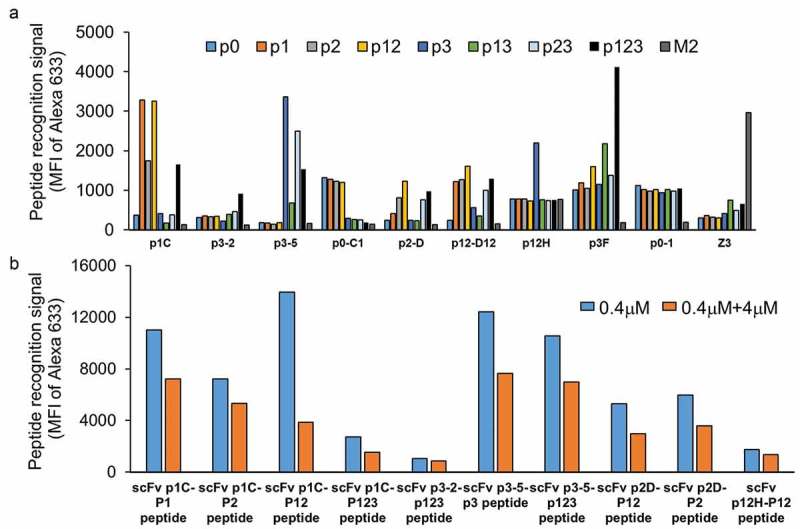
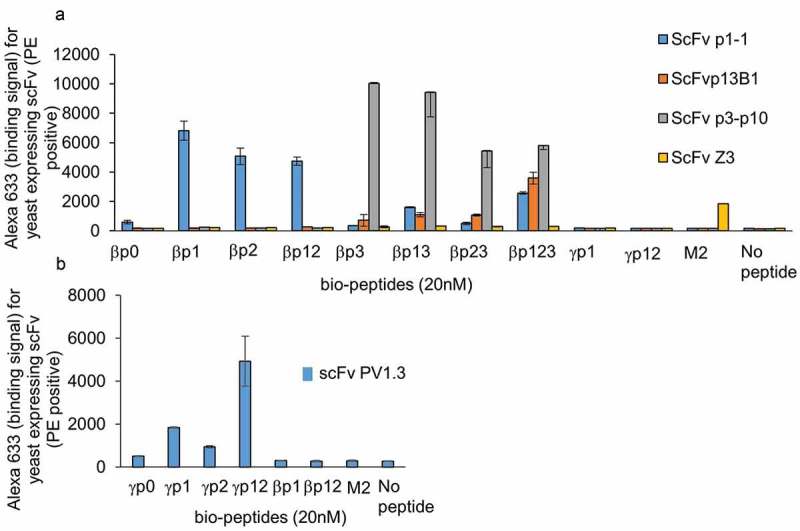
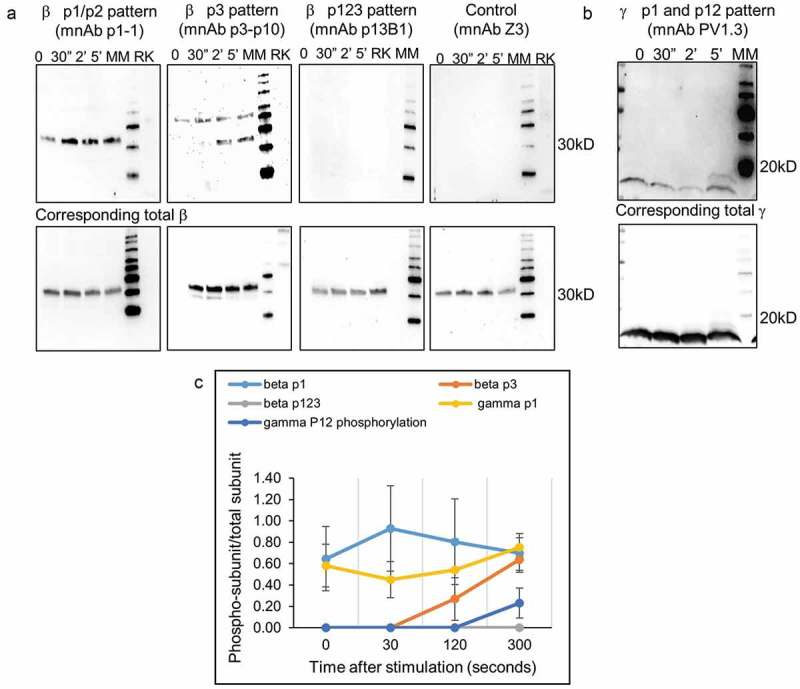
Post-translational modifications, such as the phosphorylation of tyrosines, are often the initiation step for intracellular signaling cascades. Pan-reactive antibodies against modified amino acids (e.g., anti-phosphotyrosine), which are often used to assay these changes, require isolation of the specific protein prior to analysis and do not identify the specific residue that has been modified (in the case that multiple amino acids have been modified). Phosphorylation state-specific antibodies (PSSAs) developed to recognize post-translational modifications within a specific amino acid sequence can be used to study the timeline of modifications during a signal cascade. We used the FcεRI receptor as a model system to develop and characterize high-affinity PSSAs using phage and yeast display technologies. We selected three β-subunit antibodies that recognized: 1) phosphorylation of tyrosines Y or Y; 2) phosphorylation of the Y tyrosine; and 3) phosphorylation of all three tyrosines. We used these antibodies to study the receptor activation timeline of FcεR1 in rat basophilic leukemia cells (RBL-2H3) upon stimulation with DNP-BSA. We also selected an antibody recognizing the N-terminal phosphorylation site of the γ-subunit (Y) of the receptor and applied this antibody to evaluate receptor activation. Recognition patterns of these antibodies show different timelines for phosphorylation of tyrosines in both β and γ subunits. Our methodology provides a strategy to select antibodies specific to post-translational modifications and provides new reagents to study mast cell activation by the high-affinity IgE receptor, FcεRI.
翻译后修饰,如酪氨酸磷酸化,通常是细胞内信号级联反应的起始步骤。针对修饰氨基酸的泛反应性抗体(例如抗磷酸酪氨酸抗体)常用于检测这些变化,在分析之前需要分离特定蛋白质,并且无法识别已被修饰的特定残基(如果多个氨基酸已被修饰)。为识别特定氨基酸序列内的翻译后修饰而开发的磷酸化状态特异性抗体(PSSA)可用于研究信号级联反应中修饰的时间进程。我们以FcεRI受体为模型系统,利用噬菌体和酵母展示技术开发并表征了高亲和力的PSSA。我们选择了三种识别β亚基的抗体:1)酪氨酸Y或Y的磷酸化;2)Y酪氨酸的磷酸化;3)所有三个酪氨酸的磷酸化。我们用这些抗体研究了用DNP-BSA刺激大鼠嗜碱性白血病细胞(RBL-2H3)时FcεR1的受体激活时间进程。我们还选择了一种识别受体γ亚基N端磷酸化位点(Y)的抗体,并应用该抗体评估受体激活。这些抗体的识别模式显示了β和γ亚基中酪氨酸磷酸化的不同时间进程。我们的方法提供了一种选择翻译后修饰特异性抗体的策略,并为研究高亲和力IgE受体FcεRI激活肥大细胞提供了新的试剂。