Bioproducts Research Chair, Zoology Department, Faculty of Science, King Saud University, 11451, Riyadh, Kingdom of Saudi Arabia.
Chemistry of Natural and Microbial Products Department, National Research Centre, Dokki, Cairo, Egypt.
BMC Biotechnol. 2019 Jul 16;19(1):46. doi: 10.1186/s12896-019-0546-2.
Natamycin is an antifungal polyene macrolide antibiotic with wide applications in health and food industries. Currently, it is the only antifungal food additive with the GRAS status (Generally Regarded as Safe).
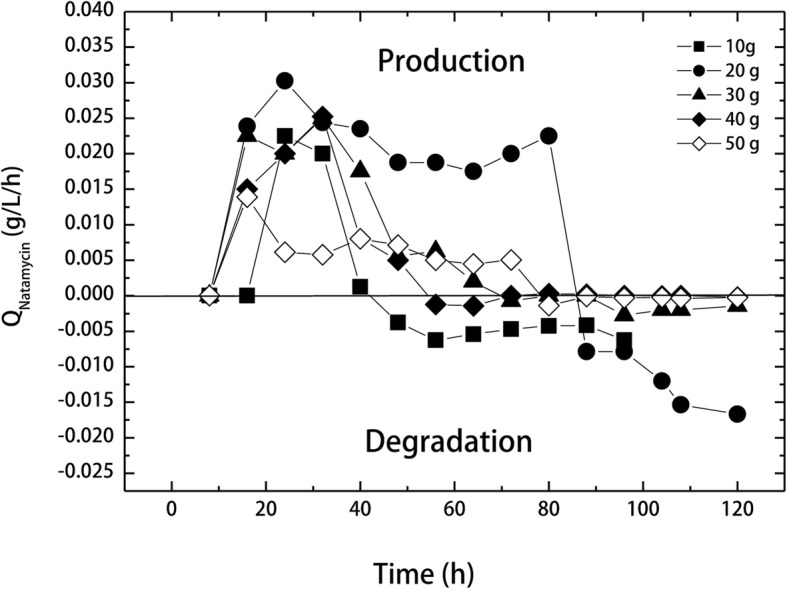
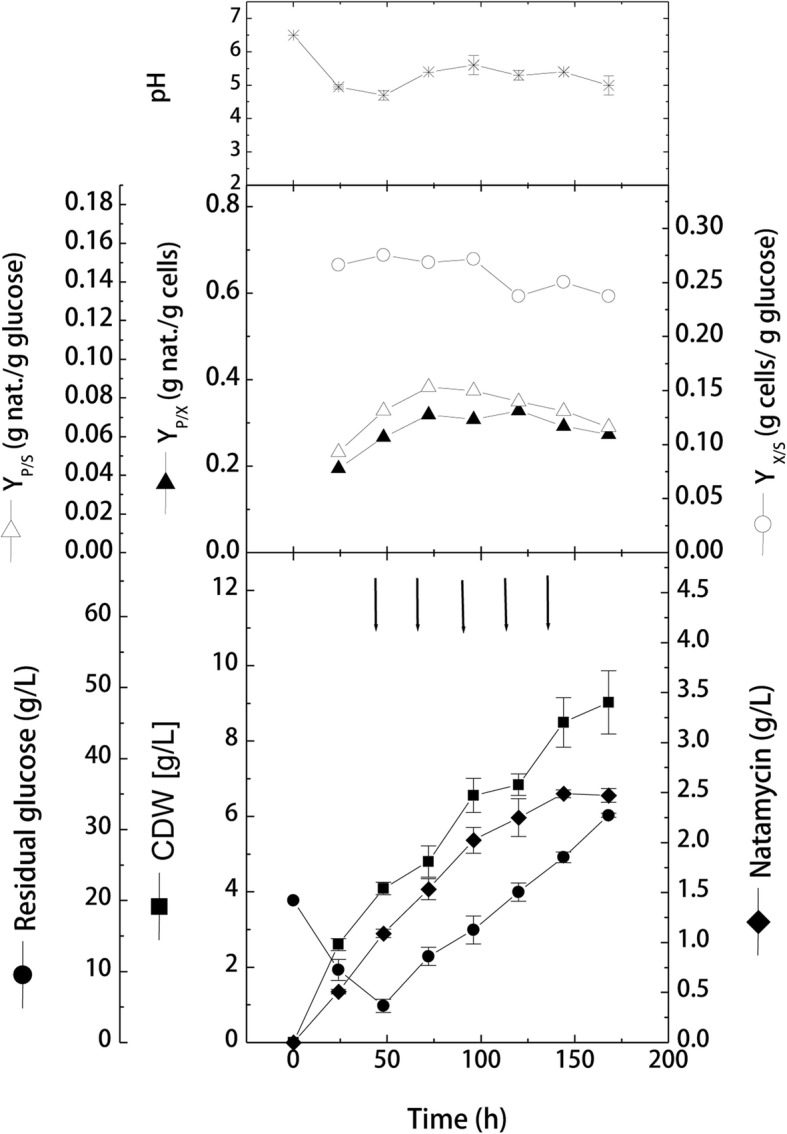
Natamycin production was investigated under the effect of different initial glucose concentrations. Maximal antibiotic production (1.58 ± 0.032 g/L) was achieved at 20 g/L glucose. Under glucose limitation, natamycin production was retarded and the produced antibiotic was degraded. Higher glucose concentrations resulted in carbon catabolite repression. Secondly, intermittent feeding of glucose improved natamycin production due to overcoming glucose catabolite regulation, and moreover it was superior to glucose-beef mixture feeding, which overcomes catabolite regulation, but increased cell growth on the expense of natamycin production. Finally, the process was optimized in 7.5 L stirred tank bioreactor under batch and fed-batch conditions. Continuous glucose feeding for 30 h increased volumetric natamycin production by about 1.6- and 1.72-folds in than the batch cultivation in bioreactor and shake-flasks, respectively.
Glucose is a crucial substrate that significantly affects the production of natamycin, and its slow feeding is recommended to alleviate the effects of carbon catabolite regulation as well as to prevent product degradation under carbon source limitation. Cultivation in bioreactor under glucose feeding increased maximal volumetric enzyme production by about 72% from the initial starting conditions.
那他霉素是一种具有广泛应用于健康和食品工业的抗真菌多烯大环内酯抗生素。目前,它是唯一具有 GRAS 地位(一般认为安全)的抗真菌食品添加剂。
研究了不同初始葡萄糖浓度对那他霉素生产的影响。在 20g/L 葡萄糖下,抗生素的最大产量(1.58±0.032g/L)达到最大值。在葡萄糖限制下,那他霉素的生产受到抑制,产生的抗生素被降解。较高的葡萄糖浓度导致碳分解代谢物抑制。其次,间歇式葡萄糖补料改善了那他霉素的生产,因为它克服了葡萄糖分解代谢物的调节,并且优于葡萄糖-牛肉混合物补料,后者克服了分解代谢物的调节,但以牺牲那他霉素生产为代价增加了细胞生长。最后,在 7.5L 搅拌釜生物反应器中分批和补料分批条件下对该过程进行了优化。连续 30h 葡萄糖补料使生物反应器和摇瓶中的分批培养的比体积那他霉素产量分别增加了约 1.6 倍和 1.72 倍。
葡萄糖是一种关键的基质,它显著影响那他霉素的生产,建议采用缓慢的葡萄糖补料方式,以减轻碳分解代谢物调节的影响,并防止在碳源限制下产品降解。在葡萄糖补料下进行生物反应器培养,使初始起始条件下的最大比体积酶产量增加了约 72%。