Department of Obstetrics and Gynaecology, Hôpital Erasme, Route de Lennik 808, 1070, Anderlecht, Belgium.
Department of Endocrinology, Hôpital Erasme, Route de Lennik 808, 1070, Anderlecht, Belgium.
BMC Pregnancy Childbirth. 2019 Jul 16;19(1):249. doi: 10.1186/s12884-019-2406-4.
In April 2012 our institution chose to switch from a two- step criteria for Gestational Diabetes Mellitus (GDM) screening, to the International Association of Diabetes in Pregnancy Study Group (IADSPG) criteria. This shift led to an increased prevalence of GDM in our pregnant population. We designed a study in order to estimate the magnitude of the increase in GDM prevalence before and after the switch in screening strategy. As a secondary objective we wanted to evaluate if there was a significant difference between the two periods in the percentage of maternal and neonatal complications such as gestational hypertensive disorders (GHD), primary cesarean section (pCS), preterm birth, large for gestational age (LGA) newborns, macrosomia, shoulder dystocia, 5' Apgar score less than to 7 at birth, neonatal intensive care unit (NICU) transfer and neonatal hypoglycemia.
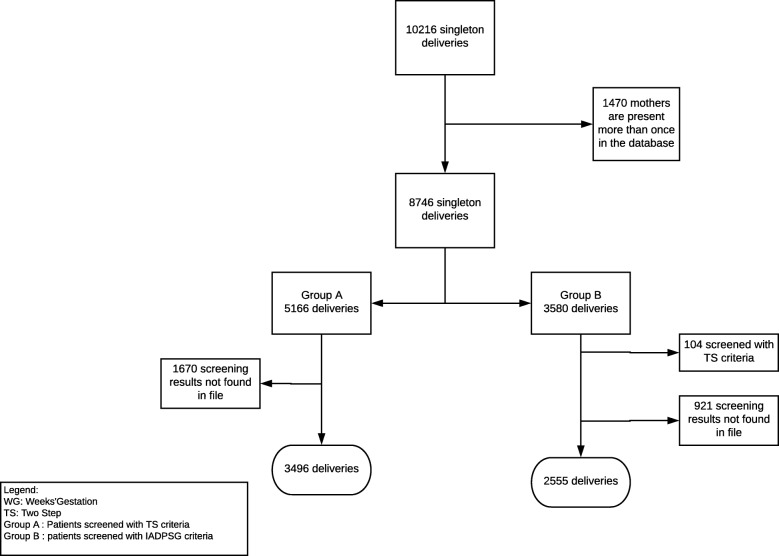
We selected retrospectively 3496 patients who delivered between January 2009 and December 2011 who were screened with the two-step criteria (group A), and compared them to 2555 patients who delivered between January 2013 and December 2014 and who were screened with IADPSG criteria (Group B). We checked patients' electronic files to establish GDM status, baseline characteristics (age, body mass index, nationality, parity) and the presence of maternal and neonatal complications.
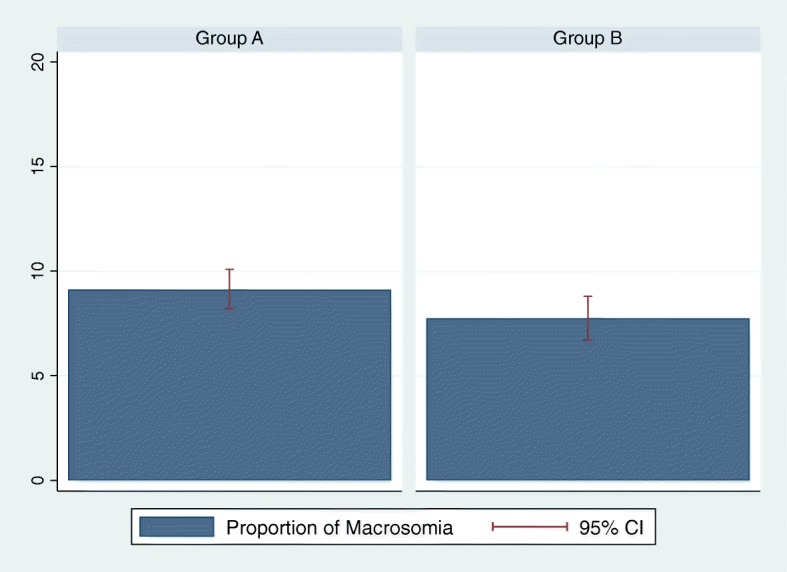
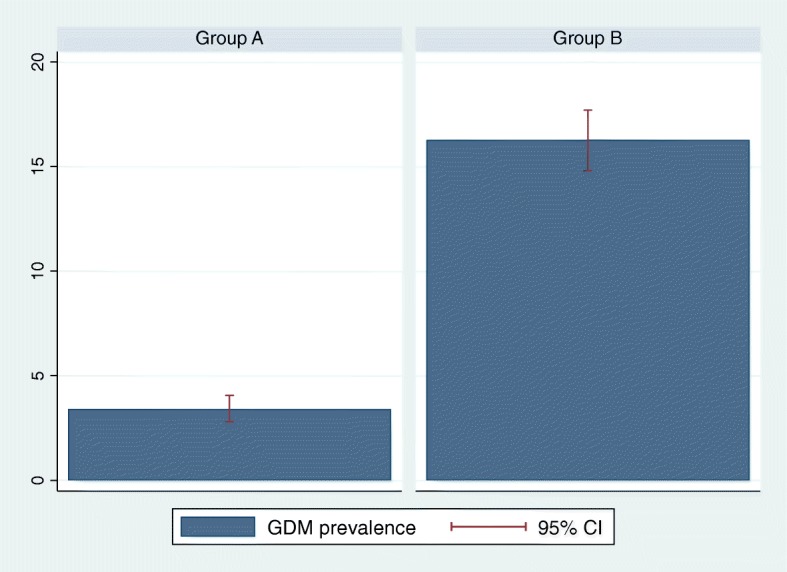
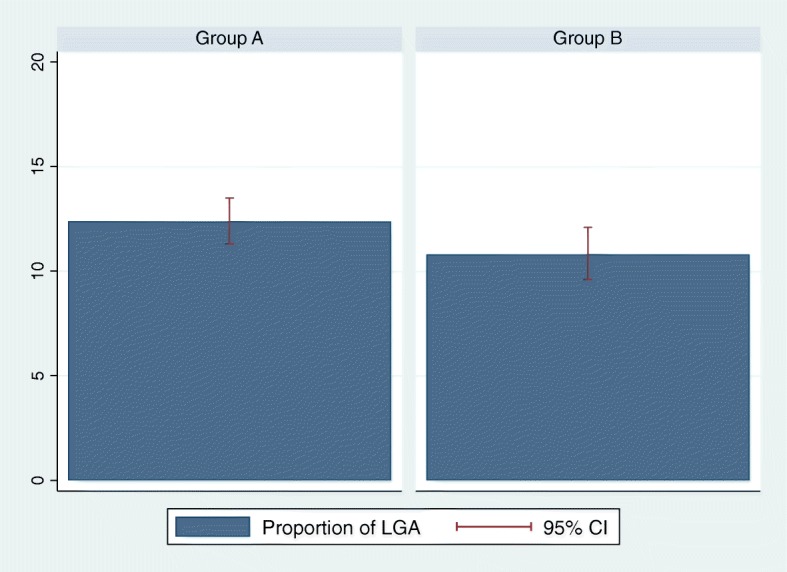
GDM prevalence increased significantly from group A (3.4%; 95%CI 2.8-4.06%) to group B (16.28%; 95%CI 14.8 -17.7%). In group B there were significantly more non-Belgian and primiparous patients. There was no statistically significant difference in maternal and neonatal complications between the two groups, even after adjustment for nationality and parity. There was a non-significant reduction of the proportion of macrosomic and of LGA babies.
In our population the introduction of IADPSG screening criteria has increased the prevalence of GDM without having a statistically significant impact on pregnancy outcomes.
2012 年 4 月,我院选择将妊娠期糖尿病(GDM)的两步筛查标准改为国际妊娠糖尿病研究组织(IADPSG)标准。这一转变导致我院孕妇人群中 GDM 的患病率增加。我们设计了一项研究,以评估在筛查策略转变前后 GDM 患病率的增加幅度。作为次要目标,我们想评估在两个时期,母体和新生儿并发症的发生率(如妊娠高血压疾病(GHD)、初次剖宫产(pCS)、早产、巨大儿、胎儿过大、肩难产、出生时 5 分钟 Apgar 评分<7、新生儿重症监护病房(NICU)转移和新生儿低血糖)是否存在显著差异。
我们回顾性选择了 2009 年 1 月至 2011 年 12 月期间采用两步筛查标准(A 组)分娩的 3496 名患者,并将其与 2013 年 1 月至 2014 年 12 月期间采用 IADPSG 标准(B 组)分娩的 2555 名患者进行比较。我们查阅了患者的电子档案,以确定 GDM 状态、基线特征(年龄、体重指数、国籍、产次)以及母体和新生儿并发症的发生情况。
GDM 的患病率从 A 组(3.4%;95%CI 2.8-4.06%)显著增加到 B 组(16.28%;95%CI 14.8-17.7%)。B 组中非比利时和初产妇的比例明显更高。两组之间的母体和新生儿并发症发生率无统计学差异,即使在调整了国籍和产次后也是如此。巨大儿和大于胎龄儿的比例有非显著性下降。
在我们的人群中,采用 IADPSG 筛查标准增加了 GDM 的患病率,但对妊娠结局没有统计学上的显著影响。