School of Public Health, Oregon Health & Science University and Portland State University, Portland, Oregon, USA.
Center for Global Health Tumbes, Universidad Peruana Cayetano Heredia, Tumbes, Peru.
Parasit Vectors. 2019 Jul 16;12(1):352. doi: 10.1186/s13071-019-3614-5.
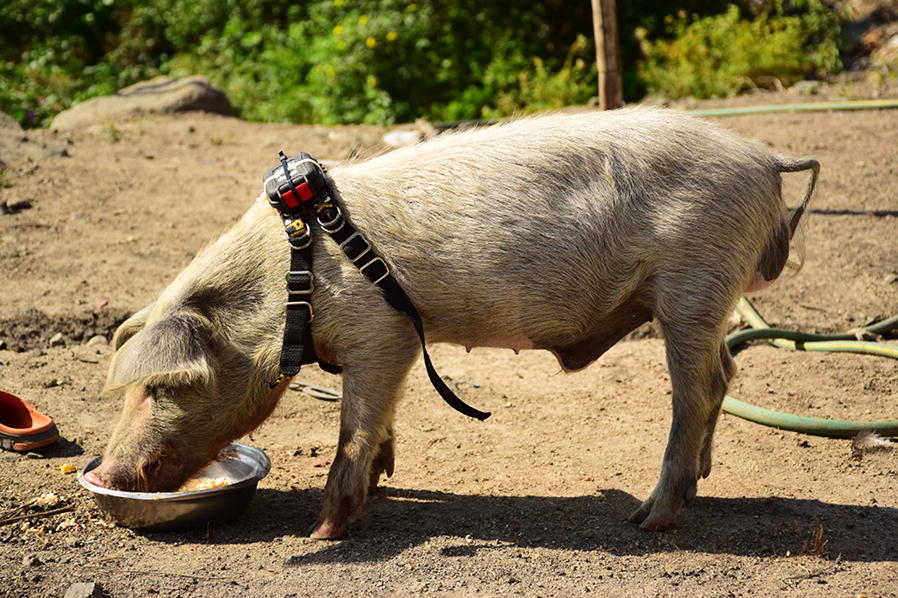
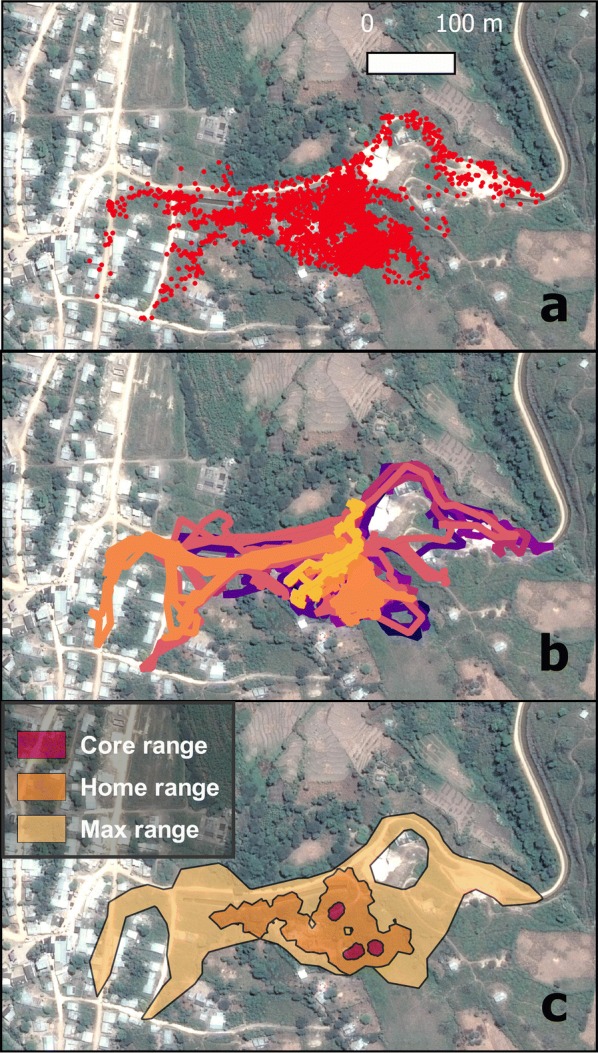
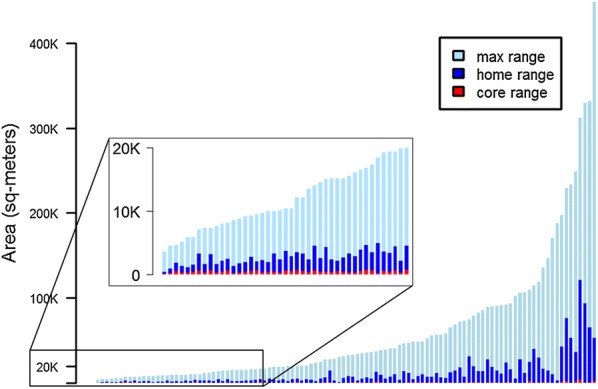
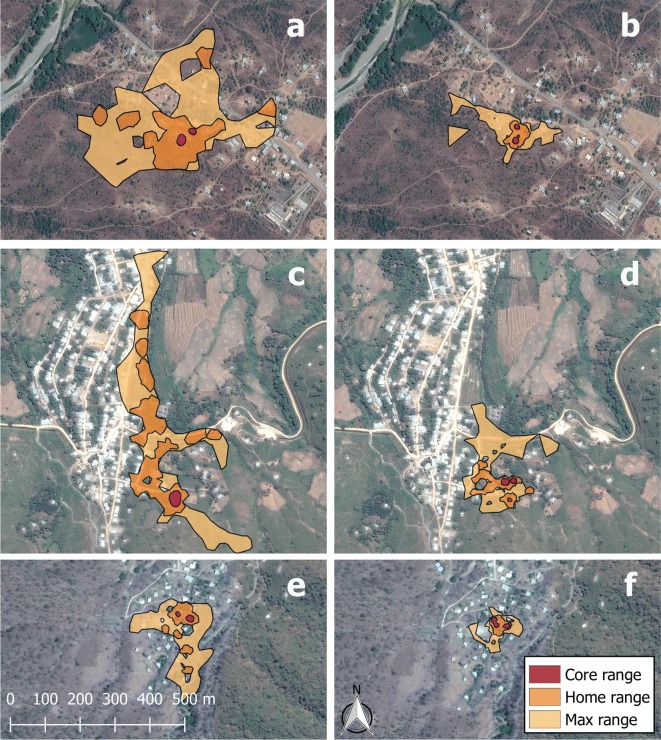
Taenia solium (cysticercosis) is a parasitic cestode that is endemic in rural populations where open defecation is common and free-roaming pigs have access to human feces. The purpose of this study was to examine the roaming patterns of free-range pigs, and identify areas where T. solium transmission could occur via contact with human feces. We did this by using GPS trackers to log the movement of 108 pigs in three villages of northern Peru. Pigs were tracked for approximately six days each and tracking was repeated in the rainy and dry seasons. Maps of pig ranges were analyzed for size, distance from home, land type and contact with human defecation sites, which were assessed in a community-wide defecation survey.
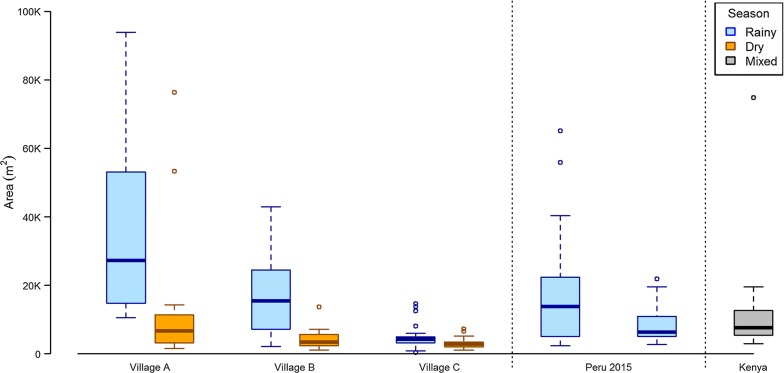
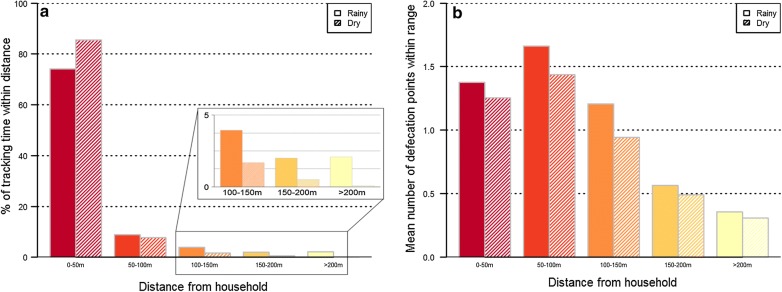
Consistent with prior GPS studies and spatial analyses, we found that the majority of pigs remained close to home during the tracking period and had contact with human feces in their home areas: pigs spent a median of 79% (IQR: 61-90%) of their active roaming time within 50 m of their homes and a median of 60% of their contact with open defecation within 100 m of home. Extended away-from-home roaming was predominately observed during the rainy season; overall, home range areas were 61% larger during the rainy season compared to the dry season (95% CI: 41-73%). Both home range size and contact with open defecation sites showed substantial variation between villages, and contact with open defecation sites was more frequent among pigs with larger home ranges and pigs living in higher density areas of their village.
Our study builds upon prior work showing that pigs predominately roam and have contact with human feces within 50-100 m of the home, and that T. solium transmission is most likely to occur in these concentrated areas of contact. This finding, therefore, supports control strategies that target treatment resources to these areas of increased transmission. Our finding of a seasonal trend in roaming ranges may be useful for control programs relying on pig interventions, and in the field of transmission modeling, which require precise estimates of pig behavior and risk.
猪带绦虫(囊尾蚴病)是一种寄生性的绦虫,在农村地区流行,这些地区普遍存在露天排便的情况,而且自由放养的猪可以接触到人类粪便。本研究的目的是研究自由放养猪的漫游模式,并确定通过接触人类粪便可能发生猪带绦虫传播的区域。我们使用 GPS 跟踪器记录了秘鲁北部三个村庄的 108 头猪的运动情况。每头猪大约跟踪六天,在雨季和旱季重复跟踪。分析了猪的活动范围图,包括大小、与家的距离、土地类型以及与人类粪便点的接触情况,这些都在一次社区范围的粪便调查中进行了评估。
与之前的 GPS 研究和空间分析一致,我们发现大多数猪在跟踪期间都靠近家,并且在其家的区域内接触到人类粪便:猪在其活动漫游时间的中位数的 79%(IQR:61-90%)内,距离家的距离在 50 米以内,并且接触到开放排便的中位数为 60%,距离家的距离在 100 米以内。远离家的漫游主要发生在雨季;总的来说,雨季的家域面积比旱季大 61%(95%CI:41-73%)。村庄之间的家域大小和与开放排便点的接触都有很大的差异,而且家域较大和生活在村庄人口密度较高地区的猪接触到开放排便的频率更高。
我们的研究建立在之前的工作基础上,表明猪主要在距离家 50-100 米的范围内漫游,并与人粪便接触,而猪带绦虫的传播最有可能发生在这些接触集中的区域。因此,这一发现支持了将治疗资源集中在这些增加传播风险的区域的控制策略。我们对漫游范围的季节性趋势的发现,可能对依赖猪干预的控制计划和对猪行为和风险的精确估计的传播建模领域有用。