Biometrics and Information Sciences, AstraZeneca, Pepparedsleden 1, SE-431 83, Mölndal, Sweden.
IQVIA, 4820 Emperor Blvd, Durham, NC, 27703, USA.
BMC Pulm Med. 2019 Jul 17;19(1):129. doi: 10.1186/s12890-019-0889-4.
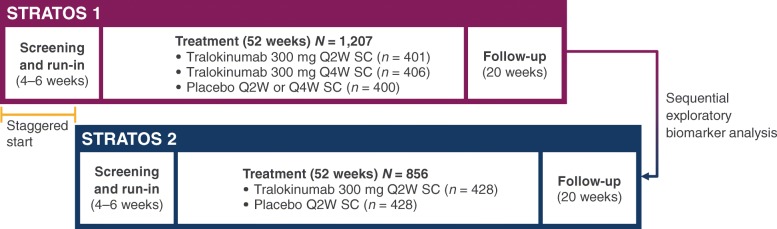
Tralokinumab is an anti-interleukin (IL)-13 monoclonal antibody investigated for the treatment of severe, uncontrolled asthma in two Phase III clinical trials, STRATOS 1 and 2. The STRATOS 1 biomarker analysis plan was developed to identify biomarker(s) indicative of IL-13 activation likely to predict tralokinumab efficacy and define a population in which there was an enhanced treatment effect; this defined population was then tested in STRATOS 2.
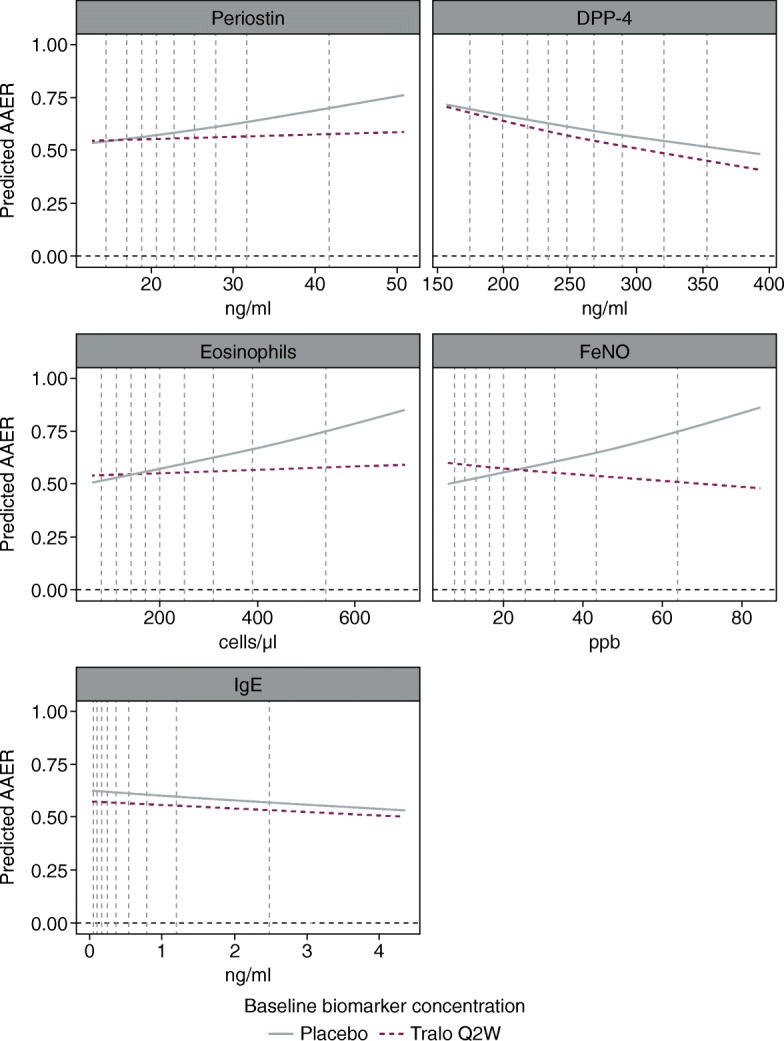
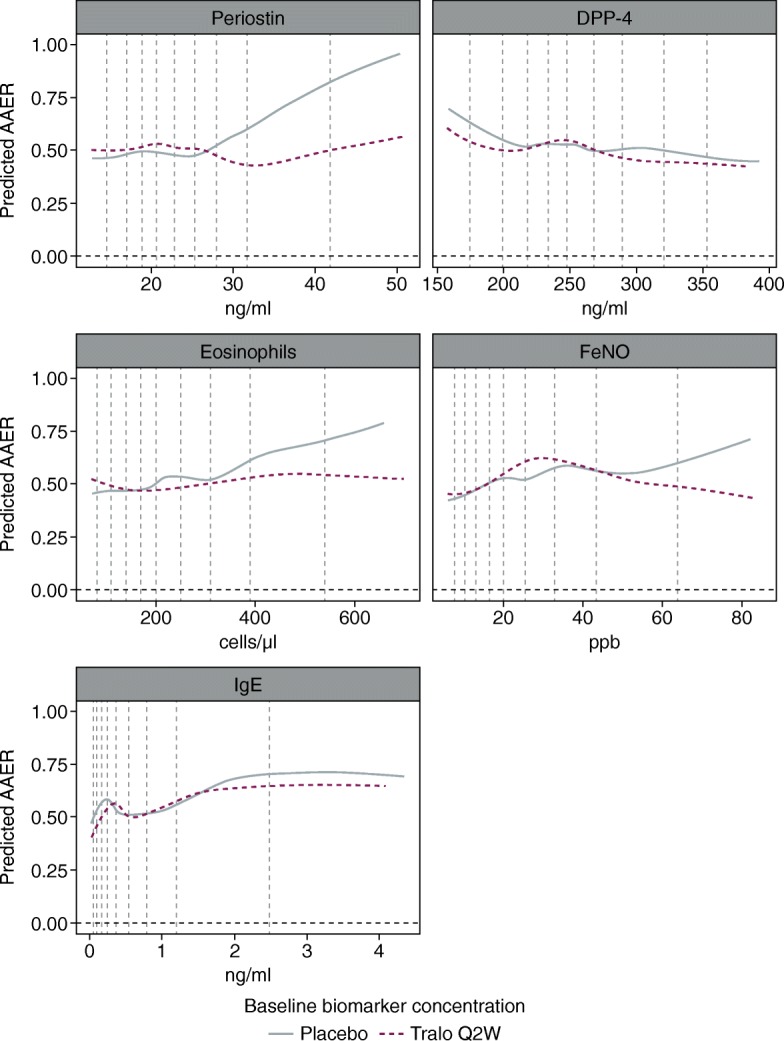
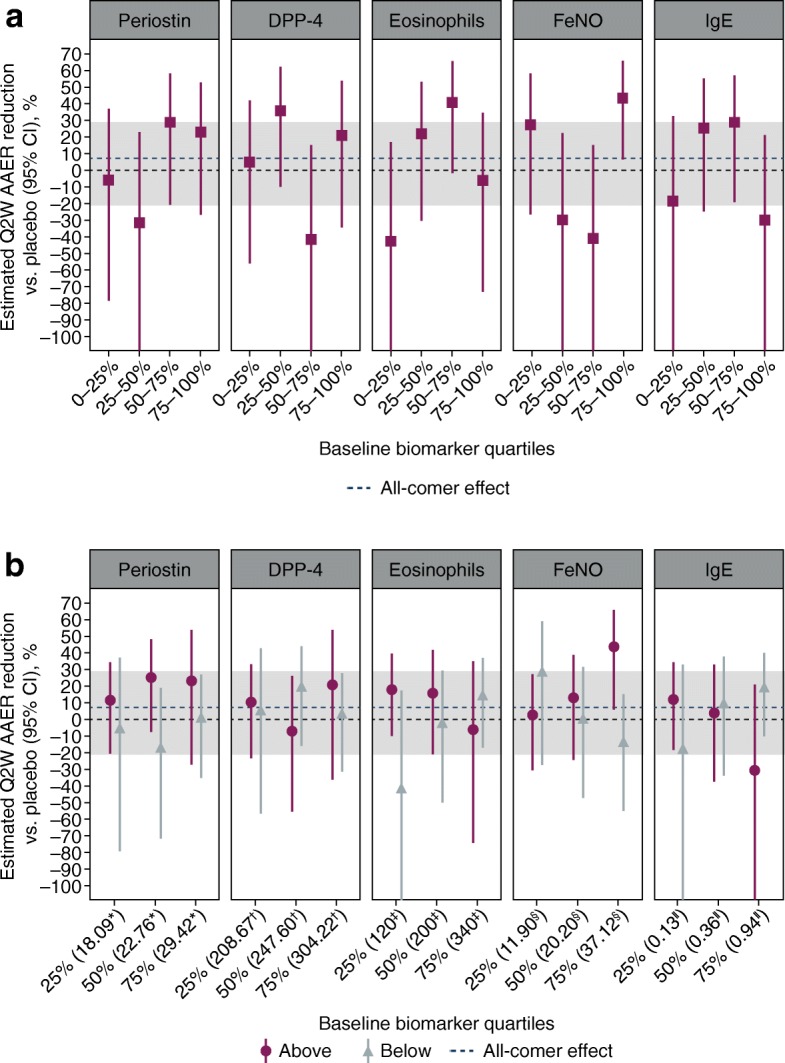
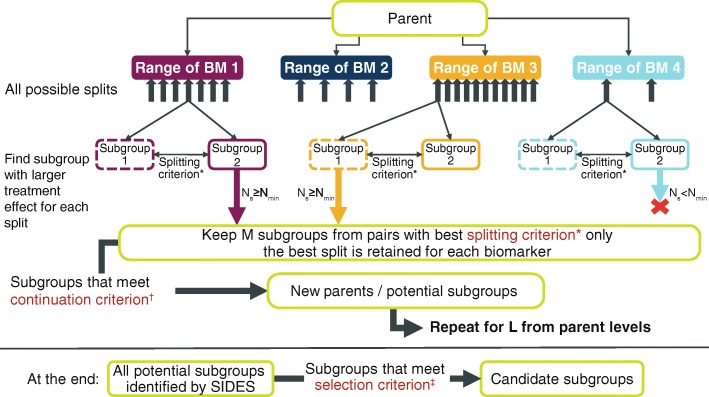
The biomarkers considered were blood eosinophil counts, fractional exhaled nitric oxide (FeNO), serum dipeptidyl peptidase-4, serum periostin and total serum immunoglobulin E. Tralokinumab efficacy was measured as the reduction in annualised asthma exacerbation rate (AAER) compared with placebo (primary endpoint measure of STRATOS 1 and 2). The biomarker analysis plan included negative binomial and generalised additive models, and the Subgroup Identification based on Differential Effect Search (SIDES) algorithm, supported by robustness and sensitivity checks. Effects on the key secondary endpoints of STRATOS 1 and 2, which included changes from baseline in standard measures of asthma outcomes, were also investigated. Prior to the STRATOS 1 read-out, numerous simulations of the methodology were performed with hypothetical data.
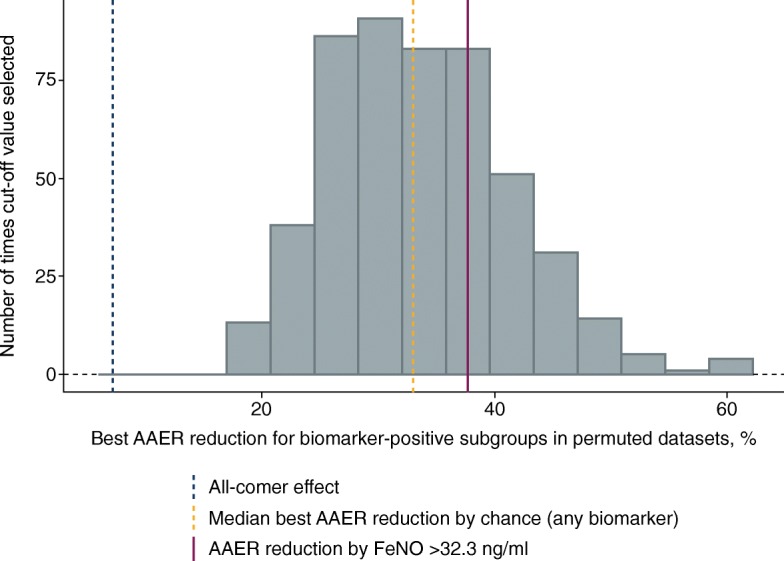
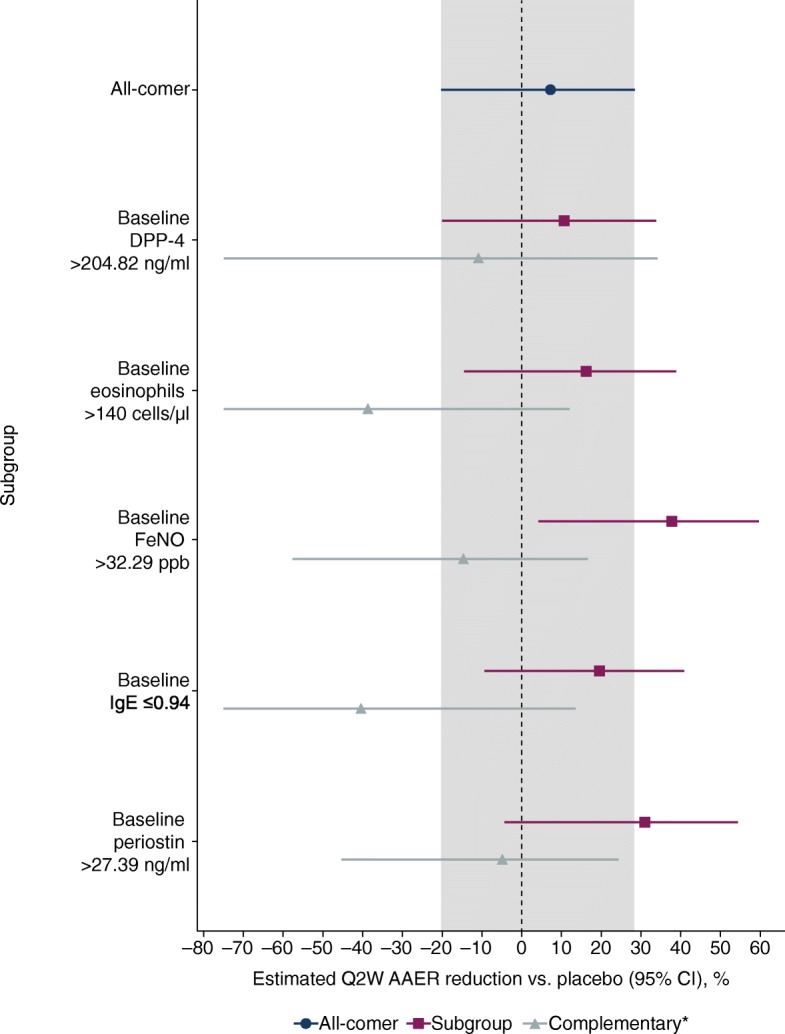
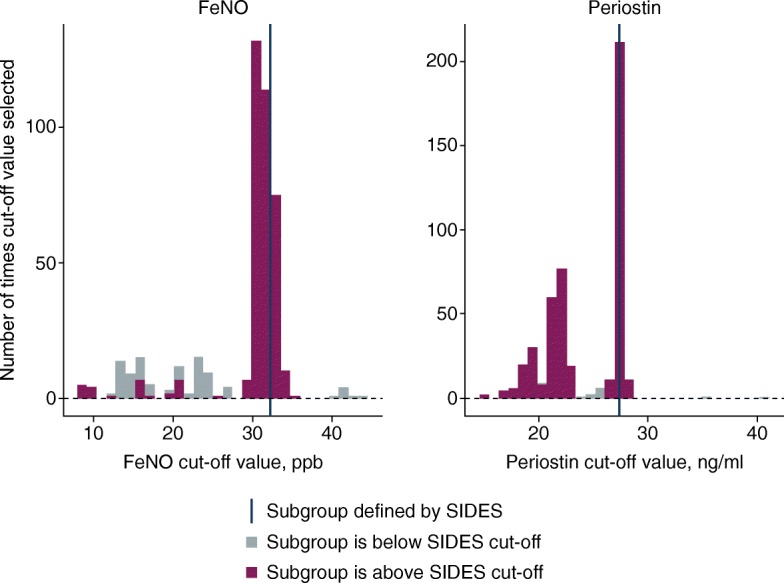
FeNO and periostin were identified as the only biomarkers potentially predictive of treatment effect, with cut-offs chosen by the SIDES algorithm of > 32.3 ppb and > 27.4 ng/ml, respectively. The FeNO > 32.3 ppb subgroup was associated with greater AAER reductions and improvements in key secondary endpoints compared with the periostin > 27.4 ng/ml subgroup. Upon further evaluation of AAER reductions at different FeNO cut-offs, ≥37 ppb was chosen as the best cut-off for predicting tralokinumab efficacy.
A rigorous statistical approach incorporating multiple methods was used to investigate the predictive properties of five potential biomarkers and to identify a participant subgroup that demonstrated an enhanced tralokinumab treatment effect. Using STRATOS 1 data, our analyses identified FeNO at a cut-off of ≥37 ppb as the best assessed biomarker for predicting enhanced treatment effect to be tested in STRATOS 2. Our findings were inconclusive, which reflects the complexity of subgroup identification in the severe asthma population.
STRATOS 1 and 2 are registered on ClinicalTrials.gov ( NCT02161757 registered on June 12, 2014, and NCT02194699 registered on July 18, 2014).
特利鲁单抗是一种抗白细胞介素(IL)-13 单克隆抗体,在两项 III 期临床试验 STRATOS 1 和 2 中被研究用于治疗严重、未得到控制的哮喘。STRATOS 1 的生物标志物分析计划旨在确定可能预测特利鲁单抗疗效的生物标志物,并定义一个具有增强治疗效果的人群;然后在 STRATOS 2 中对该人群进行测试。
考虑的生物标志物包括血嗜酸性粒细胞计数、呼出气一氧化氮分数(FeNO)、血清二肽基肽酶-4、血清骨膜蛋白和总血清免疫球蛋白 E。特利鲁单抗的疗效通过与安慰剂相比,每年哮喘加重率(AAER)的降低来衡量(STRATOS 1 和 2 的主要终点测量)。生物标志物分析计划包括负二项式和广义加性模型,以及基于差异效应搜索(SIDES)算法的亚组识别,同时进行稳健性和敏感性检查。还研究了 STRATOS 1 和 2 的关键次要终点的变化,这些终点包括哮喘结局的标准测量值从基线的变化。在 STRATOS 1 读数之前,使用假设数据对该方法进行了多次模拟。
FeNO 和骨膜蛋白被确定为唯一具有潜在治疗效果预测性的生物标志物,SIDES 算法选择的截断值分别为>32.3 ppb 和>27.4 ng/ml。与骨膜蛋白>27.4 ng/ml 亚组相比,FeNO>32.3 ppb 亚组与 AAER 降低幅度更大和关键次要终点改善相关。进一步评估不同 FeNO 截断值下的 AAER 降低情况,选择≥37 ppb 作为预测特利鲁单抗疗效的最佳截断值。
采用严格的统计方法,结合多种方法,研究了五种潜在生物标志物的预测特性,并确定了一个表现出增强特利鲁单抗治疗效果的参与者亚组。使用 STRATOS 1 数据,我们的分析确定 FeNO 截断值≥37 ppb 是预测增强治疗效果的最佳评估生物标志物,将在 STRATOS 2 中进行测试。我们的发现没有定论,这反映了严重哮喘人群中亚组识别的复杂性。
STRATOS 1 和 2 在 ClinicalTrials.gov 上注册(NCT02161757 于 2014 年 6 月 12 日注册,NCT02194699 于 2014 年 7 月 18 日注册)。