Department of Medical Oncology, The First Hospital of China Medical University, Shenyang, China.
Key Laboratory of Anticancer Drugs and Biotherapy of Liaoning Province, The First Hospital of China Medical University, Shenyang, China.
BMC Cancer. 2019 Jul 17;19(1):702. doi: 10.1186/s12885-019-5915-7.
The epidermal growth factor receptor (EGFR)-mutated advanced non-small-cell lung cancer has been successfully treated with tyrosine kinase inhibitors (TKIs). Acquired resistance becomes a tough issue when patients fail to respond to the third-generation TKI osimertinib. This study aimed to report a case baring acquired EGFR L858R/L718Q mutation in the central nervous system induced by osimertinib, which was successfully overcome using afatinib.
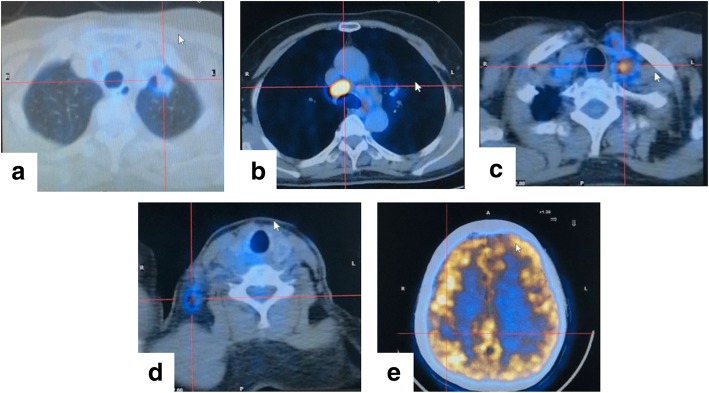
A 65-year-old female patient was diagnosed with stage IV non-small-cell lung adenocarcinoma with synchronic brain metastasis in February 2015. Before and during treatment, 416 tumor-related genes were monitored dynamically by liquid biopsies using next-generation sequencing, and the treatment strategy was decided according to the gene status. At baseline, an EGFR L858R mutation in exon 21 was detected, so treatment with icotinib was started. After 8 months, she experienced disease progression with leptomeningeal metastasis and switched to osimertinib based on an acquired EGFR T790 M mutation. After 9 months, her disease progressed and an EGFR L718Q mutation was found in the cerebrospinal fluid. The patient was then challenged with afatinib, and her disease was under control for 4 months. In January 2017, the patient passed away, with an overall survival time of 23 months, 15 months after leptomeningeal metastasis.
The acquired EGFR L718Q mutation in the cerebrospinal fluid resulted in subsequent resistance to osimertinib and could be partly overcome using afatinib, indicating a promising treatment option in the clinic.
表皮生长因子受体(EGFR)突变的晚期非小细胞肺癌已成功采用酪氨酸激酶抑制剂(TKI)治疗。当患者对第三代 TKI 奥希替尼无应答时,获得性耐药成为一个难题。本研究旨在报告一例奥希替尼诱导的中枢神经系统获得性 EGFR L858R/L718Q 突变病例,该病例通过使用阿法替尼成功克服。
一名 65 岁女性患者于 2015 年 2 月被诊断为 IV 期非小细胞肺腺癌,合并同步脑转移。在治疗前和治疗期间,通过下一代测序的液体活检对 416 个肿瘤相关基因进行了动态监测,并根据基因状态决定治疗策略。基线时,检测到 21 号外显子的 EGFR L858R 突变,因此开始使用厄洛替尼治疗。8 个月后,患者发生疾病进展,出现脑膜转移,根据获得性 EGFR T790M 突变,改为奥希替尼治疗。9 个月后,疾病进展,脑脊液中发现 EGFR L718Q 突变。随后给予阿法替尼治疗,患者疾病得到控制 4 个月。2017 年 1 月,患者去世,总生存期为 23 个月,脑膜转移后为 15 个月。
脑脊液中获得性 EGFR L718Q 突变导致奥希替尼继发耐药,阿法替尼部分克服该耐药,为临床提供了一种有前景的治疗选择。