Cordeiro Rossana de Aguiar, Evangelista Antonio Jose de Jesus, Serpa Rosana, de Andrade Ana Raquel Colares, Mendes Patrícia Bruna Leite, de Oliveira Jonathas Sales, de Alencar Lucas Pereira, Pereira Vandbergue Santos, Lima-Neto Reginaldo Gonçalves, Brilhante Raimunda Nogueira, Sidrim José Júlio Costa, Maia Débora Castelo Brancode Souza Collares, Rocha Marcos Fábio Gadelha
Medical Mycology Specialized Center, Federal University of Ceará, Fortaleza, Brazil.
Department of Tropical Medicine, Federal University of Pernambuco, Recife, Brazil.
Front Microbiol. 2019 Jun 28;10:1337. doi: 10.3389/fmicb.2019.01337. eCollection 2019.
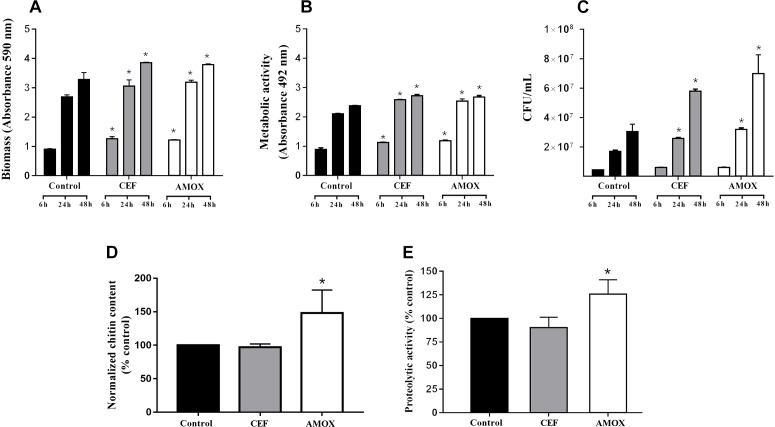
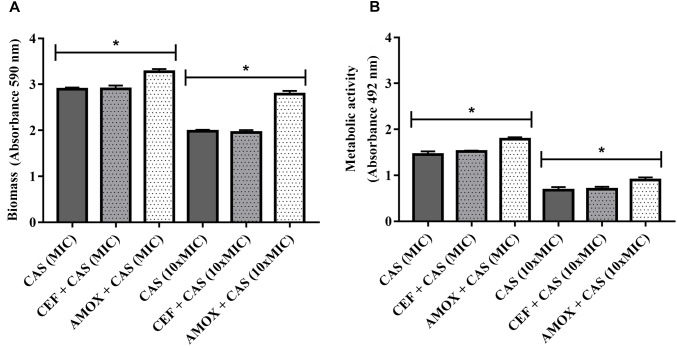
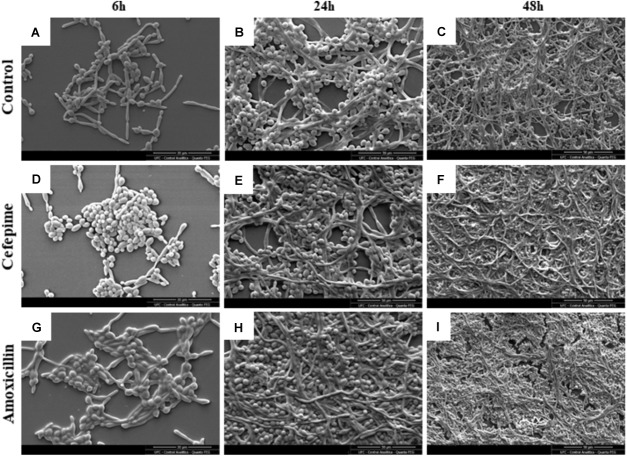
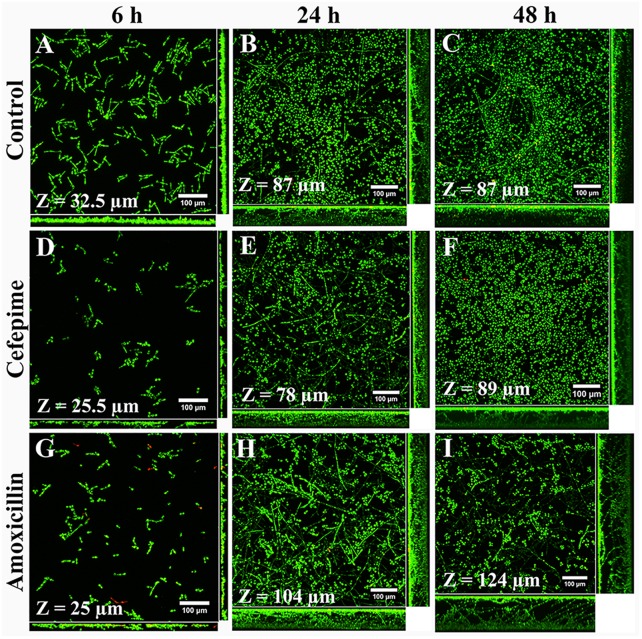
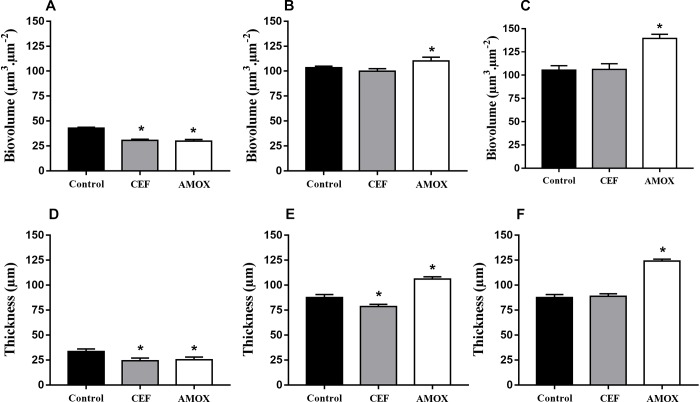
It is well known that prolonged antibiotic therapy alters the mucosal microbiota composition, increasing the risk of invasive fungal infection (IFI) in immunocompromised patients. The present study investigated the direct effect of β-lactam antibiotics cefepime (CEF) and amoxicillin (AMOX) on biofilm production by ATCC 10231. Antibacterials at the peak plasmatic concentration of each drug were tested against biofilms grown on polystyrene surfaces. Biofilms were evaluated for biomass production, metabolic activity, carbohydrate and protein contents, proteolytic activity, ultrastructure, and tolerance to antifungals. CEF and AMOX enhanced biofilm production by ATCC 10231, stimulating biomass production, metabolic activity, viable cell counts, and proteolytic activity, as well as increased biovolume and thickness of these structures. Nevertheless, AMOX induced more significant changes in biofilms than CEF. In addition, it was shown that AMOX increased the amount of chitin in these biofilms, making them more tolerant to caspofungin. Finally, it was seen that, in response to AMOX, biofilms produce Hsp70 - a protein with chaperone function related to stressful conditions. These results may have a direct impact on the pathophysiology of opportunistic IFIs in patients at risk.
众所周知,长期使用抗生素治疗会改变黏膜微生物群的组成,增加免疫功能低下患者发生侵袭性真菌感染(IFI)的风险。本研究调查了β-内酰胺类抗生素头孢吡肟(CEF)和阿莫西林(AMOX)对ATCC 10231生物膜形成的直接影响。以每种药物血浆峰值浓度的抗菌剂对在聚苯乙烯表面生长的生物膜进行测试。对生物膜的生物量产生、代谢活性、碳水化合物和蛋白质含量、蛋白水解活性、超微结构以及对抗真菌药物的耐受性进行评估。CEF和AMOX增强了ATCC 10231的生物膜形成,刺激了生物量产生、代谢活性、活菌计数和蛋白水解活性,以及增加了这些结构的生物体积和厚度。然而,AMOX对生物膜诱导的变化比CEF更显著。此外,研究表明AMOX增加了这些生物膜中几丁质的含量,使其对卡泊芬净更具耐受性。最后,观察到,作为对AMOX的反应,生物膜产生热休克蛋白70(Hsp70)——一种与应激条件相关的具有伴侣功能的蛋白质。这些结果可能对有风险患者的机会性IFI的病理生理学产生直接影响。