Du Pei, Cui Caihong, Liu Hua, Fu Liuyang, Li Lina, Dai Xiaodong, Qin Li, Wang Siyu, Han Suoyi, Xu Jing, Liu Bing, Huang Bingyan, Tang Fengshou, Dong Wenzhao, Qi Zengjun, Zhang Xinyou
Industrial Crops Research Institute, Henan Academy of Agricultural Sciences/Key Laboratory of Oil Crops in Huang-Huai-Hai Plains, Ministry of Agriculture/Henan Provincial Key Laboratory for Oil Crops Improvement, Zhengzhou, 450002 Henan China.
3School of Life Sciences, Zhengzhou University, Zhengzhou, 450001 Henan China.
Plant Methods. 2019 Jul 8;15:69. doi: 10.1186/s13007-019-0451-7. eCollection 2019.
Development of oligonucleotide probes facilitates chromosome identification via fluorescence in situ hybridization (FISH) in many organisms.
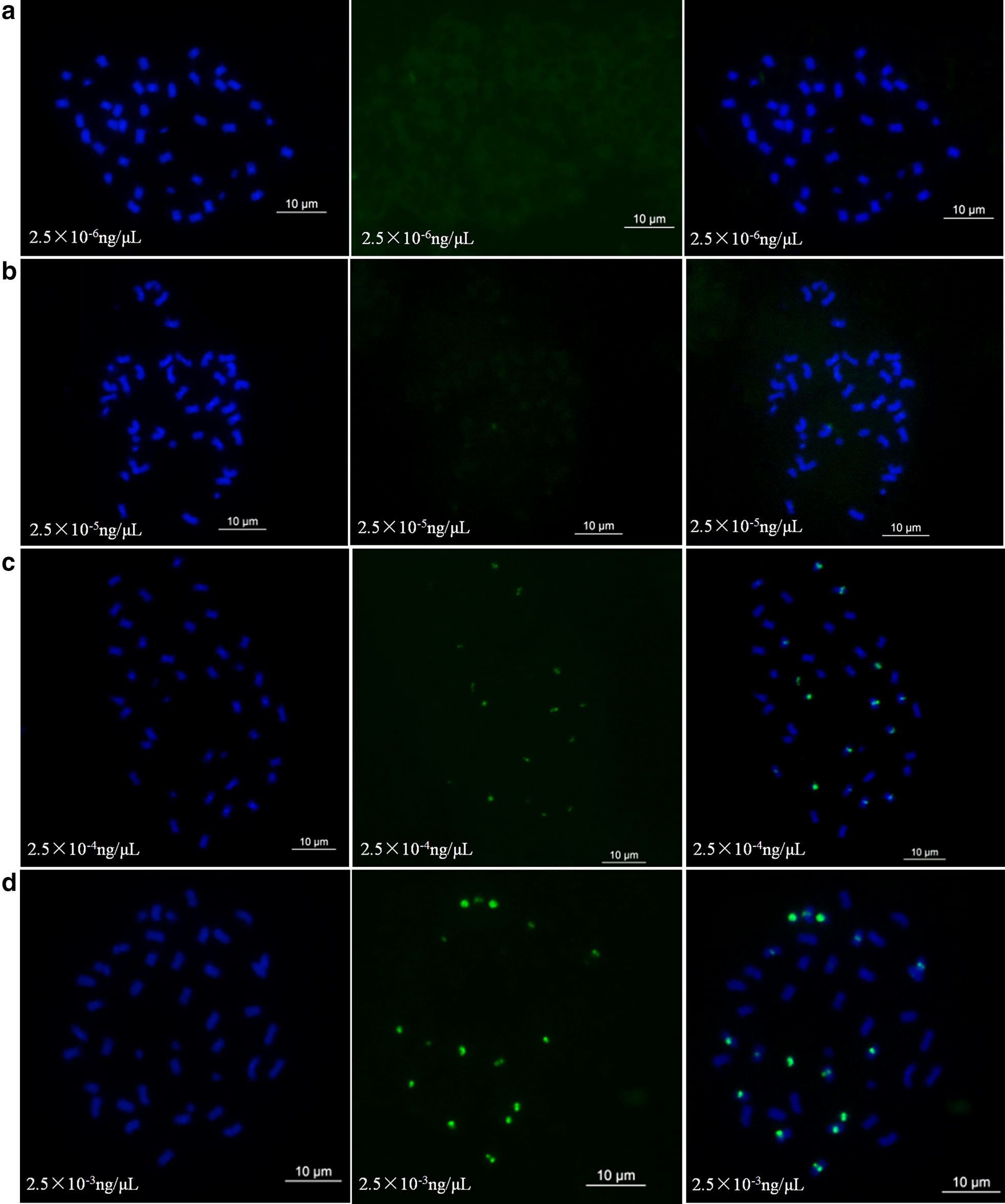
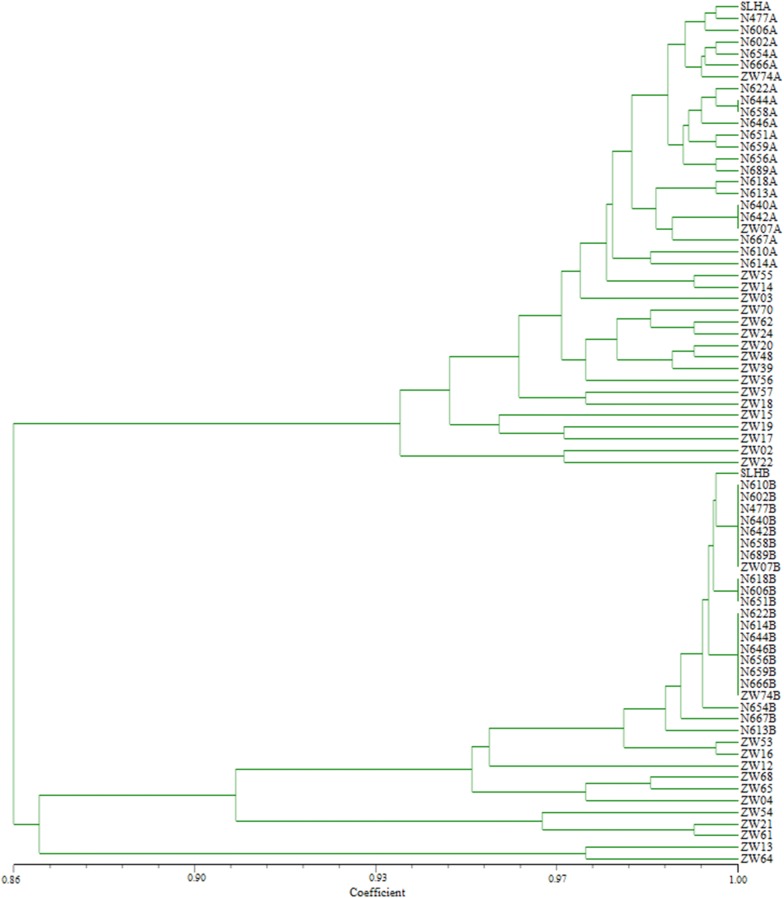
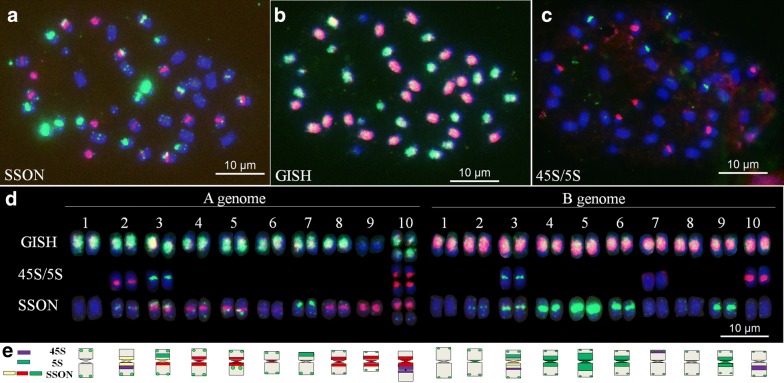
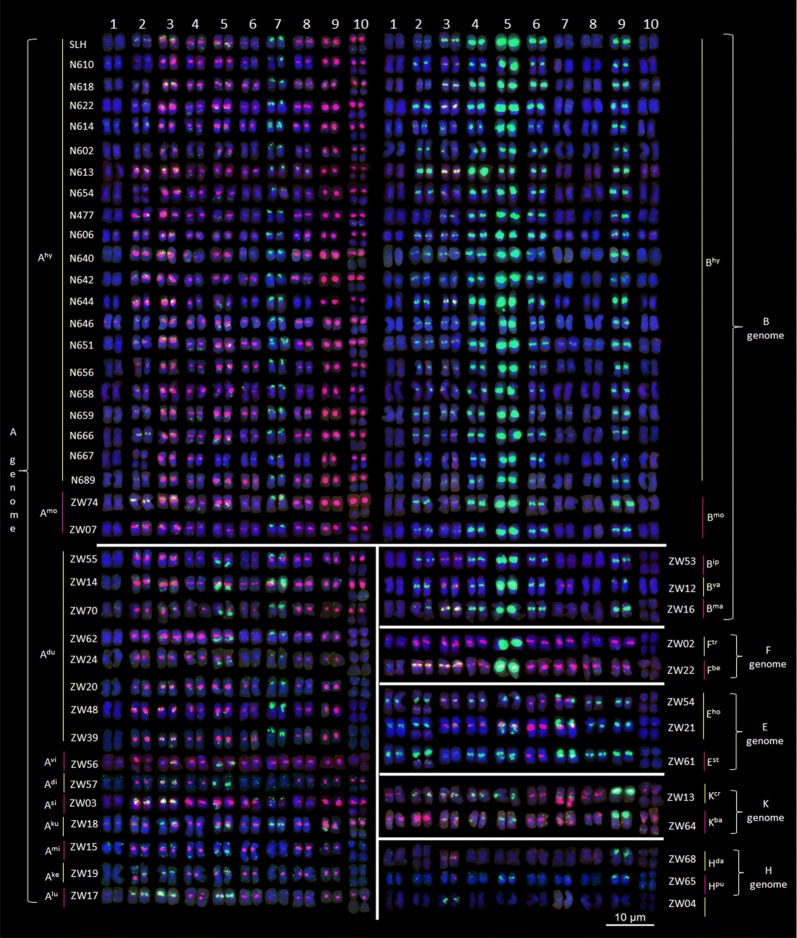
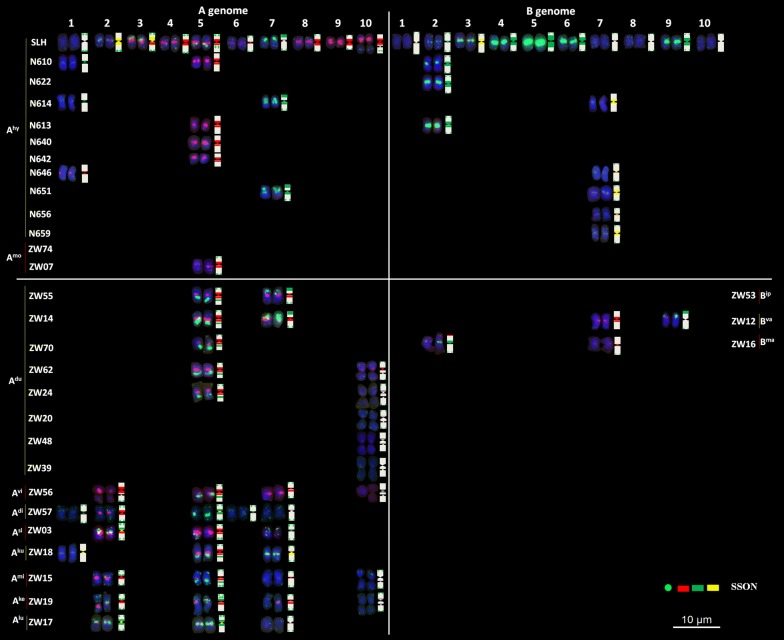
We report a high throughput and economical method of chromosome identification based on the development of a dye solution containing 2 × saline-sodium citrate (SSC) and oligonucleotide probes. Based on the concentration, staining time, and sequence effects of oligonucleotides, an efficient probe dye of peanut was developed for chromosome identification. To validate the effects of this solution, 200 slides derived from 21 accessions of the cultivated peanut and 30 wild species were painted to identify genomes and establish karyotypes. The results showed that one jar of dye could be used to paint 10 chromosome preparations and recycled at least 10 times to efficiently dye more than 100 slides. The A, B, K, F, E, and H genomes showed unique staining karyotype patterns and signal colors.
Based on the karyotype patterns of genomes, we revealed the relationships among the A, B, K, F, E, and H genomes in genus , and demonstrated the potential for adoption of this oligonucleotide dye solution in practice.
寡核苷酸探针的发展促进了许多生物体中通过荧光原位杂交(FISH)进行染色体识别。
我们报告了一种基于开发含有2×柠檬酸钠缓冲液(SSC)和寡核苷酸探针的染料溶液的高通量且经济的染色体识别方法。基于寡核苷酸的浓度、染色时间和序列效应,开发了一种用于花生染色体识别的高效探针染料。为了验证该溶液的效果,对来自21份栽培花生品种和30个野生种的200张玻片进行染色,以识别基因组并建立核型。结果表明,一罐染料可用于对10个染色体标本进行染色,并且至少可重复使用10次,从而有效地对100多张玻片进行染色。A、B、K、F、E和H基因组显示出独特的染色核型模式和信号颜色。
基于基因组的核型模式,我们揭示了花生属中A、B、K、F、E和H基因组之间的关系,并证明了这种寡核苷酸染料溶液在实际应用中的潜力。