Nascimento Emmani B M, Konings Maurice, Schaart Gert, Groen Albert K, Lütjohann Dieter, van Marken Lichtenbelt Wouter D, Schrauwen Patrick, Plat Jogchum
Department of Nutrition and Movement Sciences, NUTRIM School of Nutrition and Translational Research in Metabolism, Maastricht University, Maastricht, 6200 MD, The Netherlands.
Department of Vascular Medicine, Amsterdam Diabetes Center, Amsterdam University Medical Center, Amsterdam, 1105 AZ, The Netherlands.
Eur J Nutr. 2020 Aug;59(5):2039-2045. doi: 10.1007/s00394-019-02052-y. Epub 2019 Jul 17.
Lowering of LDL cholesterol levels by plant sterols and stanols is associated with decreased risk of cardiovascular disease in humans. Plant sterols and stanols also lower triacylglycerol (TG). However, it is not fully understood how reduction in TG is achieved and what the full potential of plant sterols and stanols is on whole-body metabolism. We here hypothesize that high levels of plant sterols and stanols stimulate whole-body energy expenditure, which can be attributed to changes in mitochondrial function of brown adipose tissue (BAT), skeletal muscle and liver.
Phytosterolemic mice were fed chow diets for 32 weeks to examine whole-body weight gain. In vitro, 24-h incubation were performed in adipocytes derived from human BAT, human myotubes or HepG2 human hepatocytes using sitosterol or sitostanol. Following mitochondrial function was assessed using seahorse bioanalyzer.
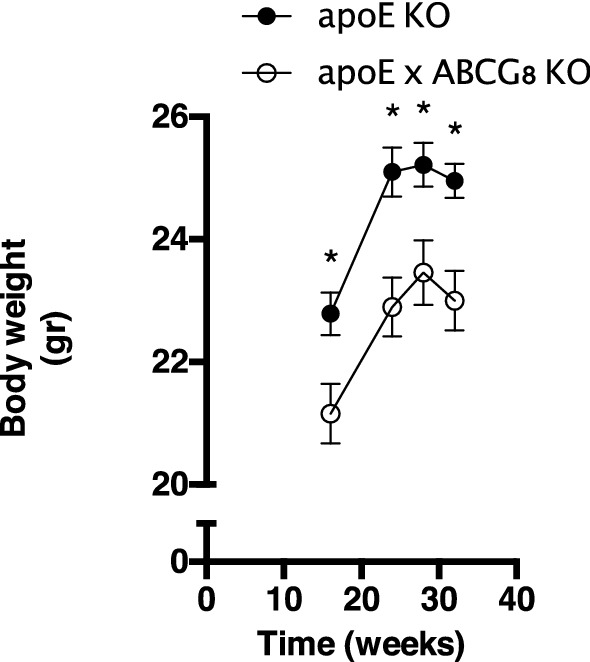
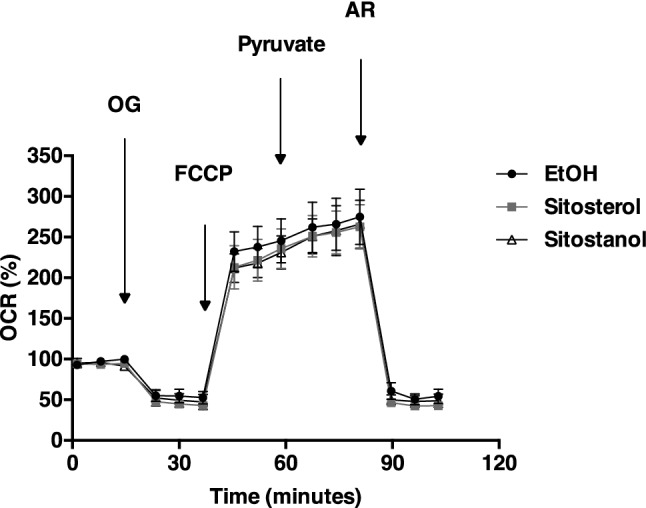
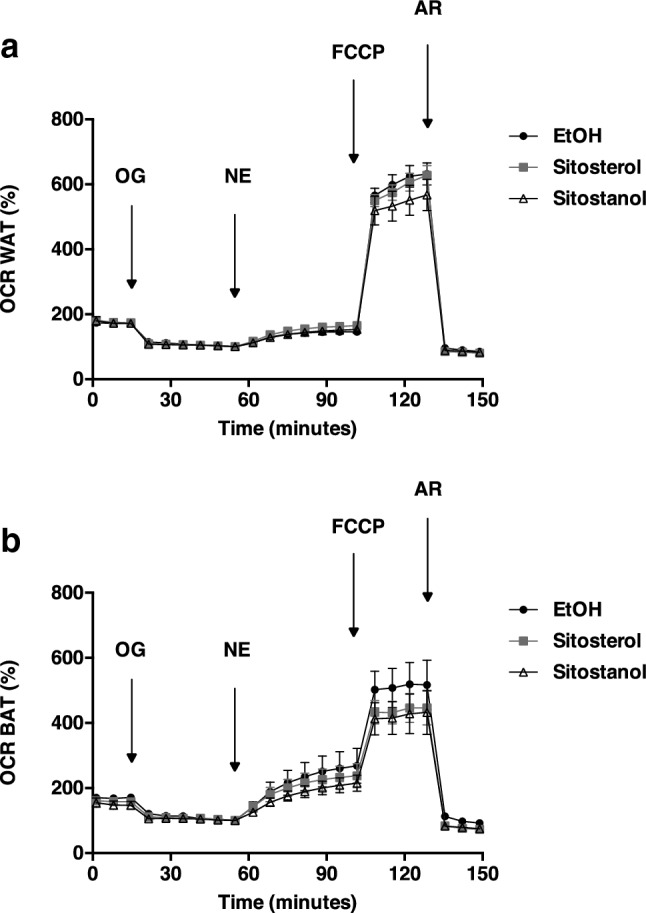
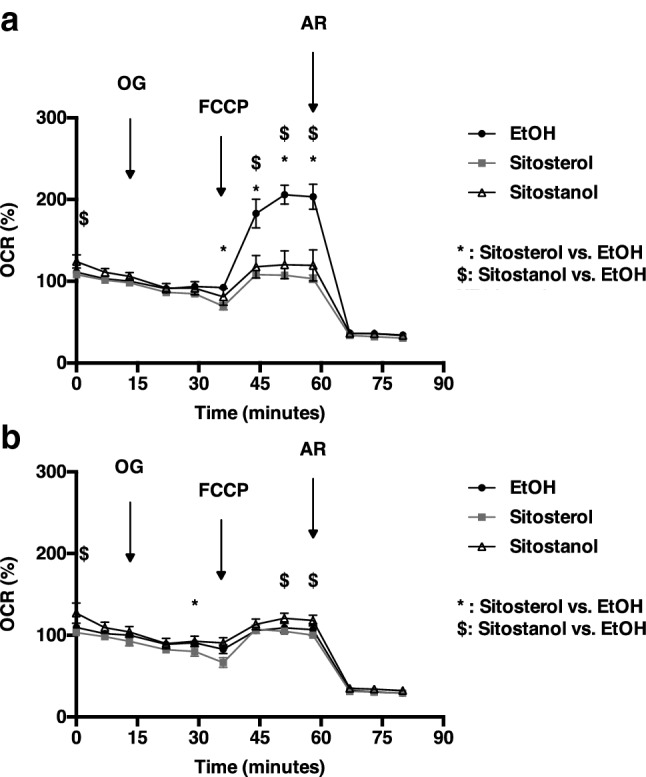
Chow feeding in phytosterolemic mice resulted in diminished increase in body weight compared to control mice. In vitro, sitosterol or sitostanol did not change mitochondrial function in adipocytes derived from human BAT or in cultured human myotubes. Interestingly, maximal mitochondrial function in HepG2 human hepatocytes was decreased following sitosterol or sitostanol incubation, however, only when mitochondrial function was assessed in low glucose-containing medium.
Beneficial in vivo effects of plant sterols and stanols on lipid and lipoprotein metabolism are well recognized. Our results indicate that alterations in human mitochondrial function are apparently not involved to explain these beneficial effects.
植物甾醇和甾烷醇降低低密度脂蛋白胆固醇水平与人类心血管疾病风险降低相关。植物甾醇和甾烷醇还能降低三酰甘油(TG)。然而,TG降低是如何实现的以及植物甾醇和甾烷醇对全身代谢的全部潜力尚不完全清楚。我们在此假设,高水平的植物甾醇和甾烷醇会刺激全身能量消耗,这可归因于棕色脂肪组织(BAT)、骨骼肌和肝脏线粒体功能的变化。
对植物甾醇血症小鼠喂食普通饲料32周,以检查全身体重增加情况。在体外,使用谷甾醇或谷甾烷醇对源自人BAT的脂肪细胞、人肌管或HepG2人肝细胞进行24小时孵育。使用海马生物分析仪评估线粒体功能。
与对照小鼠相比,对植物甾醇血症小鼠喂食普通饲料导致体重增加减少。在体外,谷甾醇或谷甾烷醇不会改变源自人BAT的脂肪细胞或培养的人肌管中的线粒体功能。有趣的是,在谷甾醇或谷甾烷醇孵育后,HepG2人肝细胞中的最大线粒体功能降低,然而,仅在含低葡萄糖的培养基中评估线粒体功能时才会出现这种情况。
植物甾醇和甾烷醇对脂质和脂蛋白代谢的有益体内作用已得到充分认识。我们的结果表明,人类线粒体功能的改变显然与解释这些有益作用无关。