Department of Clinical Sciences, Cummings School of Veterinary Medicine, Tufts University, North Grafton, Massachusetts.
J Vet Intern Med. 2019 Sep;33(5):1902-1908. doi: 10.1111/jvim.15566. Epub 2019 Jul 17.
Cardiac cachexia, loss of muscle mass associated with congestive heart failure (CHF), is associated with increased morbidity and shorter survival times in people, but an association between cardiac cachexia and survival has not been reported in dogs.
To determine the prevalence of cachexia and its associations with clinical, laboratory, and survival data in dogs with CHF.
Two hundred sixty-nine dogs with CHF.
Retrospective cohort study. Cachexia was defined by 1 of 2 definitions: (1) mild, moderate, or severe muscle loss or (2) weight loss of ≥5% in 12 months or less. Variables were compared between dogs with and without cachexia.
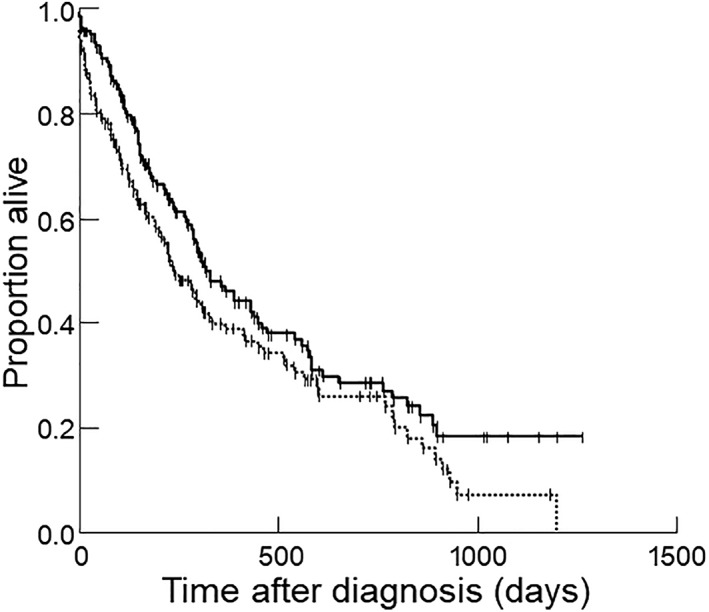
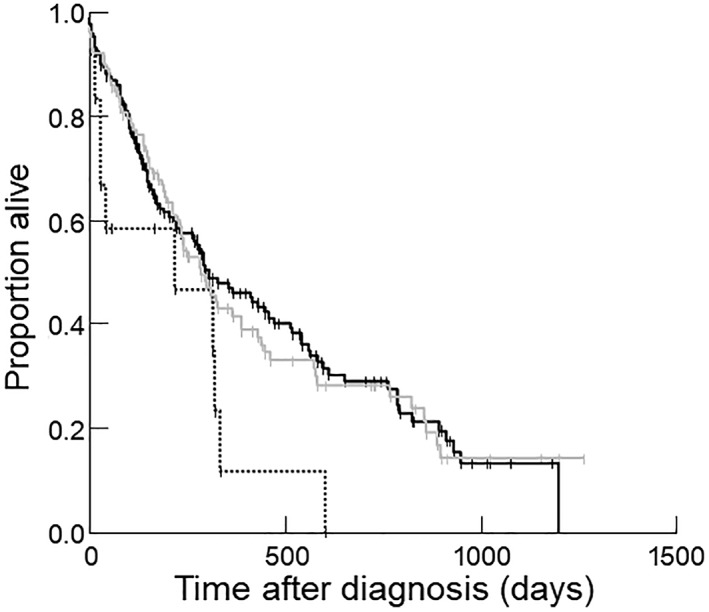
One hundred thirty of 269 dogs (48.3%) had cardiac cachexia based on muscle loss, whereas 67 of 159 dogs (42.1%) with pre-evaluation body weights had cachexia based on weight loss. Dogs with cachexia (based on muscle loss) were significantly older (P = .05), more likely to have a cardiac arrhythmia (P = .02), had higher chloride concentrations (P = .04), and had a lower body condition score (P < .001), hematocrit (P = .006), hemoglobin (P = .006), and albumin (P = .004) concentrations. On multivariable analysis, cachexia (P = .05), clinically important tachyarrhythmias (P < .001), azotemia (P < .001), and being under- or overweight (both P = .003) were associated with shorter survival times.
Cardiac cachexia in common in dogs with CHF and is associated with significantly shorter survival. This emphasizes the importance of preventing, diagnosing, and treating muscle loss in dogs with CHF.
与充血性心力衰竭(CHF)相关的心肌恶病质,即肌肉质量的损失,与人类发病率增加和生存时间缩短有关,但犬的心肌恶病质与生存之间的关联尚未被报道。
确定 CHF 犬恶病质的患病率及其与临床、实验室和生存数据的相关性。
269 只 CHF 犬。
回顾性队列研究。恶病质通过以下 2 种定义中的 1 种来定义:(1)轻度、中度或重度肌肉损失或(2)12 个月内体重减轻≥5%。比较有恶病质和无恶病质犬之间的变量。
根据肌肉损失,269 只犬中有 130 只(48.3%)患有心脏恶病质,而根据体重减轻,159 只犬中有 67 只(42.1%)患有恶病质。有恶病质(基于肌肉损失)的犬年龄显著较大(P =.05),更可能有心律失常(P =.02),氯浓度较高(P =.04),体况评分较低(P < .001),红细胞压积(P =.006)、血红蛋白(P =.006)和白蛋白(P =.004)浓度较低。多变量分析显示,恶病质(P =.05)、临床显著的心动过速(P < .001)、氮质血症(P < .001)以及超重或体重不足(均 P =.003)与生存时间较短相关。
CHF 犬中常见心脏恶病质,与生存时间明显缩短相关。这强调了预防、诊断和治疗 CHF 犬肌肉损失的重要性。