Nestlé Purina Research St. Louis MO.
Department of Clinical Sciences and Advanced Medicine School of Veterinary Medicine University of Pennsylvania Philadelphia PA.
J Am Heart Assoc. 2021 May 4;10(9):e018923. doi: 10.1161/JAHA.120.018923. Epub 2021 Apr 23.
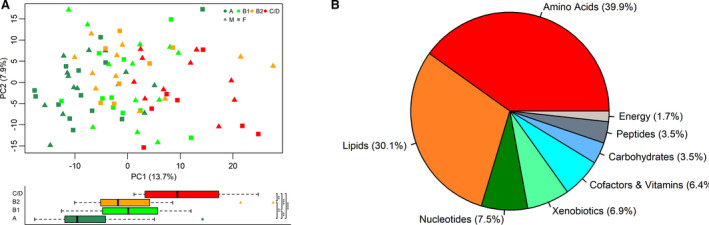
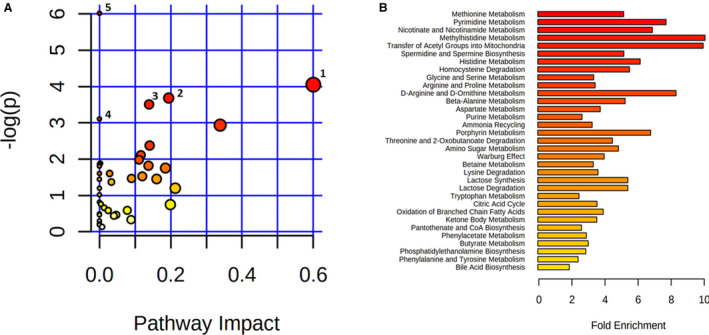
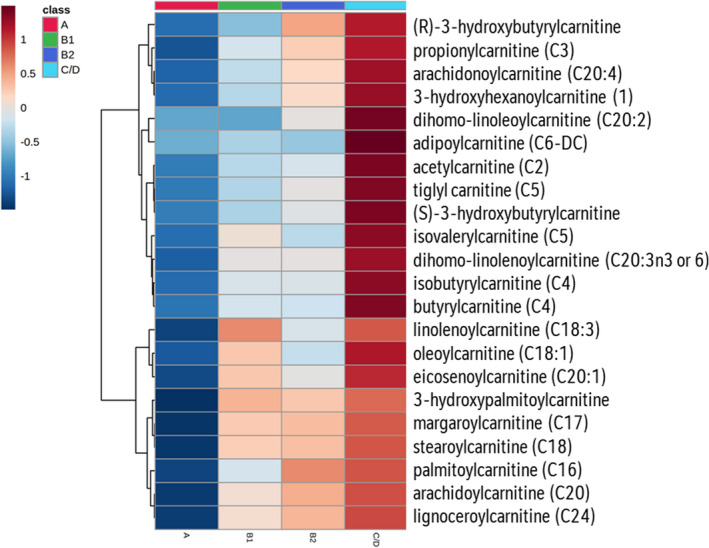
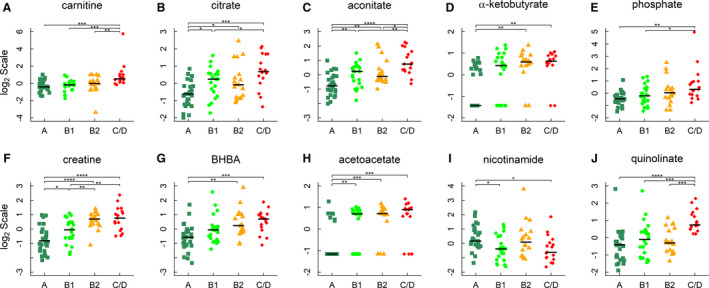
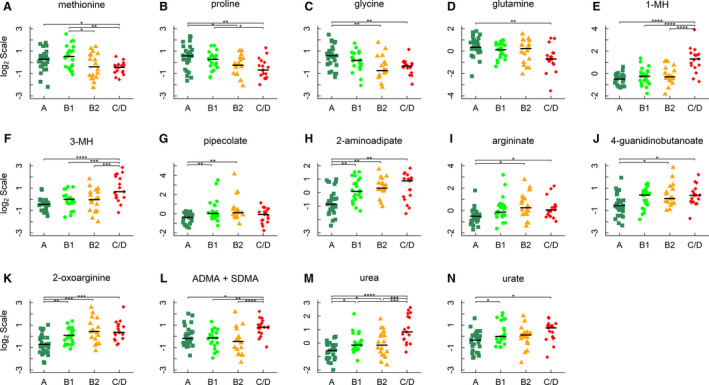
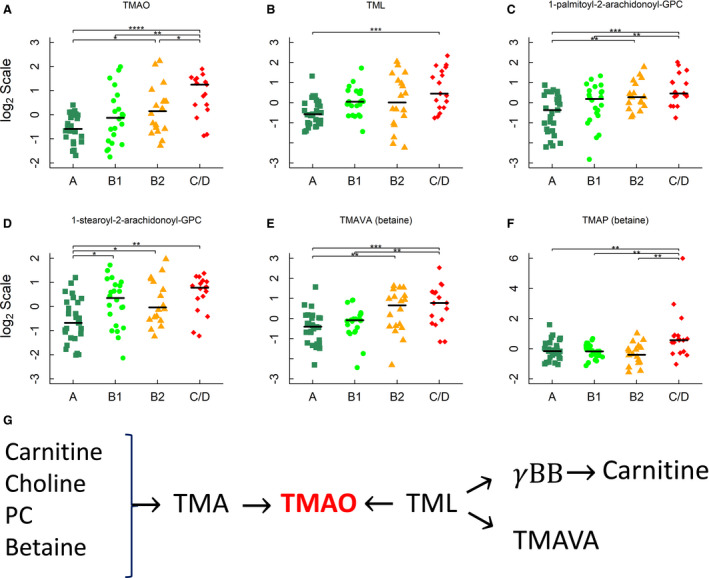
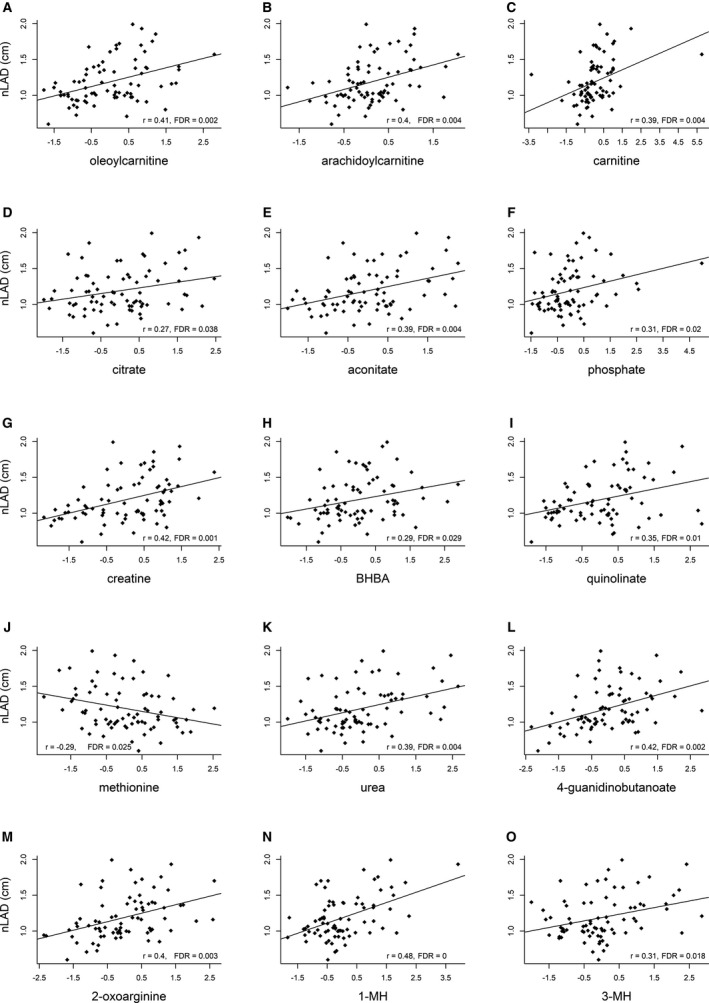
Background Myxomatous mitral valve disease (MMVD), a naturally occurring heart disease, affects 10% to 15% of the canine population. Canine MMVD shares many similarities with human MMVD. Untargeted metabolomics was performed to identify changes in metabolic pathways and biomarkers with potential clinical utilities. Methods and Results Serum samples from 27 healthy, 22 stage B1, 18 stage B2 preclinical MMVD dogs, and 17 MMVD dogs with a history of congestive heart failure (CHF) were analyzed. Linear regression analysis identified 173 known metabolites whose concentrations were different among the 4 groups (adjusted <0.05), of which 40% belonged to amino acid super pathways, while 30% were lipids. More than 50% of significant metabolites were correlated with left atrial diameter but not left ventricular dimension. Acylcarnitines, tricarboxylic acid cycle intermediates, and creatine accumulated in proportion to MMVD severity. α-Ketobutyrate and ketone bodies were increased as MMVD advanced. Nicotinamide, a key substrate of the main nicotinamide adenine dinucleotide (NAD) salvage pathway, was decreased, while quinolinate of the de novo NAD biosynthesis was increased in CHF dogs versus healthy dogs. 3-Methylhistidine, marker for myofibrillar protein degradation, was higher in CHF dogs than non-CHF dogs. Trimethylamine N-oxide (TMAO) and TMAO-producing precursors, including carnitine, phosphatidylcholine, betaine, and trimethyllysine, were increased in CHF dogs versus non-CHF dogs. Elevated levels of uremic toxins, including guanidino compounds, TMAO, and urea, were observed in CHF dogs. Pathway analysis highlighted the importance of bioenergetics and amino acid metabolism in canine MMVD. Conclusions Our study revealed altered energy metabolism, amino acid metabolic programming, and reduced renal function in the development of MMVD and CHF. Complex interplays along the heart-kidney-gut axis were implicated.
黏液样心肌二尖瓣病(MMVD)是一种自然发生的心脏病,影响了 10%至 15%的犬群。犬 MMVD 与人类 MMVD 有许多相似之处。本研究采用非靶向代谢组学方法,旨在寻找具有潜在临床应用价值的代谢途径和生物标志物的变化。
分析了 27 只健康犬、22 只 B1 期、18 只 B2 期临床前 MMVD 犬和 17 只有充血性心力衰竭(CHF)病史的 MMVD 犬的血清样本。线性回归分析确定了 173 种已知代谢物,它们在 4 组之间的浓度不同(调整后<0.05),其中 40%属于氨基酸超级途径,而 30%是脂质。超过 50%的显著代谢物与左心房直径相关,而与左心室维度无关。酰基辅酶 A、三羧酸循环中间体和肌酸随着 MMVD 严重程度的增加而积累。随着 MMVD 的进展,α-酮戊二酸和酮体增加。烟酰胺,主要烟酰胺腺嘌呤二核苷酸(NAD)补救途径的关键底物,在 CHF 犬中减少,而新 NAD 生物合成的喹啉酸盐在 CHF 犬中增加。肌球蛋白蛋白降解的标志物 3-甲基组氨酸在 CHF 犬中高于非 CHF 犬。三甲胺 N-氧化物(TMAO)和 TMAO 产生前体,包括肉碱、磷脂酰胆碱、甜菜碱和三甲基赖氨酸,在 CHF 犬中高于非 CHF 犬。在 CHF 犬中观察到尿毒症毒素水平升高,包括胍基化合物、TMAO 和尿素。途径分析突出了犬 MMVD 中生物能量学和氨基酸代谢的重要性。
我们的研究揭示了在 MMVD 和 CHF 发展过程中能量代谢、氨基酸代谢编程和肾功能降低的改变。涉及到心脏-肾脏-肠道轴的复杂相互作用。