Cancer Epigenetics and Biology Program (PEBC), Bellvitge Biomedical Research Institute (IDIBELL), Barcelona, Spain.
Translational Genomics and Targeted Therapeutics in Solid Tumors, August Pi i Sunyer Biomedical Research Institute (IDIBAPS), Barcelona, Spain.
Mol Cancer Res. 2019 Oct;17(10):2063-2076. doi: 10.1158/1541-7786.MCR-19-0040. Epub 2019 Jul 18.
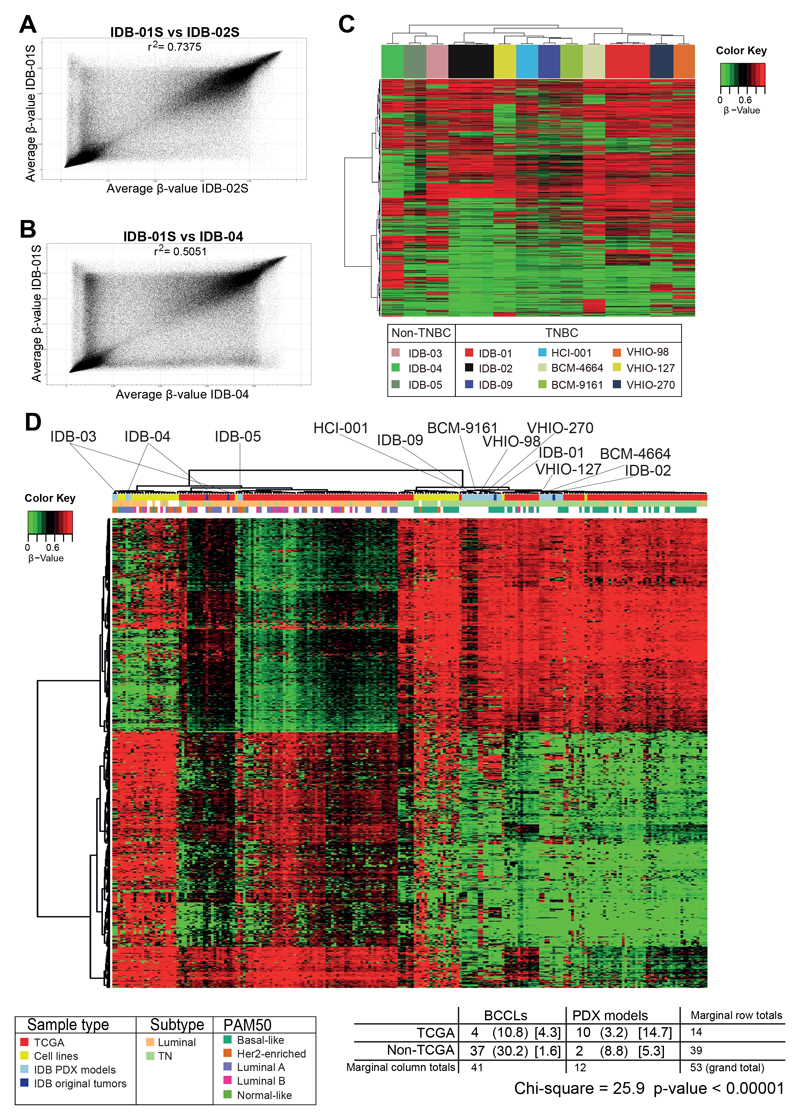
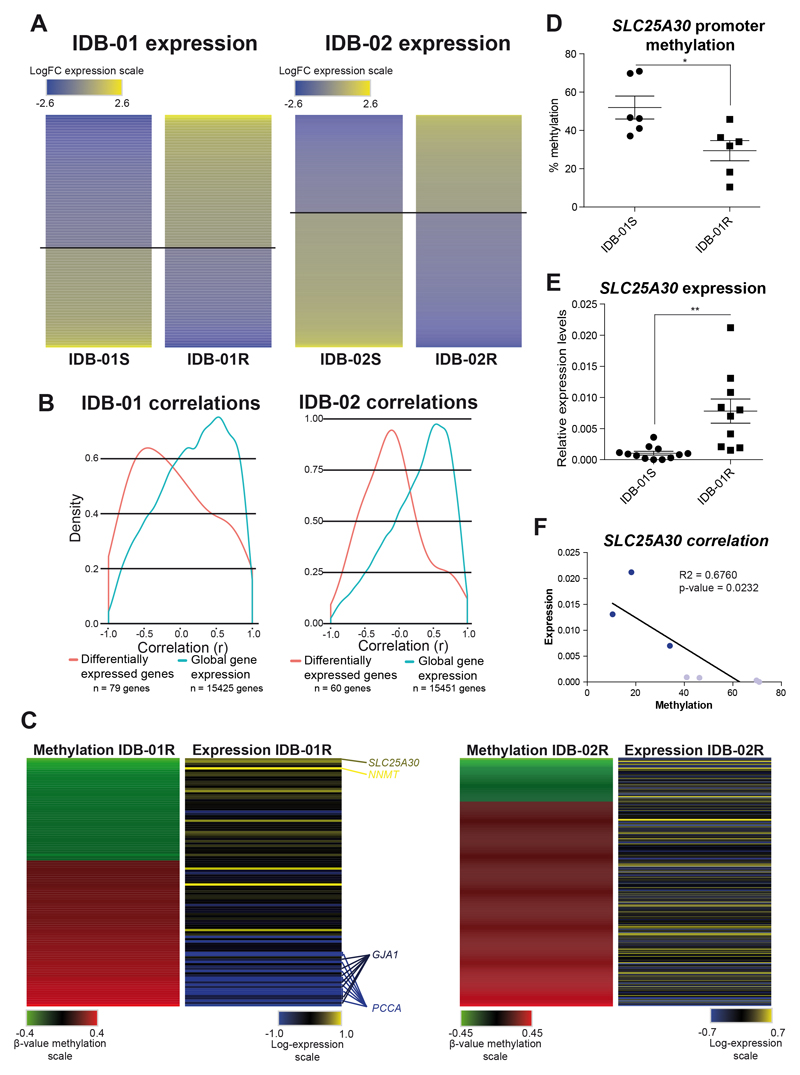
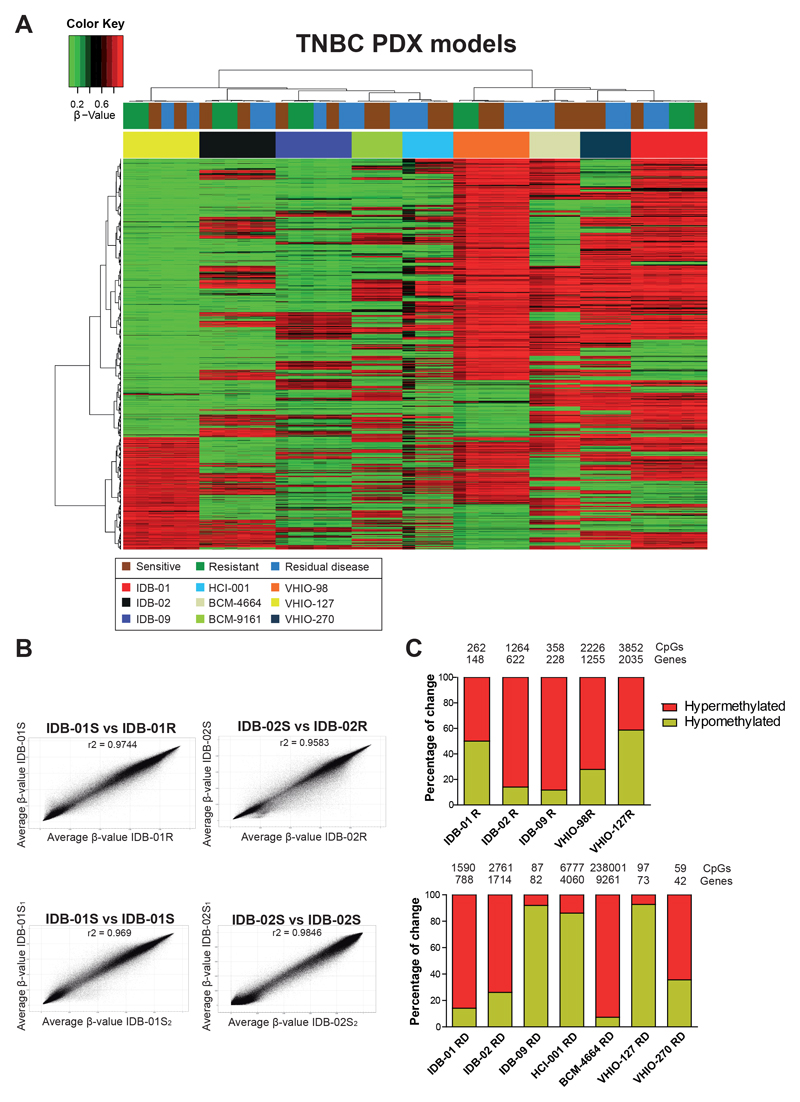
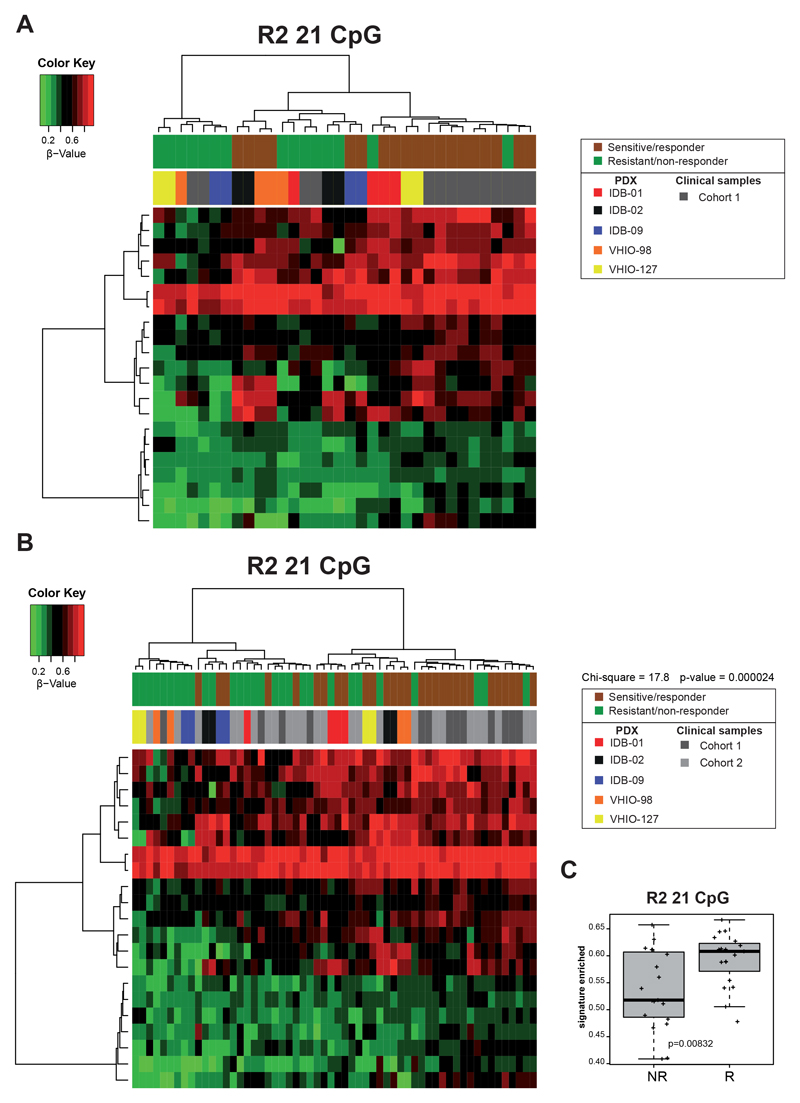
Taxanes are standard therapy in clinical practice for metastatic breast cancer; however, primary or acquired chemoresistance are a common cause of mortality. Breast cancer patient-derived xenografts (PDX) are powerful tools for the study of cancer biology and drug treatment response. Specific DNA methylation patterns have been associated to different breast cancer subtypes but its association with chemoresistance remains unstudied. Aiming to elucidate docetaxel resistance mechanisms, we performed genome-wide DNA methylation in breast cancer PDX models, including luminal and triple-negative breast cancer (TNBC) models sensitive to docetaxel, their matched models after emergence of chemoresistance and residual disease after short-term docetaxel treatment. We found that DNA methylation profiles from breast cancer PDX models maintain the subtype-specific methylation patterns of clinical samples. Two main DNA methylation clusters were found in TNBC PDX and remain stable during the emergence of docetaxel resistance; however, some genes/pathways were differentially methylated according to docetaxel response. A DNA methylation signature of resistance able to segregate TNBC based on chemotherapy response was identified. Transcriptomic profiling of selected sensitive/resistant pairs and integrative analysis with methylation data demonstrated correlation between some differentially methylated and expressed genes in docetaxel-resistant TNBC PDX models. Multiple gene expression changes were found after the emergence of docetaxel resistance in TNBC. DNA methylation and transcriptional changes identified between docetaxel-sensitive and -resistant TNBC PDX models or residual disease may have predictive value for chemotherapy response in TNBC. IMPLICATIONS: Subtype-specific DNA methylation patterns are maintained in breast cancer PDX models. While no global methylation changes were found, we uncovered differentially DNA methylated and expressed genes/pathways associated with the emergence of docetaxel resistance in TNBC.
紫杉烷类药物是转移性乳腺癌临床实践中的标准治疗方法;然而,原发性或获得性化疗耐药是导致死亡的常见原因。乳腺癌患者来源的异种移植(PDX)是研究癌症生物学和药物治疗反应的有力工具。特定的 DNA 甲基化模式与不同的乳腺癌亚型相关,但与化疗耐药性的关联尚未得到研究。为了阐明多西紫杉醇耐药机制,我们对包括对多西紫杉醇敏感的 luminal 和三阴性乳腺癌(TNBC)模型在内的乳腺癌 PDX 模型进行了全基因组 DNA 甲基化分析,以及在出现化疗耐药性和短期多西紫杉醇治疗后残留疾病时的匹配模型。我们发现,乳腺癌 PDX 模型的 DNA 甲基化谱保持了临床样本的亚组特异性甲基化模式。在 TNBC PDX 中发现了两个主要的 DNA 甲基化簇,并且在多西紫杉醇耐药性出现期间保持稳定;然而,根据多西紫杉醇的反应,一些基因/途径存在差异甲基化。确定了一种能够根据化疗反应对 TNBC 进行分类的耐药性 DNA 甲基化特征。对选定的敏感/耐药对进行转录组分析,并与甲基化数据进行综合分析,表明在多西紫杉醇耐药性 TNBC PDX 模型中一些差异甲基化和表达的基因之间存在相关性。在 TNBC 中出现多西紫杉醇耐药性后,发现了多个基因表达变化。在多西紫杉醇敏感和耐药性 TNBC PDX 模型或残留疾病之间鉴定的 DNA 甲基化和转录变化可能对 TNBC 的化疗反应具有预测价值。意义:在乳腺癌 PDX 模型中保持了亚组特异性的 DNA 甲基化模式。虽然没有发现全局甲基化变化,但我们发现了与 TNBC 中多西紫杉醇耐药性出现相关的差异 DNA 甲基化和表达的基因/途径。