College of Agronomy, Shenyang Agricultural University, 110866 Liaoning Province, China.
Department of Genetics, University of Wisconsin, Madison, Wisconsin 53706.
Genetics. 2019 Sep;213(1):143-160. doi: 10.1534/genetics.119.302378. Epub 2019 Jul 18.
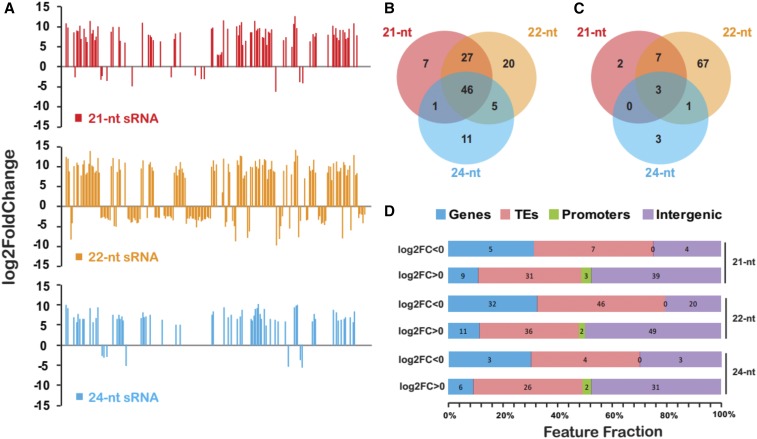
In the course of generating populations of maize with teosinte chromosomal introgressions, an unusual sickly plant phenotype was noted in individuals from crosses with two teosinte accessions collected near Valle de Bravo, Mexico. The plants of these Bravo teosinte accessions appear phenotypically normal themselves and the F plants appear similar to typical maize × teosinte Fs. However, upon backcrossing to maize, the BC and subsequent generations display a number of detrimental characteristics including shorter stature, reduced seed set, and abnormal floral structures. This phenomenon is observed in all BC individuals and there is no chromosomal segment linked to the sickly plant phenotype in advanced backcross generations. Once the sickly phenotype appears in a lineage, normal plants are never again recovered by continued backcrossing to the normal maize parent. Whole-genome shotgun sequencing reveals a small number of genomic sequences, some with homology to transposable elements, that have increased in copy number in the backcross populations. Transcriptome analysis of seedlings, which do not have striking phenotypic abnormalities, identified segments of 18 maize genes that exhibit increased expression in sickly plants. A assembly of transcripts present in plants exhibiting the sickly phenotype identified a set of 59 upregulated novel transcripts. These transcripts include some examples with sequence similarity to transposable elements and other sequences present in the recurrent maize parent (W22) genome as well as novel sequences not present in the W22 genome. Genome-wide profiles of gene expression, DNA methylation, and small RNAs are similar between sickly plants and normal controls, although a few upregulated transcripts and transposable elements are associated with altered small RNA or methylation profiles. This study documents hybrid incompatibility and genome instability triggered by the backcrossing of Bravo teosinte with maize. We name this phenomenon "hybrid decay" and present ideas on the mechanism that may underlie it.
在培育含有玉米染色体渐渗的玉米种群的过程中,人们注意到来自与两个玉米近缘种收集的杂交个体中出现了一种异常的病态植物表型。这些 Bravo 玉米近缘种的植物本身表型正常,F1 代植物也类似于典型的玉米×玉米近缘种 F1 代。然而,在回交至玉米时,BC 代及其后续世代表现出许多有害特征,包括株高变矮、结实减少和异常的花器官结构。这种现象在所有 BC 个体中都观察到,并且在回交的高级世代中没有与病态植物表型相关联的染色体片段。一旦病态表型出现在一个品系中,通过继续回交至正常玉米亲本,就再也无法恢复正常植物。全基因组鸟枪法测序揭示了少数基因组序列,其中一些与转座元件具有同源性,在回交群体中拷贝数增加。对幼苗进行的转录组分析,这些幼苗没有明显的表型异常,鉴定出 18 个玉米基因的片段在病态植物中表达增加。在表现出病态表型的植物中存在的转录本的组装鉴定了一组 59 个上调的新转录本。这些转录本包括一些与转座元件和在反复出现的玉米亲本(W22)基因组中存在的其他序列具有序列相似性的例子,以及在 W22 基因组中不存在的新序列。病态植物和正常对照之间的全基因组基因表达、DNA 甲基化和小 RNA 图谱相似,尽管一些上调的转录本和转座元件与改变的小 RNA 或甲基化图谱相关。本研究记录了 Bravo 玉米近缘种与玉米回交引发的杂种不亲和和基因组不稳定。我们将这种现象命名为“杂种衰退”,并提出了可能与之相关的机制的想法。