TEDA Institute of Biological Sciences and Biotechnology, Nankai University, Tianjin, China.
The Key Laboratory of Molecular Microbiology and Technology, Ministry of Education, Tianjin, China.
Rev Med Virol. 2019 Sep;29(5):e2075. doi: 10.1002/rmv.2075. Epub 2019 Jul 19.
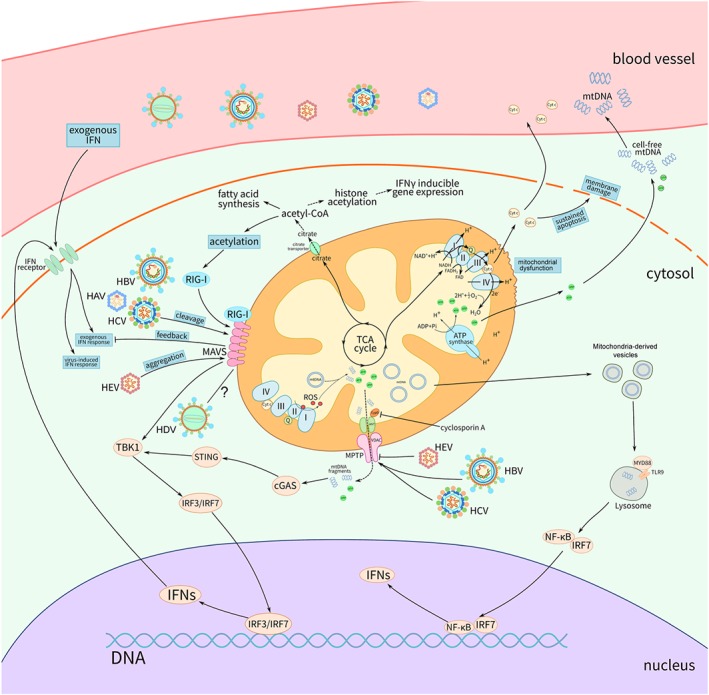
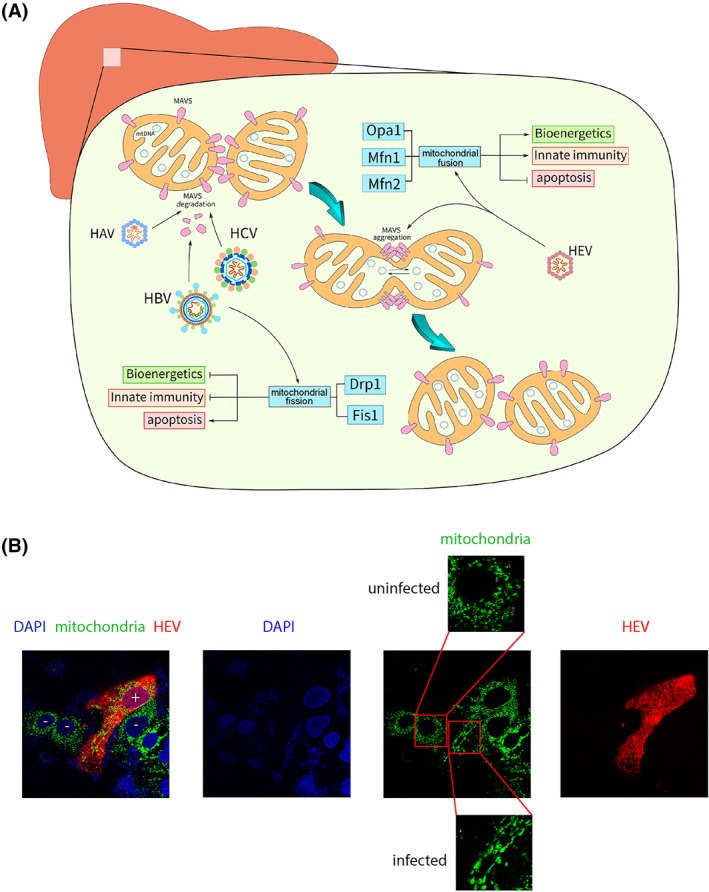
Hepatitis virus infections affect a large proportion of the global population. The host responds rapidly to viral infection by orchestrating a variety of cellular machineries, in particular, the mitochondrial compartment. Mitochondria actively regulate viral infections through modulation of the cellular innate immunity and reprogramming of metabolism. In turn, hepatitis viruses are able to modulate the morphodynamics and functions of mitochondria, but the mode of actions are distinct with respect to different types of hepatitis viruses. The resulting mutual interactions between viruses and mitochondria partially explain the clinical presentation of viral hepatitis, influence the response to antiviral treatment, and offer rational avenues for novel therapy. In this review, we aim to consider in depth the multifaceted interactions of mitochondria with hepatitis virus infections and emphasize the implications for understanding pathogenesis and advancing therapeutic development.
肝炎病毒感染影响了全球很大一部分人口。宿主通过协调多种细胞机制,特别是线粒体区室,对病毒感染迅速作出反应。线粒体通过调节细胞固有免疫和代谢重编程积极调控病毒感染。反过来,肝炎病毒能够调节线粒体的形态动力学和功能,但不同类型的肝炎病毒的作用模式是不同的。病毒和线粒体之间的这种相互作用部分解释了病毒性肝炎的临床表现,影响了抗病毒治疗的反应,并为新的治疗方法提供了合理的途径。在这篇综述中,我们旨在深入探讨线粒体与肝炎病毒感染的多方面相互作用,并强调其对理解发病机制和推进治疗发展的意义。