Department of Prosthodontics, Peking University School and Hospital of Stomatology, National Laboratory for Digital and Material Technology of Stomatology, Beijing Key Laboratory of Digital Stomatology, National Clinical Research Center for Oral Diseases, 22 Zhongguancun South Avenue, Beijing, 100081, People's Republic of China.
Department of Materials Science and Engineering, College of Engineering, Peking University, Beijing, 100871, People's Republic of China.
Stem Cell Res Ther. 2019 Jul 19;10(1):213. doi: 10.1186/s13287-019-1321-y.
As the representative of fenamic acids, an important group of NSAIDs, flufenamic acid (FFA) has been used for anti-inflammation and analgesia in the clinic. Recently, researches have focused on the role of some members of NSAIDs in promoting osteogenesis. However, little attention has been paid to the subgroup of fenamic acids, and it remains unclear whether FFA and other fenamic acids could regulate mesenchymal stem cells' (MSCs) lineage commitment and bone regeneration.
Here we treated two kinds of human MSCs with FFA at different concentrations in vitro and examined the effect of FFA on osteogenic differentiation of human MSCs. This was followed by heterotopic bone formation assay in nude mice. In addition, ovariectomized and aged mice were used as osteoporotic models to test the effect of FFA on osteoporosis. Besides, activators and inhibitor of nuclear factor-κB (NF-κB) signaling pathway and western blot were used to clarify the mechanism of the promoting effect of low concentration FFA on osteogenesis.
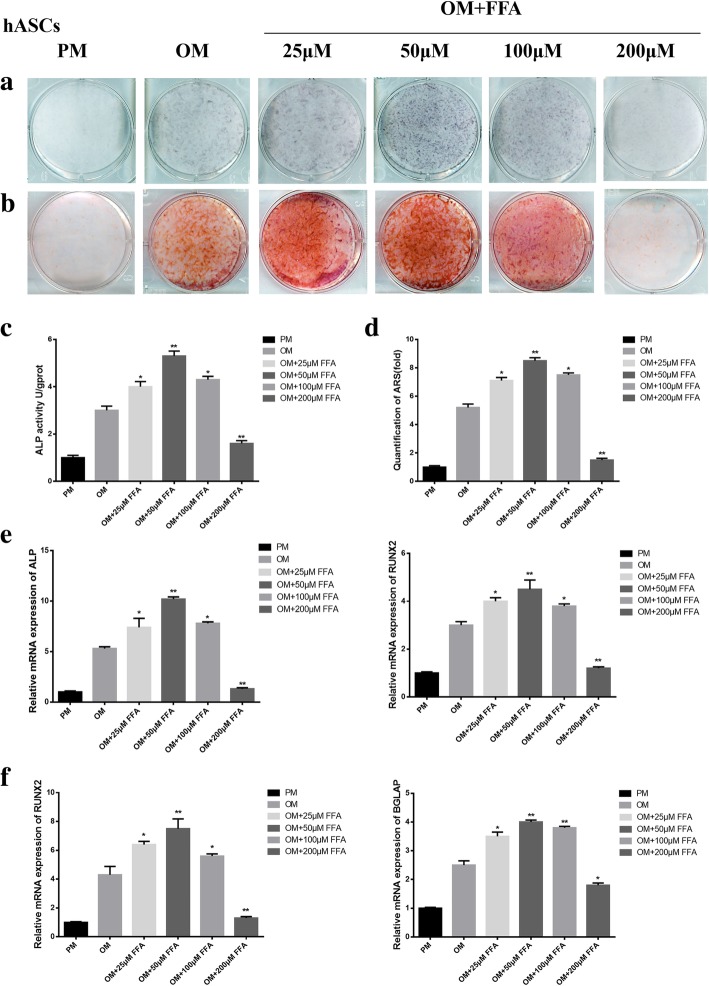
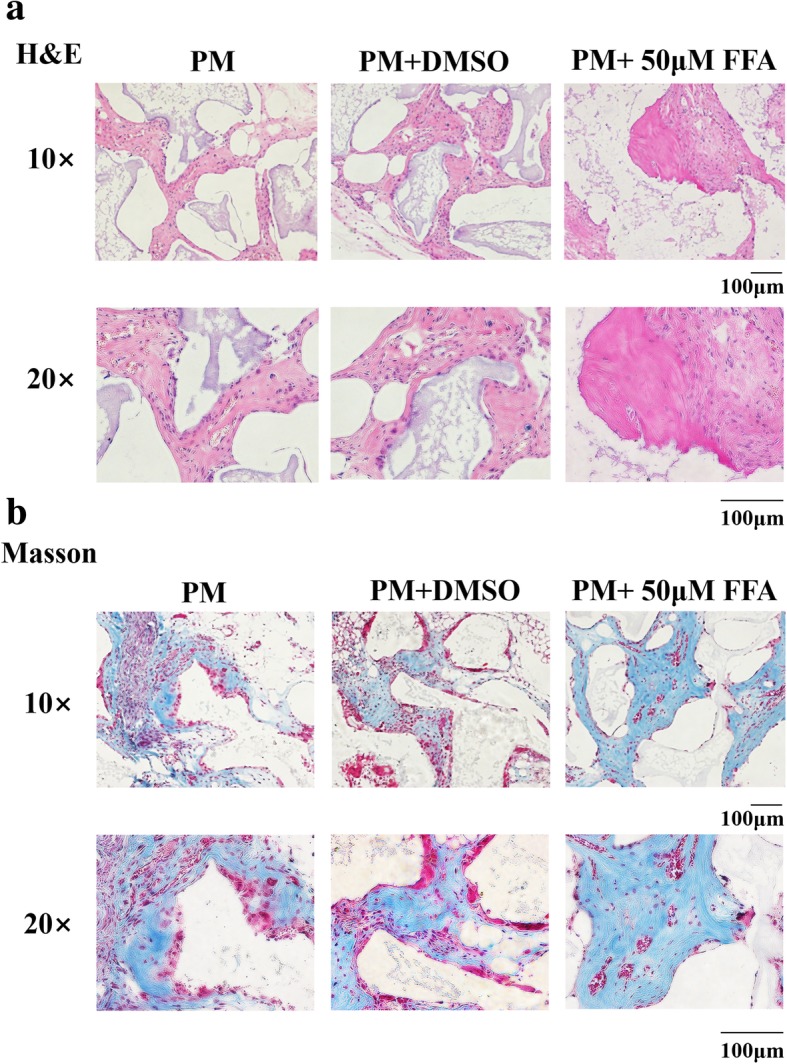
Our results indicated that low concentrations of FFA could significantly enhance osteogenic differentiation of human MSCs in vitro, as well as in vivo. In addition, FFA treatment suppressed bone loss in ovariectomized and aged mice. Mechanistically, FFA at low concentrations promoted osteogenesis differentiation of human MSCs by inhibition of the NF-κB signaling pathway.
Collectively, our study suggested that low concentration FFA could be used in bone tissue engineering or osteoporosis by promoting osteogenic differentiation of human MSCs.
作为非甾体抗炎药(NSAIDs)的重要代表之一,灭酸类药物中的氟芬那酸(FFA)已被临床用于抗炎和镇痛。最近,研究集中在一些 NSAIDs 成员在促进成骨作用方面。然而,人们对灭酸类药物的亚组关注甚少,尚不清楚 FFA 和其他灭酸类药物是否能调节间充质干细胞(MSCs)的谱系分化和骨再生。
我们在体外以不同浓度的 FFA 处理两种人 MSCs,并研究 FFA 对人 MSCs 成骨分化的影响。随后在裸鼠中进行异位骨形成试验。此外,还使用去卵巢和老龄小鼠作为骨质疏松模型,以测试 FFA 对骨质疏松的作用。此外,使用核因子-κB(NF-κB)信号通路的激活剂和抑制剂以及 Western blot 来阐明低浓度 FFA 对成骨作用的促进作用的机制。
我们的结果表明,低浓度的 FFA 可显著增强人 MSCs 的体外和体内成骨分化。此外,FFA 处理可抑制去卵巢和老龄小鼠的骨丢失。在机制上,低浓度的 FFA 通过抑制 NF-κB 信号通路促进人 MSCs 的成骨分化。
总之,我们的研究表明,低浓度的 FFA 可通过促进人 MSCs 的成骨分化,用于骨组织工程或骨质疏松症的治疗。