Wu Longfei, Dzade Nelson Y, Yu Miao, Mezari Brahim, van Hoof Arno J F, Friedrich Heiner, de Leeuw Nora H, Hensen Emiel J M, Hofmann Jan P
Laboratory for Inorganic Materials and Catalysis, Department of Chemical Engineering and Chemistry, Eindhoven University of Technology, P.O. Box 513, 5600 MB Eindhoven, The Netherlands.
Faculty of Geosciences, Utrecht University, Princetonlaan 8A, 3584 CB Utrecht, The Netherlands.
ACS Energy Lett. 2019 Jul 12;4(7):1733-1740. doi: 10.1021/acsenergylett.9b00945. Epub 2019 Jun 27.
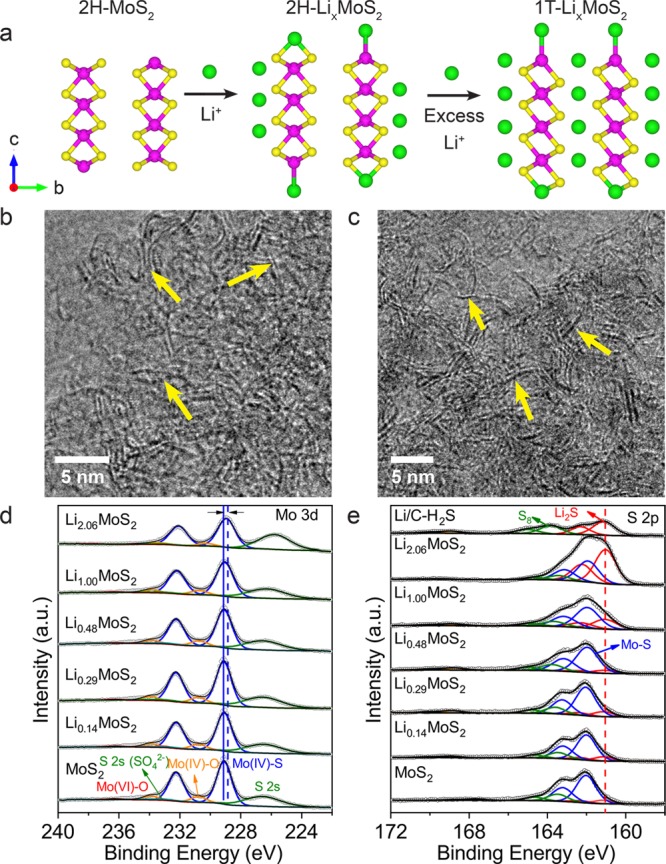
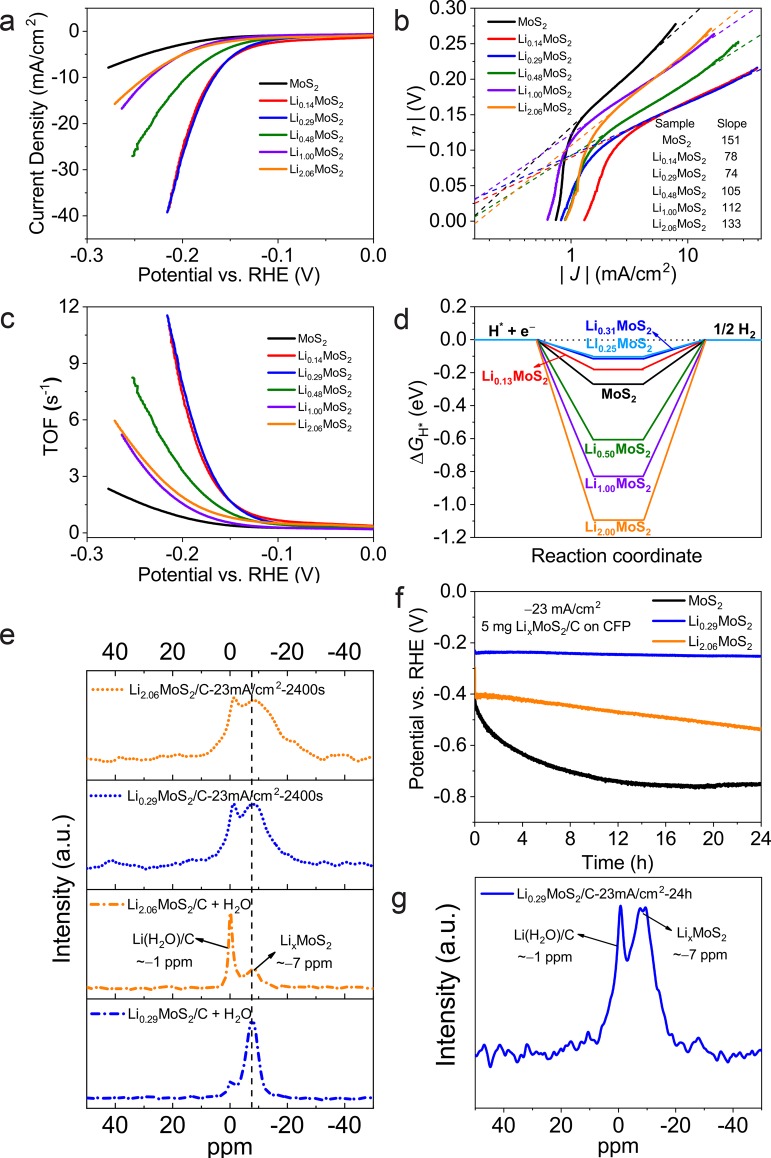
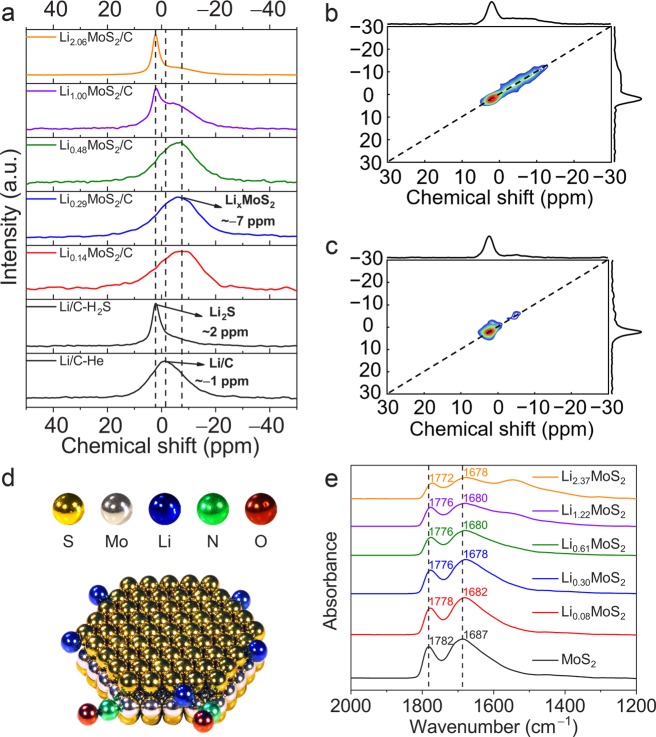
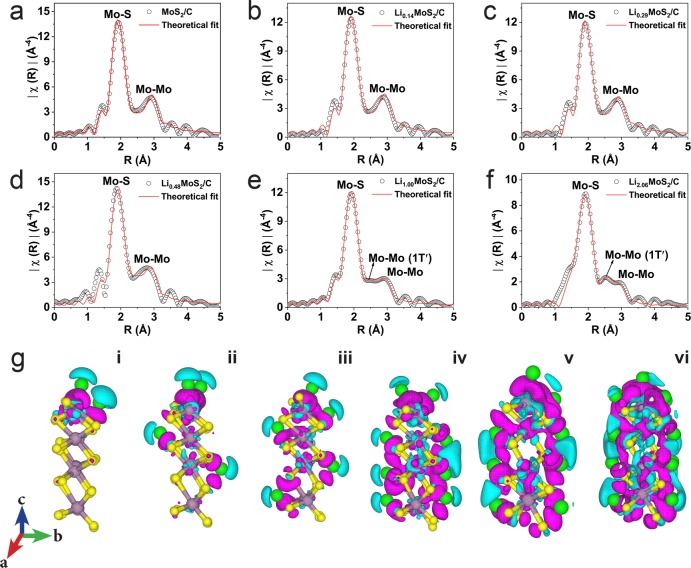
Molybdenum disulfide (MoS) is a highly promising catalyst for the hydrogen evolution reaction (HER) to realize large-scale artificial photosynthesis. The metallic 1T'-MoS phase, which is stabilized via the adsorption or intercalation of small molecules or cations such as Li, shows exceptionally high HER activity, comparable to that of noble metals, but the effect of cation adsorption on HER performance has not yet been resolved. Here we investigate in detail the effect of Li adsorption and intercalation on the proton reduction properties of MoS. By combining spectroscopy methods (infrared of adsorbed NO, Li solid-state nuclear magnetic resonance, and X-ray photoemission and absorption) with catalytic activity measurements and theoretical modeling, we infer that the enhanced HER performance of Li MoS is predominantly due to the catalytic promotion of edge sites by Li.
二硫化钼(MoS₂)是一种极具潜力的催化剂,可用于析氢反应(HER)以实现大规模人工光合作用。通过小分子或阳离子(如Li)的吸附或插层而稳定的金属1T'-MoS₂相表现出极高的析氢活性,可与贵金属相媲美,但阳离子吸附对析氢性能的影响尚未得到解决。在此,我们详细研究了Li吸附和插层对MoS₂质子还原性能的影响。通过将光谱方法(吸附NO的红外光谱、Li固态核磁共振以及X射线光电子能谱和吸收光谱)与催化活性测量和理论建模相结合,我们推断Li-MoS₂析氢性能增强主要是由于Li对边缘位点的催化促进作用。