INSERM, U955, Team 09, 94010 Créteil, France.
Faculty of Medicine, University Paris Est, 94010 Créteil, France.
Cells. 2019 Jul 20;8(7):757. doi: 10.3390/cells8070757.
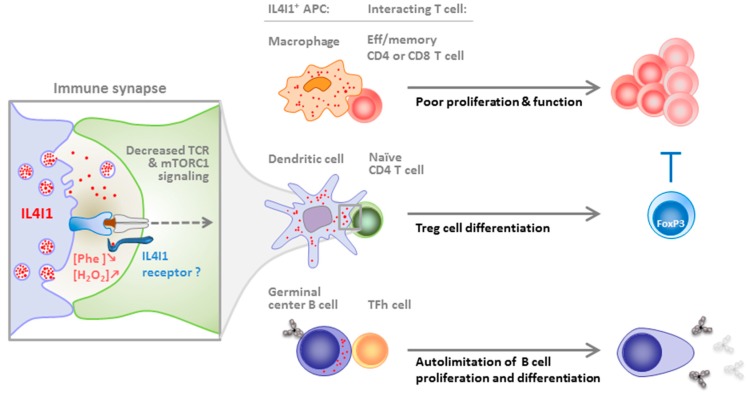
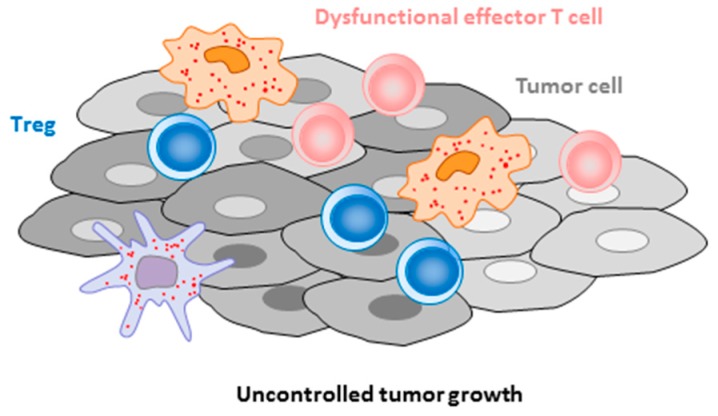
The high metabolic needs of T lymphocytes in response to activation make them particularly vulnerable to modifications of their biochemical milieu. Immunosuppressive enzymes produced in the tumor microenvironment modify nutrient availability by catabolizing essential or semi-essential amino acids and producing toxic catabolites, thus participating in the local sabotage of the antitumor immune response. L-amino-acid oxidases are FAD-bound enzymes found throughout evolution, from bacteria to mammals, and are often endowed with anti-infectious properties. IL4I1 is a secreted L-phenylalanine oxidase mainly produced by inflammatory antigen-presenting cells-in particular, macrophages present in T helper type 1 granulomas and in various types of tumors. In the last decade, it has been shown that IL4I1 is involved in the fine control of B- and T-cell adaptive immune responses. Preclinical models have revealed its role in cancer immune evasion. Recent clinical data highlight IL4I1 as a new potential prognostic marker in human melanoma. As a secreted enzyme, IL4I1 may represent an easily targetable molecule for cancer immunotherapy.
T 淋巴细胞在响应激活时的高代谢需求使它们特别容易受到其生化环境变化的影响。肿瘤微环境中产生的免疫抑制酶通过分解必需或半必需氨基酸和产生有毒代谢物来改变营养物质的可用性,从而参与局部破坏抗肿瘤免疫反应。L-氨基酸氧化酶是一种结合 FAD 的酶,存在于从细菌到哺乳动物的整个进化过程中,通常具有抗感染特性。IL4I1 是一种分泌型 L-苯丙氨酸氧化酶,主要由炎症性抗原呈递细胞产生,特别是在辅助性 T 细胞 1 肉芽肿和各种类型的肿瘤中存在的巨噬细胞。在过去的十年中,已经表明 IL4I1 参与了 B 和 T 细胞适应性免疫反应的精细控制。临床前模型揭示了它在癌症免疫逃逸中的作用。最近的临床数据强调了 IL4I1 作为人类黑色素瘤的一个新的潜在预后标志物。作为一种分泌型酶,IL4I1 可能代表癌症免疫治疗的一个易于靶向的分子。