The Mondor Institute of Biomedical Research (IMRB), INSERM U955, Team 09, F-94010 Créteil CEDEX, France.
Faculty of Medicine, Paris Est University, F-94010 Créteil CEDEX, France.
Molecules. 2017 Dec 5;22(12):2151. doi: 10.3390/molecules22122151.
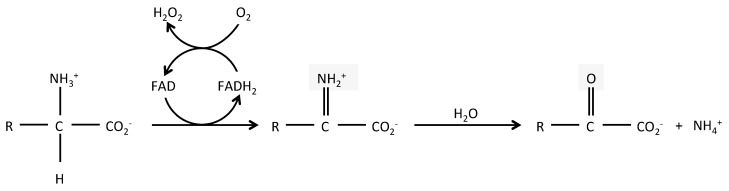
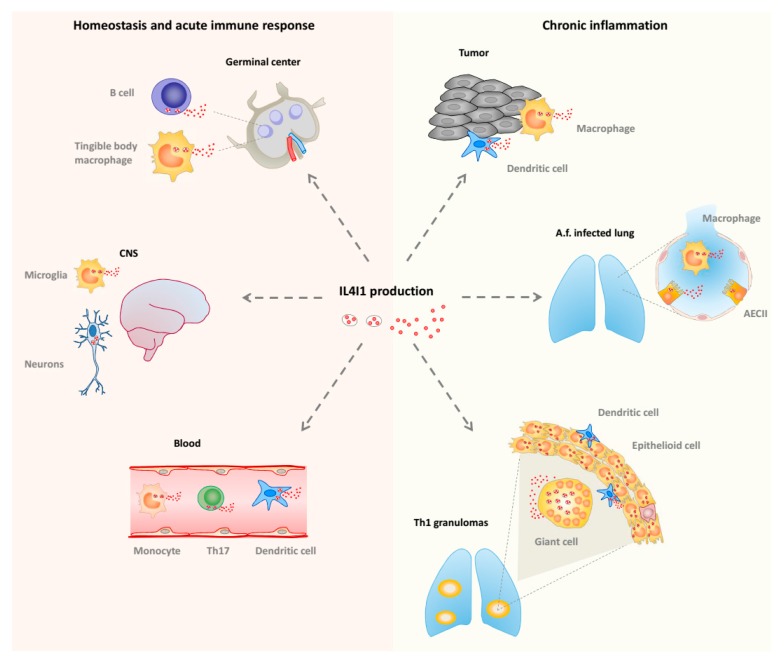
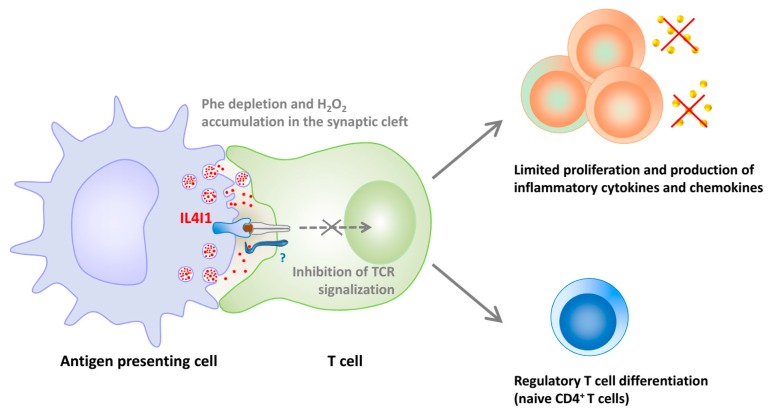
l-amino acid oxidases are flavin adenine dinucleotide-dependent enzymes present in all major kingdom of life, from bacteria to mammals. They participate in defense mechanisms by limiting the growth of most bacteria and parasites. A few mammalian LAAOs have been described, of which the enzyme "interleukin-4 induced gene 1" (IL4I1) is the best characterized. IL4I1 mainly oxidizes l-phenylalanine. It is a secreted enzyme physiologically produced by antigen presenting cells of the myeloid and B cell lineages and T helper type (Th) 17 cells. Important roles of IL4I1 in the fine control of the adaptive immune response in mice and humans have emerged during the last few years. Indeed, IL4I1 inhibits T cell proliferation and cytokine production and facilitates naïve CD4⁺ T-cell differentiation into regulatory T cells in vitro by limiting the capacity of T lymphocytes to respond to clonal receptor stimulation. It may also play a role in controlling the germinal center reaction for antibody production and limiting Th1 and Th17 responses. IL4I1 is expressed in tumor-associated macrophages of most human cancers and in some tumor cell types. Such expression, associated with its capacity to facilitate tumor growth by inhibiting the anti-tumor T-cell response, makes IL4I1 a new potential druggable target in the field of immunomodulation in cancer.
l-氨基酸氧化酶是黄素腺嘌呤二核苷酸依赖性酶,存在于从细菌到哺乳动物的所有主要生命王国中。它们通过限制大多数细菌和寄生虫的生长参与防御机制。已经描述了几种哺乳动物 LAAO,其中酶“白细胞介素-4 诱导基因 1”(IL4I1)是最具特征的。IL4I1 主要氧化 l-苯丙氨酸。它是一种由髓系和 B 细胞谱系以及辅助性 T 细胞(Th)17 细胞的抗原呈递细胞生理性产生的分泌酶。近年来,在小鼠和人类中,IL4I1 在适应性免疫反应的精细控制中发挥着重要作用。事实上,IL4I1 通过限制 T 淋巴细胞对克隆受体刺激的反应能力,抑制 T 细胞增殖和细胞因子产生,并促进幼稚 CD4⁺T 细胞分化为调节性 T 细胞,从而在体外抑制 T 细胞增殖和细胞因子产生。它还可能在控制生发中心反应以产生抗体和限制 Th1 和 Th17 反应方面发挥作用。IL4I1 在大多数人类癌症的肿瘤相关巨噬细胞和一些肿瘤细胞类型中表达。这种表达与其通过抑制抗肿瘤 T 细胞反应促进肿瘤生长的能力相关,使得 IL4I1 成为癌症免疫调节领域的一个新的潜在可药物靶点。