Dubbelboer Ilse R, Pavlovic Natasa, Heindryckx Femke, Sjögren Erik, Lennernäs Hans
Department of Pharmacy, Uppsala University, Box 580, 751 23 Uppsala, Sweden.
Department of Medical Cell Biology, Uppsala University, Box 571, 751 23 Uppsala, Sweden.
Cancers (Basel). 2019 Jul 20;11(7):1024. doi: 10.3390/cancers11071024.
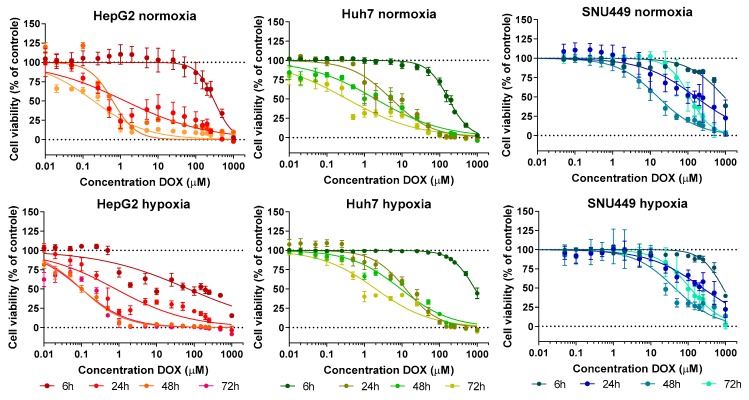
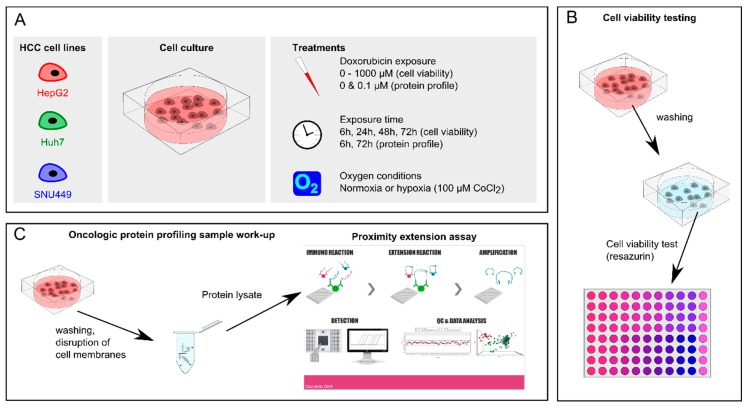
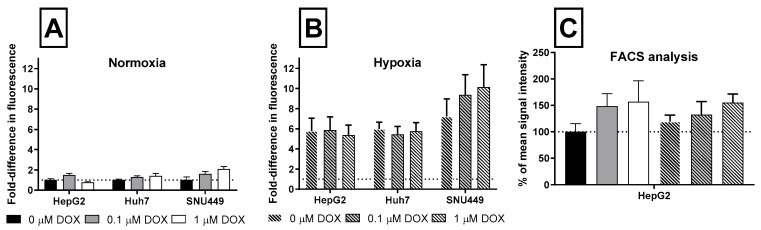
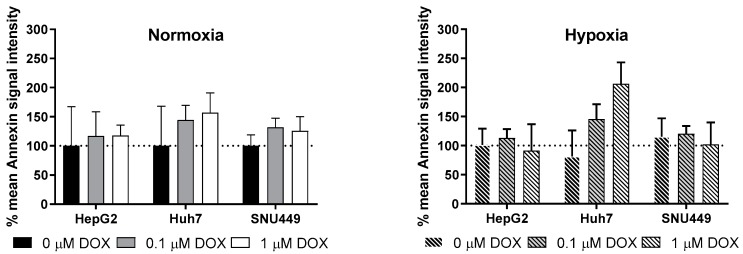
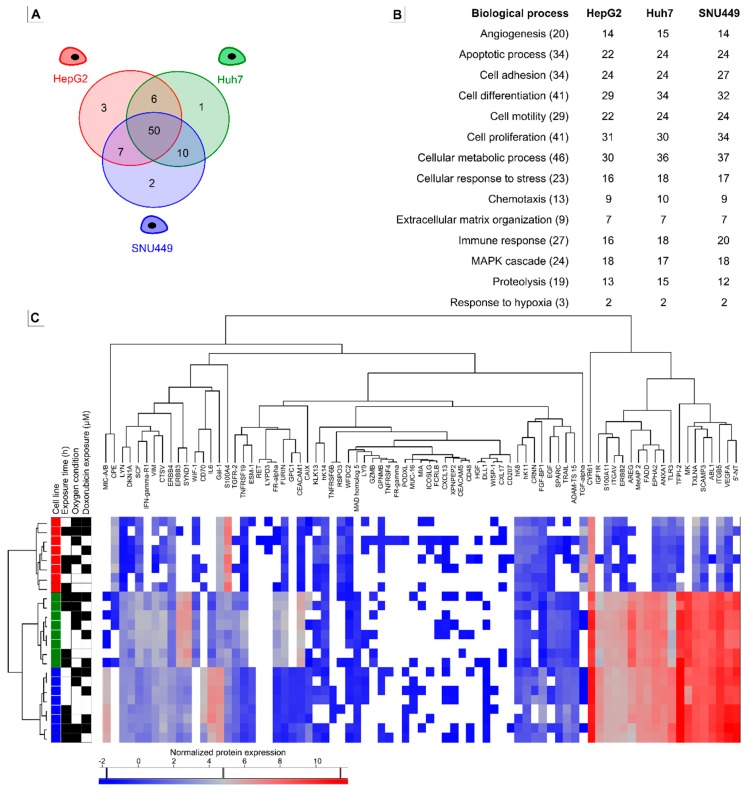
Hepatocellular carcinoma is often treated with a combination of doxorubicin and embolization, exposing it to high concentrations and hypoxia. Separation of the possible synergistic effect of this combination in vivo is difficult. Here, treatment with doxorubicin, under hypoxia or normoxia in different liver cancer cell lines, was evaluated. Liver cancer cells HepG2, Huh7, and SNU449 were exposed to doxorubicin, hypoxia, or doxorubicin + hypoxia with different duration. Treatment response was evaluated with cell viability, apoptosis, oxidative stress, and summarized with IC. The protein profile of a 92-biomarker panel was analyzed on cells treated with 0 or 0.1 µM doxorubicin during 6 or 72 h, under normoxia or hypoxia. Hypoxia decreased viability of HepG2 and SNU499. HepG2 was least and SNU449 most tolerant to doxorubicin treatment. Cytotoxicity of doxorubicin increased over time in HepG2 and Huh7. The combination of doxorubicin + hypoxia affected the cells differently. Normalized protein expression was lower for HepG2 than Huh7 and SNU449. Hierarchical clustering separated HepG2 from Huh7 and SNU449. These three commonly used cell lines have critically different responses to chemotherapy and hypoxia, which was reflected in their different protein expression profile. These different responses suggest that tumors can respond differently to the combination of local chemotherapy and embolization.
肝细胞癌通常采用阿霉素和栓塞联合治疗,使其暴露于高浓度和低氧环境中。在体内分离这种联合治疗可能的协同作用很困难。在此,评估了在不同肝癌细胞系中,在低氧或常氧条件下用阿霉素进行治疗的效果。肝癌细胞HepG2、Huh7和SNU449分别暴露于阿霉素、低氧或阿霉素+低氧环境中不同时长。通过细胞活力、凋亡、氧化应激评估治疗反应,并以半数抑制浓度(IC)进行总结。对在常氧或低氧条件下,用0或0.1μM阿霉素处理6或72小时的细胞,分析了一个92种生物标志物组成的蛋白谱。低氧降低了HepG2和SNU499的活力。HepG2对阿霉素治疗的耐受性最低,SNU449最高。在HepG2和Huh7中,阿霉素的细胞毒性随时间增加。阿霉素+低氧的联合治疗对细胞的影响不同。HepG2的标准化蛋白表达低于Huh7和SNU449。层次聚类将HepG2与Huh7和SNU449区分开来。这三种常用细胞系对化疗和低氧的反应截然不同,这在它们不同的蛋白表达谱中得到了体现。这些不同的反应表明,肿瘤对局部化疗和栓塞联合治疗的反应可能不同。