Department of Dermatology, University of Turku and Turku University Hospital, Hämeentie 11 TE6, FI-20520 Turku, Finland.
The Western Cancer Centre of the Cancer Center Finland (FICAN West), University of Turku and Turku University Hospital, Kiinamyllynkatu 10, FI-20520 Turku, Finland.
Int J Mol Sci. 2019 Jul 19;20(14):3550. doi: 10.3390/ijms20143550.
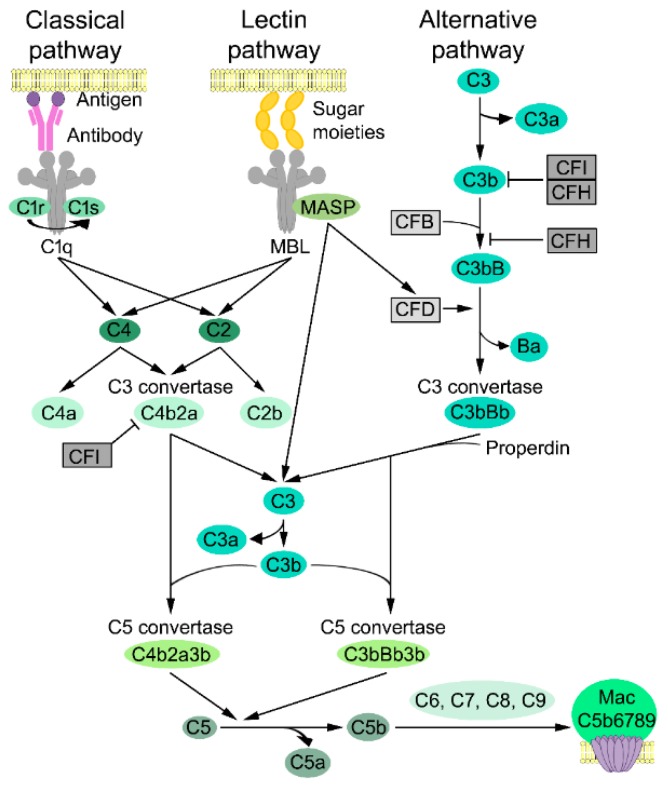
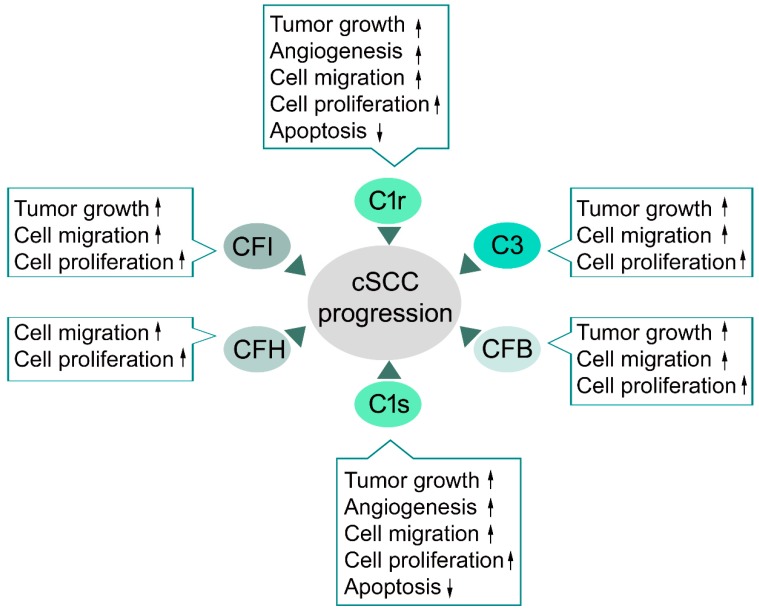
Epidermal keratinocyte-derived cutaneous squamous cell carcinoma (cSCC) is the most common metastatic skin cancer with high mortality rates in the advanced stage. Chronic inflammation is a recognized risk factor for cSCC progression and the complement system, as a part of innate immunity, belongs to the microenvironment of tumors. The complement system is a double-edged sword in cancer, since complement activation is involved in anti-tumor cytotoxicity and immune responses, but it also promotes cancer progression directly and indirectly. Recently, the role of several complement components and inhibitors in the regulation of progression of cSCC has been shown. In this review, we will discuss the role of complement system components and inhibitors as biomarkers and potential new targets for therapeutic intervention in cSCC.
表皮角质形成细胞衍生的皮肤鳞状细胞癌 (cSCC) 是最常见的转移性皮肤癌,晚期死亡率高。慢性炎症是 cSCC 进展的公认危险因素,补体系统作为固有免疫系统的一部分,属于肿瘤的微环境。补体系统在癌症中是一把双刃剑,因为补体激活既参与抗肿瘤细胞毒性和免疫反应,又直接和间接促进癌症进展。最近,已证实几种补体成分和抑制剂在调节 cSCC 进展中的作用。在这篇综述中,我们将讨论补体系统成分和抑制剂作为 cSCC 生物标志物和潜在治疗干预新靶点的作用。