Institute of Zoology, Chinese Academy of Sciences, Beijing, 100101, China.
Institute of Neuroscience, University of Oregon, Eugene, OR, 97403, USA.
J Mol Evol. 2019 Sep;87(7-8):199-208. doi: 10.1007/s00239-019-09901-8. Epub 2019 Jul 22.
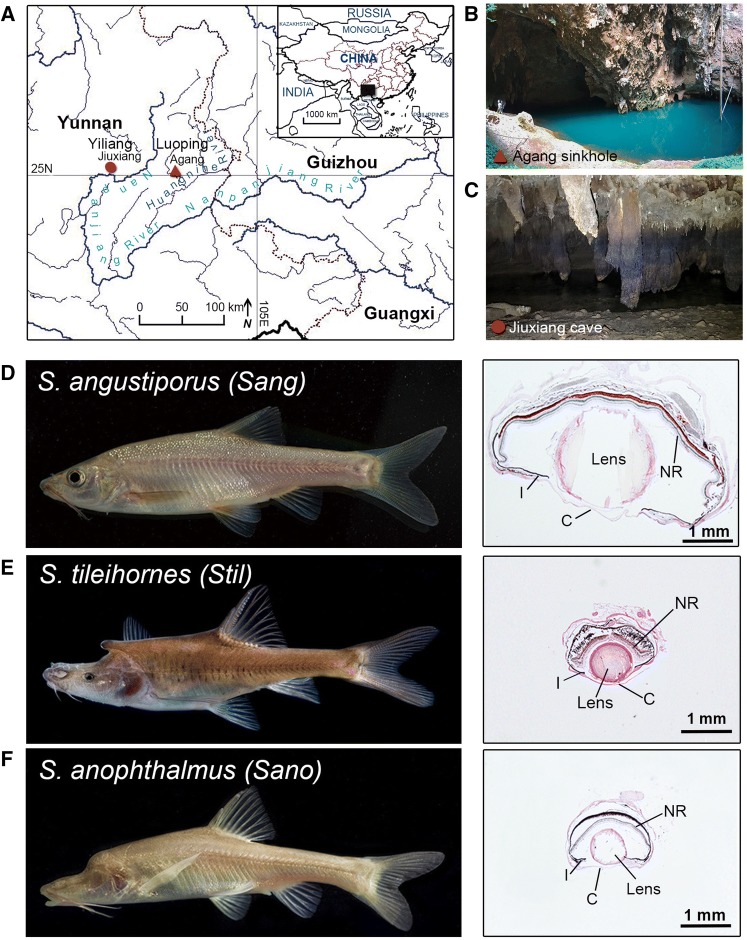
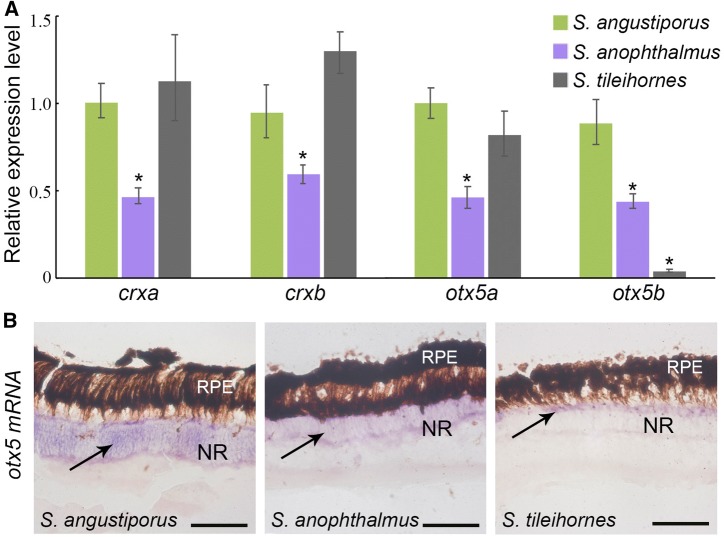
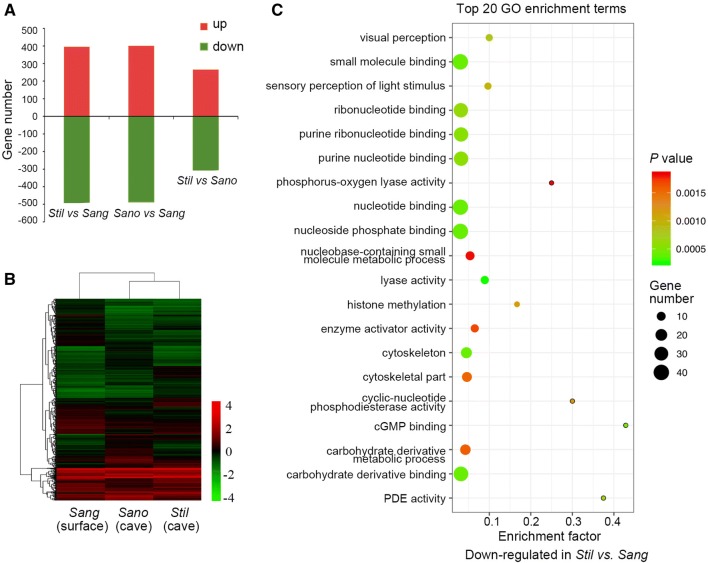
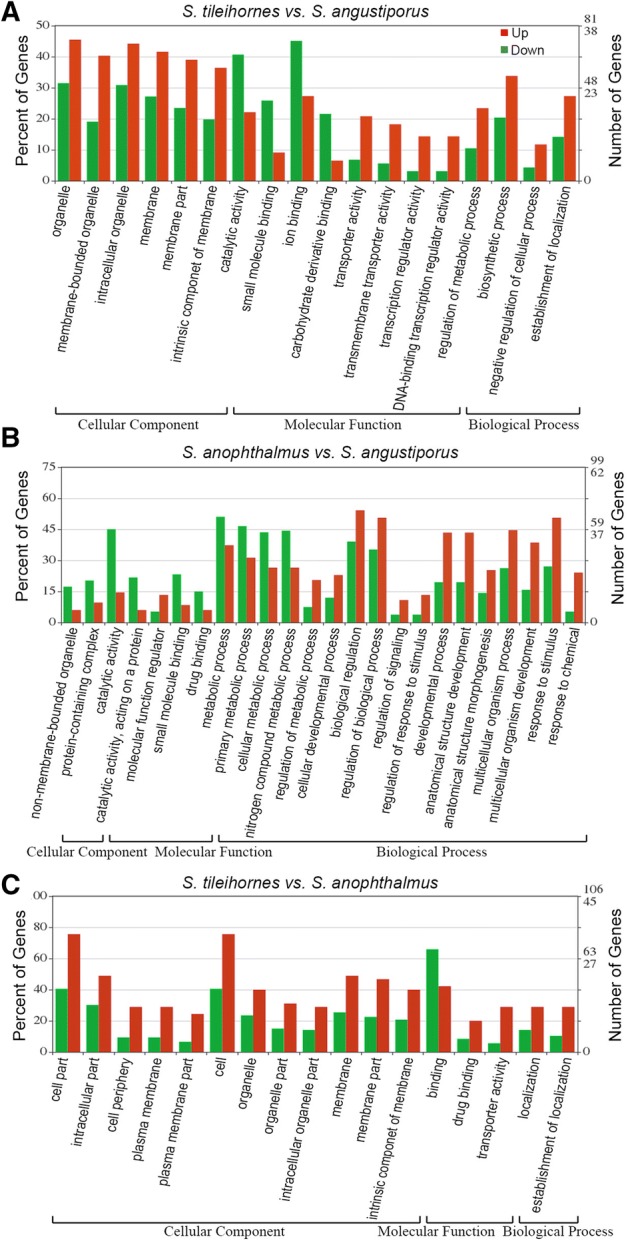
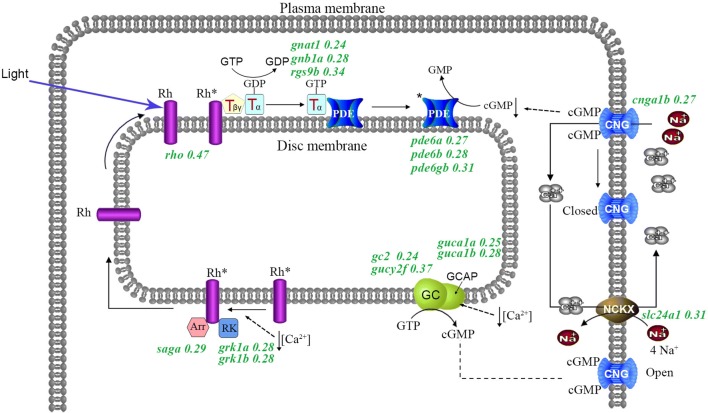
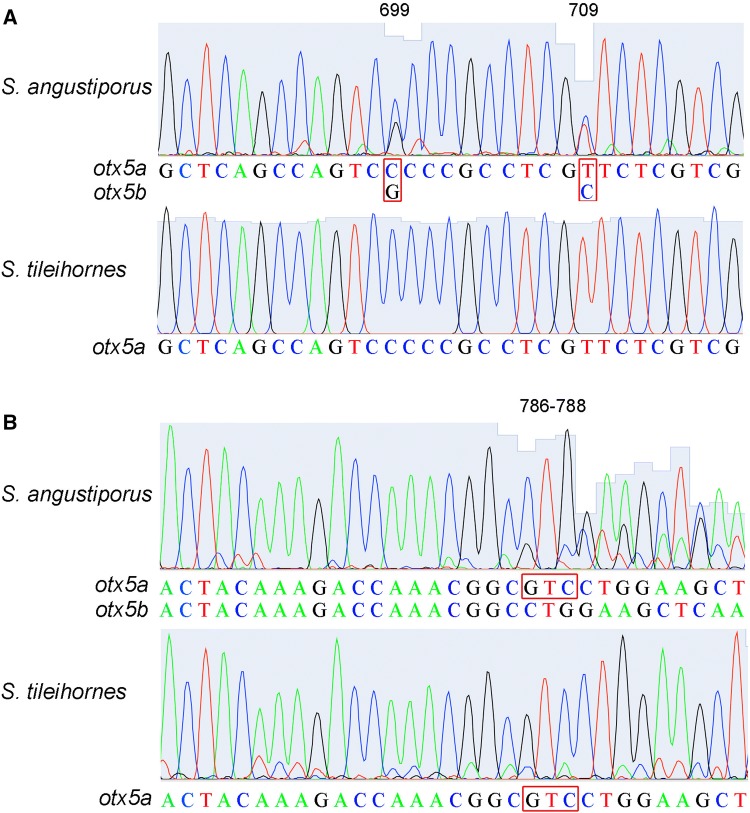
Cave animals possess remarkable phenotypes associated with existence in their dark environments. The Chinese cavefish Sinocyclocheilus tileihornes shows substantial eye degeneration, a trait shared by most cave species. The extent to which independent evolution of troglomorphic traits uses convergent molecular genetic mechanisms is as yet unknown. We performed transcriptome-wide gene expression profiling in S. tileihornes eyes and compared results with those from the closely related surface species S. angustiporus and an independently derived congeneric cavefish, S. anophthalmus. In total, 52.85 million 100 bp long paired-end clean reads were generated for S. tileihornes, and we identified differentially expressed genes between the three possible pairs of species. Functional analysis of genes differentially expressed between S. tileihornes and S. angustiporus revealed that phototransduction (KEGG id: dre04744) was the most significantly enriched pathway, indicating the obvious differences in response to captured photons between the cavefish S. tileihornes and the surface species S. angustiporus. Analysis of key genes regulating eye development showed complete absence of otx5b (orthodenticle homolog 5) expression in S. tileihornes eyes, probably related to degradation of rods, but normal expression of crx (cone-rod homeobox). The enriched pathways and Otx5 are involved in phototransduction, photoreceptor formation, and regulation of photoreceptor-related gene expression. Unlike the S. tileihornes reported here, S. anophthalmus has reduced crx and otx5 expression. These results show that different species of cavefish within the same genus that independently evolved troglodyte characteristics can have different genetic mechanisms of eye degeneration.
洞穴动物具有与黑暗环境中生存相关的显著表型。中国洞穴鱼中华纹胸鮡表现出显著的眼睛退化,这是大多数洞穴物种共有的特征。独立进化的洞穴特征在多大程度上使用趋同的分子遗传机制尚不清楚。我们对 S. tileihornes 的眼睛进行了全转录组基因表达谱分析,并将结果与亲缘关系密切的表型物种 S. angustiporus 和独立进化的同源洞穴鱼 S. anophthalmus 进行了比较。总共为 S. tileihornes 生成了 5285 万个 100bp 长的配对末端清洁读数,我们确定了三种可能的物种对之间的差异表达基因。在 S. tileihornes 和 S. angustiporus 之间差异表达的基因的功能分析表明,光转导(KEGG id:dre04744)是最显著富集的途径,表明洞穴鱼 S. tileihornes 和表型物种 S. angustiporus 对捕获光子的反应明显不同。对调节眼睛发育的关键基因的分析表明,S. tileihornes 眼睛中完全没有 otx5b(同源异型盒基因 5)的表达,这可能与视杆的降解有关,但 crx(视锥-视杆同源盒)的表达正常。富集途径和 Otx5 参与光转导、光感受器形成以及光感受器相关基因表达的调控。与这里报道的 S. tileihornes 不同,S. anophthalmus 的 crx 和 otx5 表达减少。这些结果表明,同一属内独立进化为洞穴特征的不同洞穴鱼可能具有不同的眼睛退化遗传机制。