Costa Paulo, Simão Roberto, Perez Anselmo, Gama Maurício, Lanchtermacher Rogério, Musialowski Reinaldo, Braga Fábio, de Mello Coelho Valeria, Palma Alexandre
School of Physical Education and Sports, Rio de Janeiro Federal University, Av. Carlos Chagas Filho, 540 - Cidade Universitária, Rio de Janeiro, RJ, 21940-901, Brazil.
Laboratory of Immunophysiology, Institute of Biomedical Sciences, Health Sciences Center, Federal University of Rio de Janeiro, Rio de Janeiro, Brazil.
Sports Med Open. 2019 Jul 22;5(1):32. doi: 10.1186/s40798-019-0200-5.
Taper is considered as a strategy to avoid overtraining and increase peak performance in athletes. Because aerobic exercise increases the level and duration of independence during the lifespan, the participation of recreational athletes has increased in running events around the world. However, the effects of using load reduction in their training and aerobic performance are still not well known.
Our goal was to compare load manipulations, using tapering-like periods in the end of recreational athletes training evaluating alterations in oxygen supply, muscle injury, and metabolism markers.
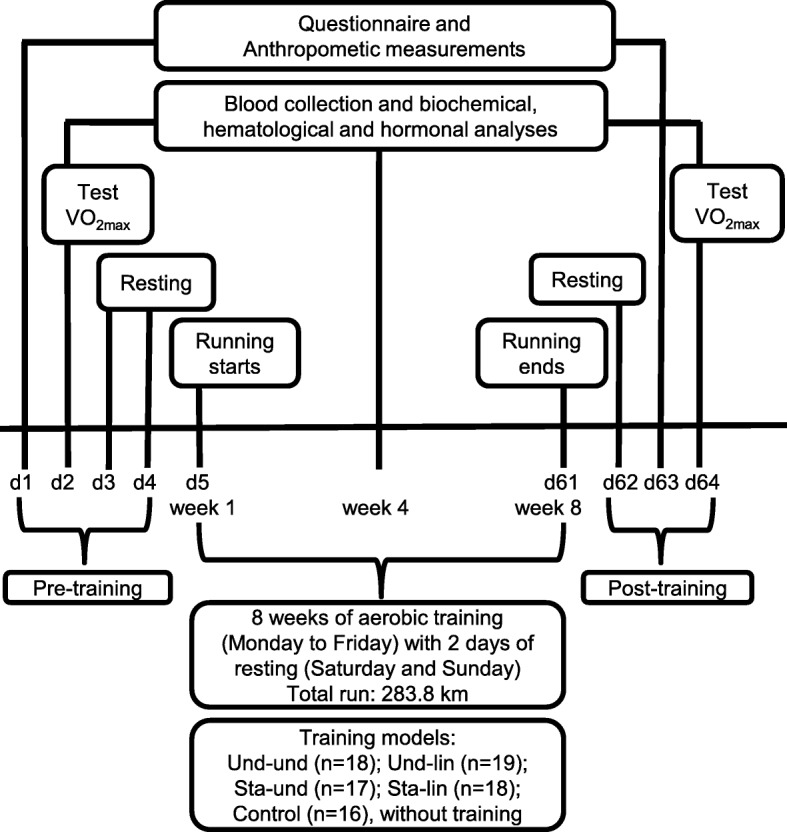
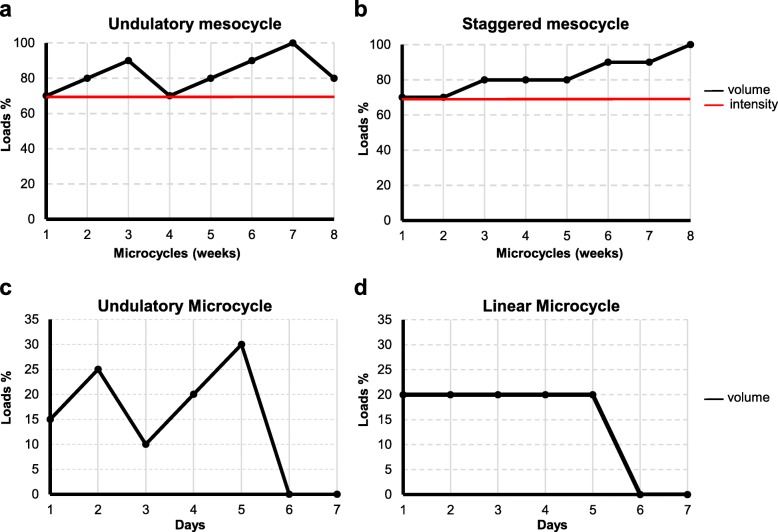
Healthy males (n = 88, 20-35 years old) were randomly distributed in groups using a combination of two mesocycles of 4 weeks, undulatory and staggered, with two daily microcycles, undulatory and linear. Undulatory-undulatory (Und-Und) and undulatory-linear (Und-Lin) groups had load reduction in the final week of training while the staggered-undulatory (Sta-Und) and staggered-linear (Sta-Lin) groups did not. Cardiorespiratory capacity (V̇O), body mass index (BMI), and body fat % were evaluated. Blood samples were also collected to analyze hematocrit (Ht), mean corpuscular hemoglobin (MCHC), circulating levels of hemoglobin (Hb), creatine kinase (CK), lactate dehydrogenase (LDH), aspartate aminotransferase (AST), alanine aminotransferase (ALT), urea (U), cortisol (C), free testosterone (FT), and free T/C ratio.
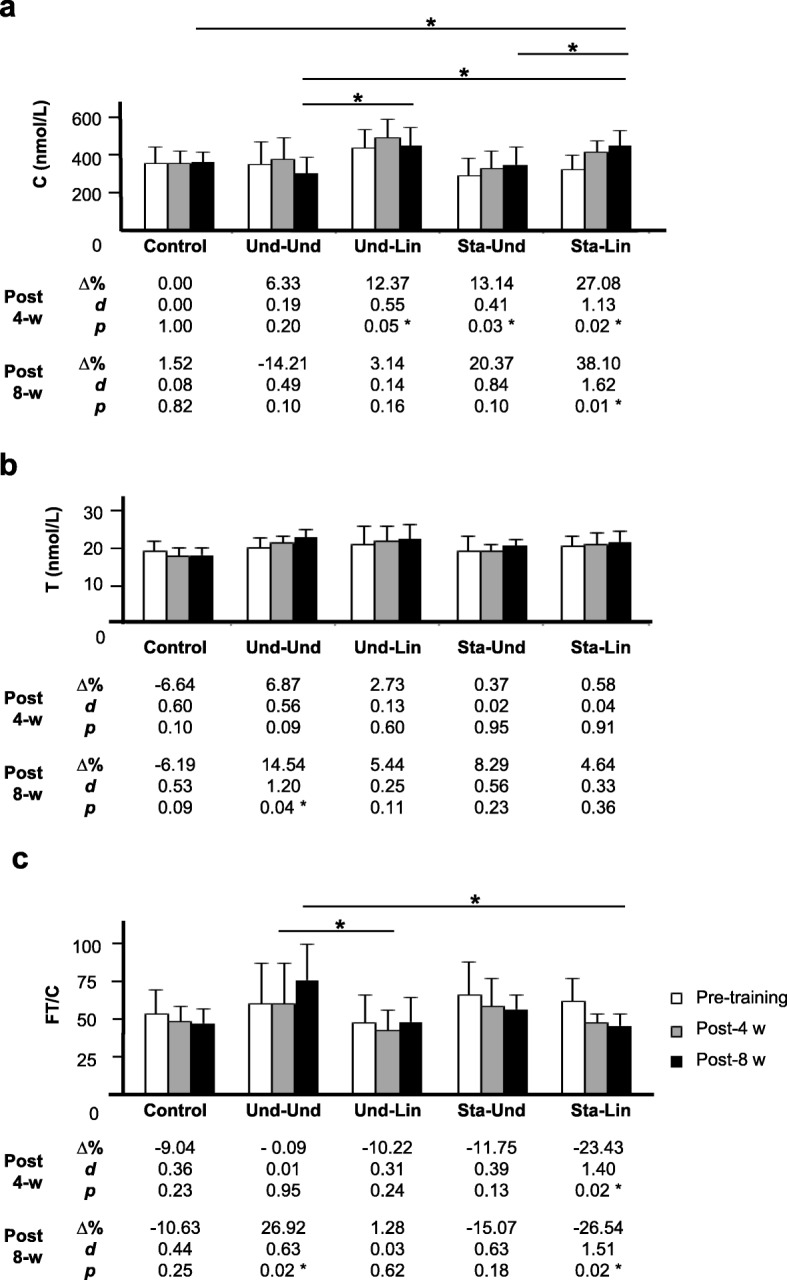
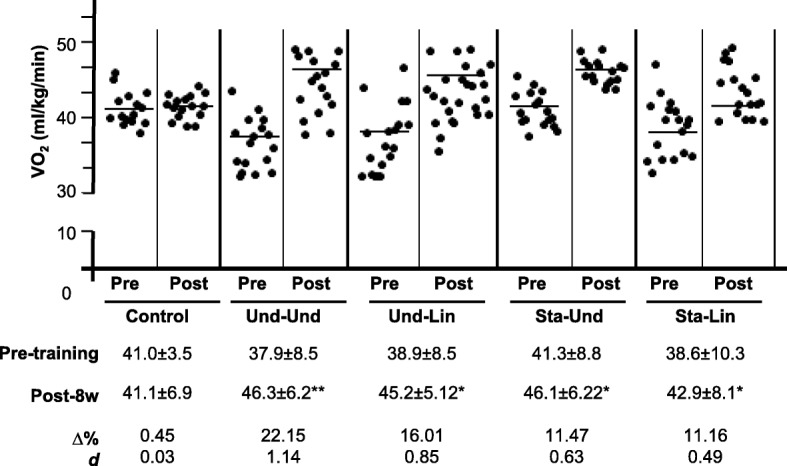
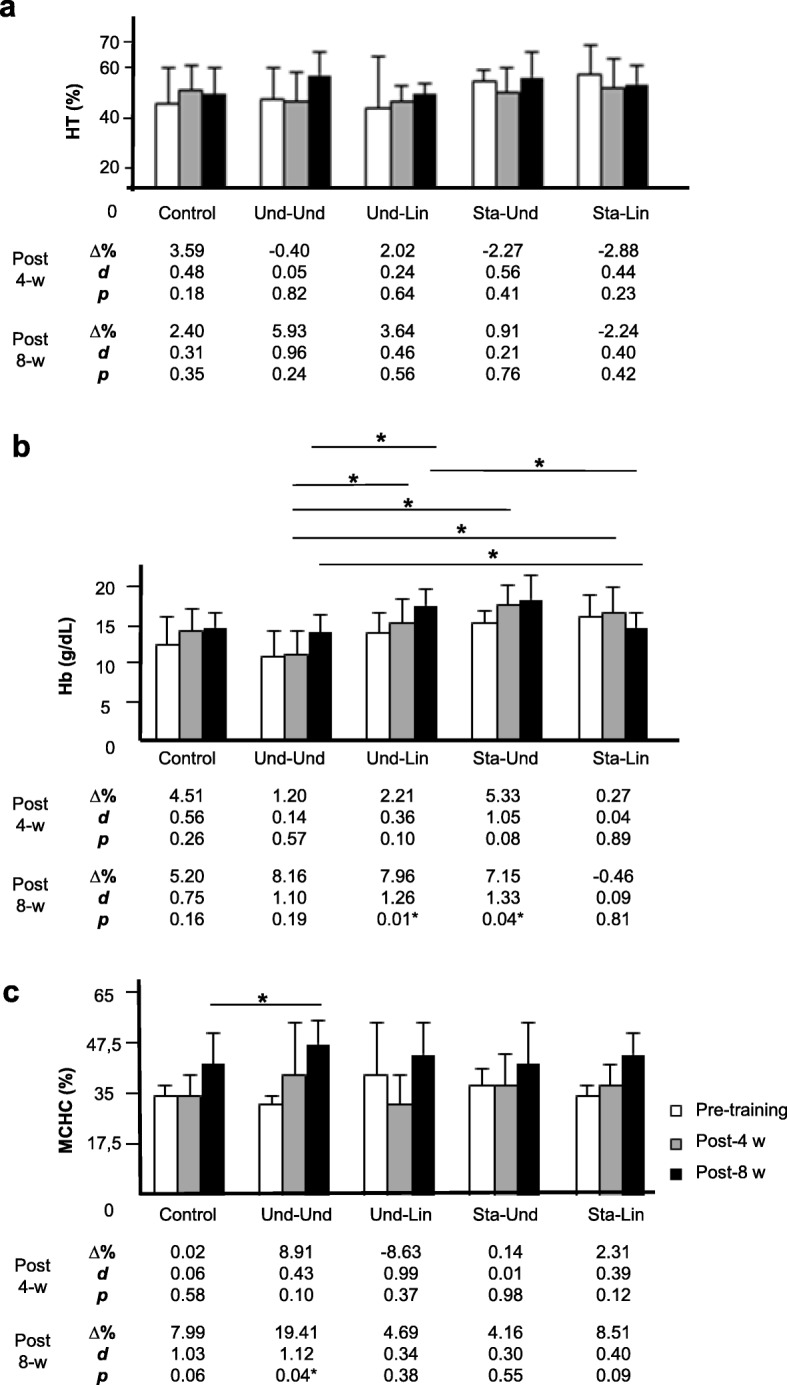
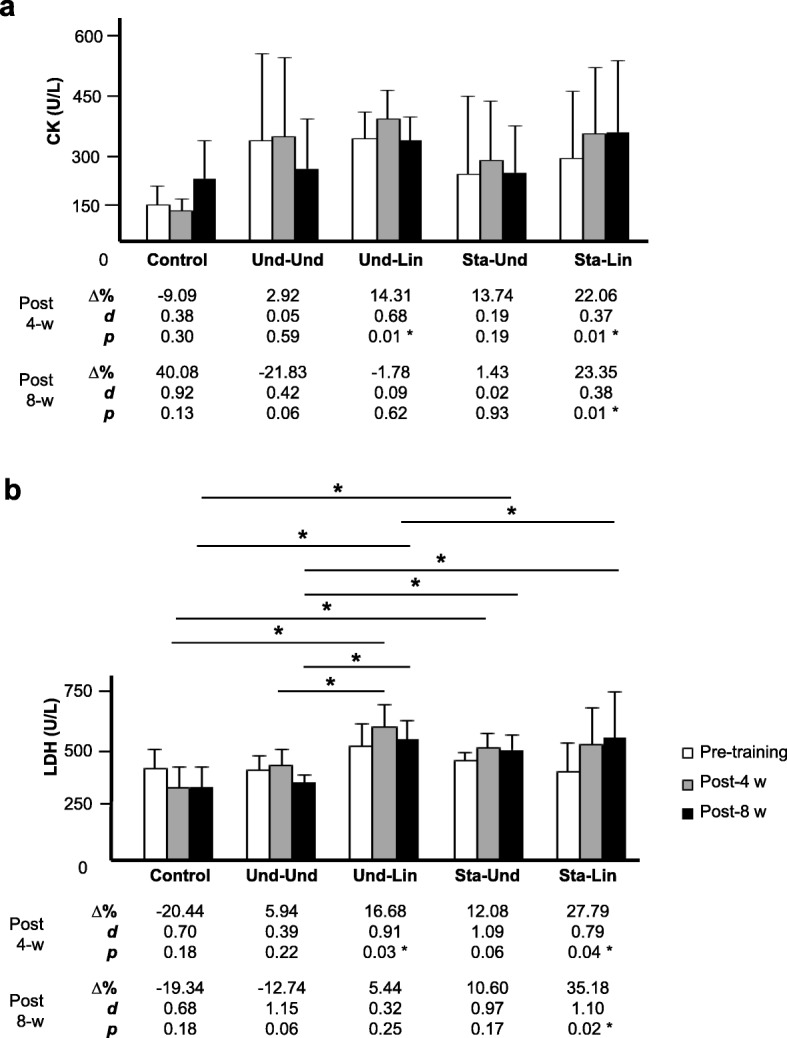
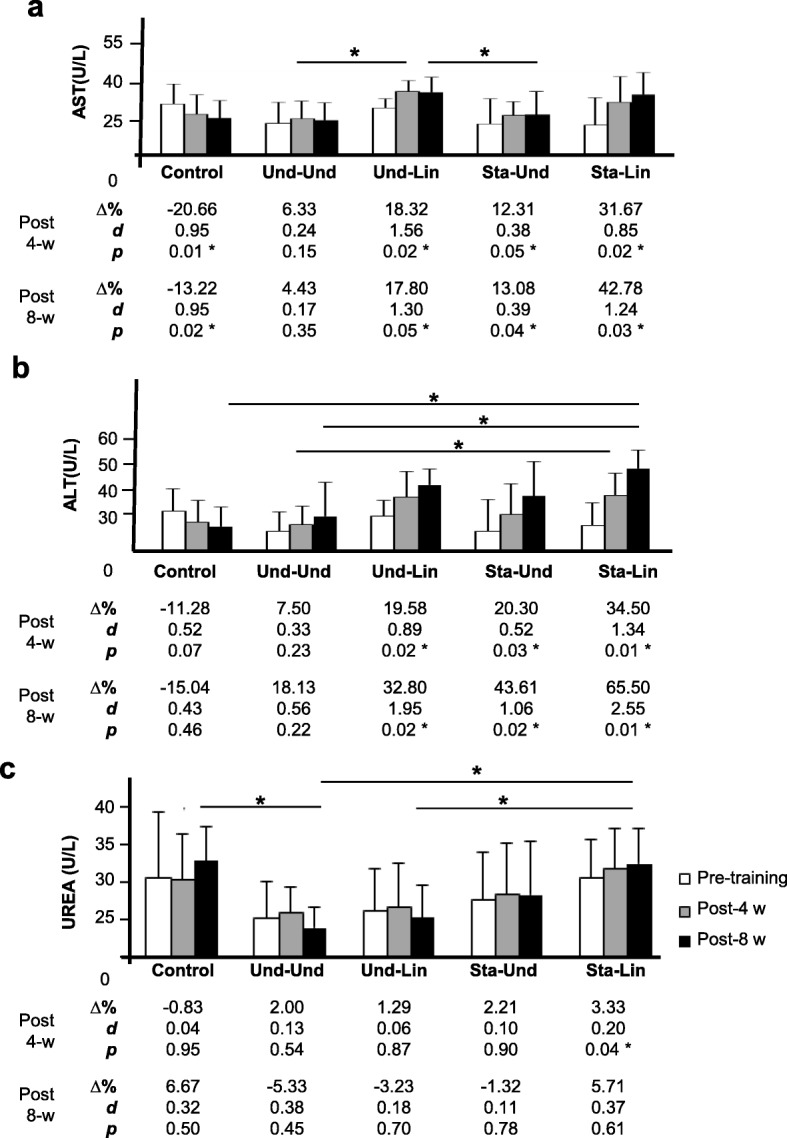
After 8 weeks of training, Und-Und had the highest trend to increase V̇O. Both Und-Und and Sta-Lin reduced body fat %. Und-Und showed a significant increase in MCHC, T and Free T/C ratio, a positive trend to increase Ht% and Hb levels, and a trend to decrease CK, LDH, and C circulating levels. Sta-Lin presented a trend to decrease Ht% and Hb levels, a significant increase in CK, LDH, AST, ALT circulating levels, and a decrease in Free T/C ratio.
The use of daily undulatory training load provides better gains for aerobic fitness while the use of staggered load, mainly associated with linear load, promotes inadequate recovery in recreational runners.
减量训练被视为一种避免运动员过度训练并提高其最佳表现的策略。由于有氧运动可增加一生中独立生活的水平和持续时间,休闲运动员参与世界各地跑步赛事的人数有所增加。然而,在他们的训练中采用减量负荷对有氧能力的影响仍不为人所知。
我们的目标是比较负荷调整,即在休闲运动员训练末期采用类似减量训练阶段的方式,评估氧气供应、肌肉损伤和代谢标志物的变化。
健康男性(n = 88,20 - 35岁)通过将两个4周的中周期(波动型和交错型)与两个每日微周期(波动型和线性)相结合的方式随机分组。波动 - 波动(Und - Und)组和波动 - 线性(Und - Lin)组在训练的最后一周进行负荷减量,而交错 - 波动(Sta - Und)组和交错 - 线性(Sta - Lin)组则不进行。评估心肺功能(V̇O)、体重指数(BMI)和体脂百分比。还采集血样以分析血细胞比容(Ht)、平均红细胞血红蛋白含量(MCHC)、血红蛋白(Hb)、肌酸激酶(CK)、乳酸脱氢酶(LDH)、天冬氨酸氨基转移酶(AST)、丙氨酸氨基转移酶(ALT)、尿素(U)、皮质醇(C)、游离睾酮(FT)以及游离T/C比值的循环水平。
经过8周训练后,Und - Und组V̇O增加的趋势最为明显。Und - Und组和Sta - Lin组的体脂百分比均有所降低。Und - Und组的MCHC、T和游离T/C比值显著增加,Ht%和Hb水平有增加的趋势,CK、LDH和C的循环水平有降低的趋势。Sta - Lin组的Ht%和Hb水平有降低的趋势,CK、LDH、AST、ALT的循环水平显著增加,游离T/C比值降低。
每日采用波动训练负荷对有氧适能的提升效果更佳,而采用交错负荷,主要是与线性负荷相关时,会导致休闲跑步者恢复不足。