Fesharaki-Zadeh Arman
Yale Neurology, Yale Medicine, New Haven, CT, United States.
Front Neurol. 2019 Jul 3;10:713. doi: 10.3389/fneur.2019.00713. eCollection 2019.
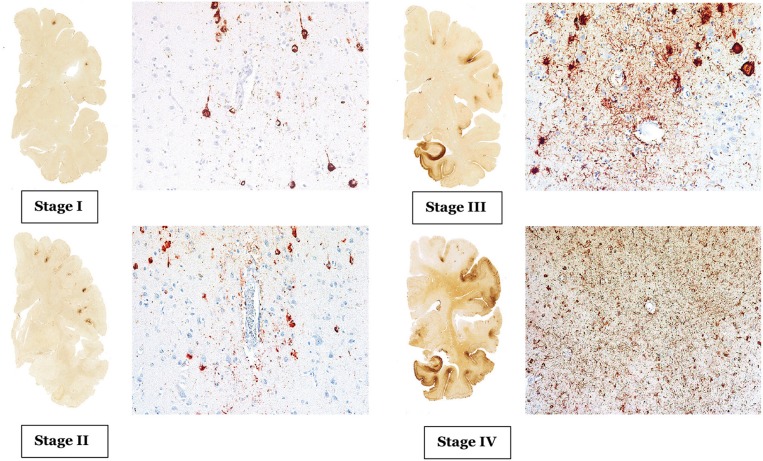
Chronic Traumatic Encephalopathy (CTE) is a debilitating neurodegenerative disease, which has been increasingly reported in athletes, especially American football players, as well as military veterans in combat settings, commonly as a result of repetitive mild traumatic brain injuries (TBIs). CTE has a unique neuropathological signature comprised of accumulation of phosphorylated tau (p-tau) in sulci and peri-vascular regions, microgliosis, and astrocytosis. As per most recent disease classification, the disease manifests itself in four different stages, characterized by widespread tauopathy. Clinically, CTE has a more subtle presentation, as patients often present with two distinct phenotypes, with one subtype initially presenting with affective changes, and the other subtype with more cognitive impairment. On a genetic basis, there are no clear risk factor genes. Although ApoE4 carriers have been reported to suffer more severe outcome post TBI. As there are no disease modifying regimen for CTE, the newly developed TBI treatments, if administered in a time sensitive manner, can offer a potential viable option. Prevention is another key strategy that needs to be implemented in various sports and military settings. Providing education for safe practice techniques, such as safe tackling and hitting, and providing ready access to full neuropsychiatric assessment by team physician could have measurable benefits. The combination of advanced of research techniques including neuroimaging, as well as increasing public awareness of CTE, offers promising vistas for research advancement.
慢性创伤性脑病(CTE)是一种使人衰弱的神经退行性疾病,越来越多地在运动员中被报道,尤其是美国橄榄球运动员,以及战斗环境中的退伍军人,通常是由于重复性轻度创伤性脑损伤(TBI)所致。CTE具有独特的神经病理学特征,包括脑沟和血管周围区域磷酸化tau(p-tau)的积累、小胶质细胞增生和星形细胞增生。根据最新的疾病分类,该疾病表现为四个不同阶段,其特征为广泛的tau蛋白病。临床上,CTE的表现更为隐匿,因为患者通常表现出两种不同的表型,一种亚型最初表现为情感变化,另一种亚型则有更多的认知障碍。在基因层面,没有明确的风险因素基因。尽管有报道称载脂蛋白E4(ApoE4)携带者在创伤性脑损伤后预后更差。由于目前尚无针对CTE的疾病改善疗法,新开发的TBI治疗方法若能在时间敏感的情况下给药,可能会提供一个可行的选择。预防是另一个需要在各种体育和军事环境中实施的关键策略。提供安全练习技巧的教育,如安全擒抱和击打,并让团队医生能够随时进行全面的神经精神评估,可能会带来显著的益处。包括神经影像学在内的先进研究技术的结合,以及公众对CTE认识的提高,为研究进展提供了广阔的前景。