Liu Ruisheng, Li Huijuan, Liang Fuxiang, Yao Liang, Liu Jieting, Li Meixuan, Cao Liujiao, Song Bing
The First Hospital of Lanzhou University.
The First Clinical Medical College of Lanzhou University.
Medicine (Baltimore). 2019 Jul;98(29):e16227. doi: 10.1097/MD.0000000000016227.
The aim of this study was to determine the diagnostic accuracy of different computer-aided diagnostic (CAD) systems for thyroid nodules classification.
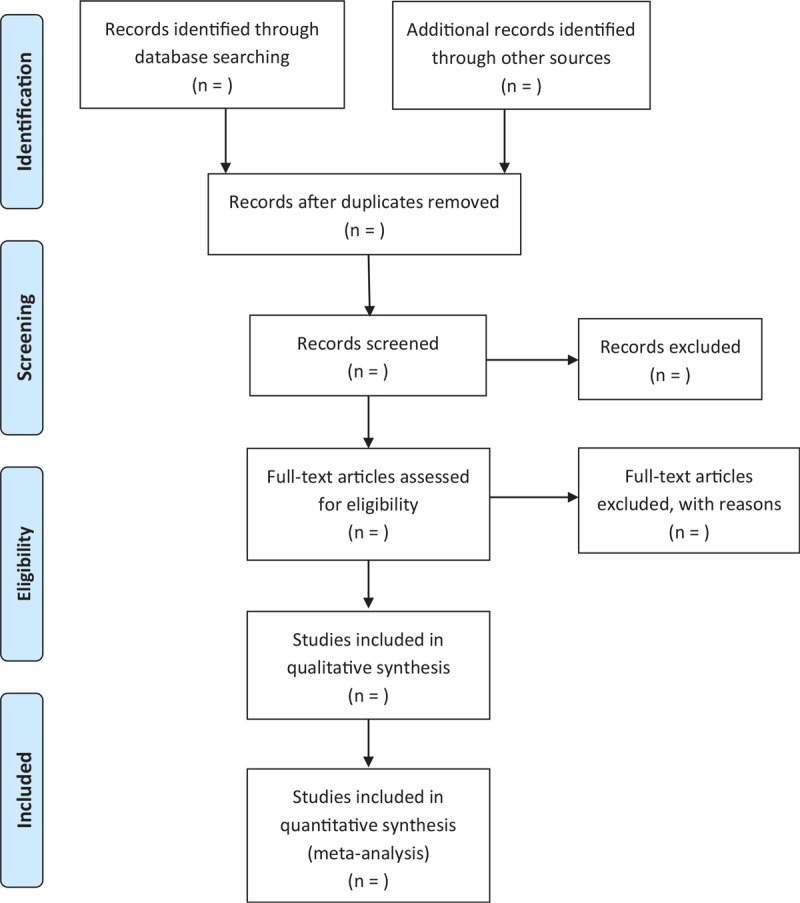
A systematic search of the literature was conducted from inception until March, 2019 using the PubMed, EMBASE, Web of science, and Cochrane library. Literature selection and data extraction were conducted by 2 independent reviewers. Numerical values for sensitivity and specificity were obtained from false negative (FN), false positive (FP), true negative (TN), and true positive (TP) rates, presented alongside graphical representations with boxes marking the values and horizontal lines showing the confidence intervals (CIs). Summary receiver operating characteristic (SROC) curves were applied to assess the performance of diagnostic tests. Data were processed using Review Manager 5.3 and Stata 15. The methodological quality of included studies was assessed using Quality Assessment of Diagnostic Accuracy Studies (QUADAS-2) tool.
PROSPERO CRD42019132540.
本研究旨在确定不同计算机辅助诊断(CAD)系统对甲状腺结节分类的诊断准确性。
从创刊至2019年3月,使用PubMed、EMBASE、科学网和Cochrane图书馆对文献进行系统检索。文献筛选和数据提取由2名独立评审员进行。敏感性和特异性的数值从假阴性(FN)、假阳性(FP)、真阴性(TN)和真阳性(TP)率中获得,并与带有标记数值的框和显示置信区间(CI)的水平线的图形表示一起呈现。应用汇总接收器操作特征(SROC)曲线来评估诊断试验的性能。使用Review Manager 5.3和Stata 15对数据进行处理。使用诊断准确性研究质量评估(QUADAS-2)工具评估纳入研究的方法学质量。
PROSPERO CRD42019132540。